

Psychologist Steve Stewart-Williams’ third book about evolutionary psychology is A Billion Years of Sex Differences: How Evolution Shaped the Minds of Men and Women.
Articles on Evolutionary psychology
Displaying 1 - 20 of 46 articles

There are two ways to understand sexual harassment in the workplace, but one of them is more scientific than the other.

People use cognitive shortcuts to make choices that sometimes have outcomes that don’t serve their own interests or preferences. But to call these choices irrational might be missing the big picture.

People from many different cultures across the globe and across millennia largely agree about which body parts are most valuable – and how much compensation they warrant when injured.
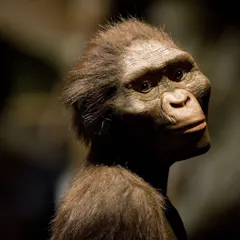
The way Lucy has been depicted in newspapers, textbooks and museums shows how today’s cultural norms influence perceptions of the past.

Some of winter’s effects have been tied to cultural norms and practices, while others likely reflect our bodies’ innate biological responses to shorter days and colder weather.

A number of theories try to explain how cultural differences come to be. A new study quantifies how such factors as resource abundance, population density and infectious disease risk can contribute.

When you stop treating AI as another human, you’ll get on with it better.

Many older people tend to trim their social circles and focus their social efforts on family and close friends. New research on our close primate relatives may help explain why.

Going out of your way to get grossed out might seem like a contradiction of human nature. But it serves a strong evolutionary purpose.

What people consider to be fair and just today are in line with the laws of ancient Mesopotamia and the Tang Dynasty in China – suggesting that these intuitions are part of human nature.
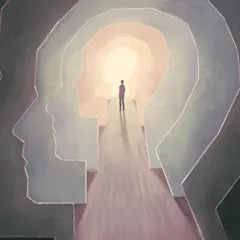
Some scientists believe the ‘free energy principle’ can explain the behaviour of all living things – but others say it paints the world with too broad a brush to be useful.

Some reasons people oppose abortion seem to be at odds with other positions they hold. Evolutionary social science points to a surprising motivation for anti-abortion attitudes.
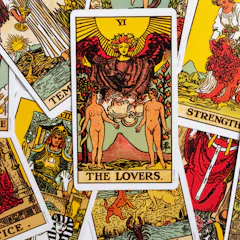
It’s not logical to believe your relationship is “meant to be.” But believing in destined love may have evolved as a way to keep couples together long enough to reproduce and raise children.
Study after study has shown that men tend to be more willing to put themselves in harm’s way to help others. Why some men rise to the occasion – and others don’t – has been a bit trickier to pin down.
We fall for people based on appearance, kindness and wealth. It’s not as simple as removing one part of the equation.
Both men and women play a role in perpetuating attitudes toward sex that are hypocritical and logically inconsistent.
New research calls into question the validity of ‘Dunbar’s number’.

Unfairness alone is upsetting enough to drive people to punish lucky recipients of unfair outcomes.
The ‘good’ side of our nature is much more deep-rooted than the ‘evil’ side.
Top contributors
-

Cornelia H. Dudley Professor of Psychology, Knox College
-
Scientia Professor of Psychology, UNSW
-
Associate Professor of Psychology, Arizona State University
-
Professor, History & Philosophy of Science program, School of Historical & Philosophical Studies, The University of Melbourne
-
Associate Professor of Psychology, University of California, Los Angeles
-
Assistant Professor of Psychology, Oklahoma State University
-
Visiting Scholar, School of Engineering and Applied Sciences, Harvard University
-
Professor of Psychology, Skidmore College
-
Wellcome Trust Fellow, Brunel University of London
-
Post-doctoral Research Fellow, Iowa State University
-
Associate Fellow, International Center for the Study of Radicalisation (ICSR), King's College London
-
Assistant Professor, Psychology
-
Doctoral student in Human Development and Family Sciences, The University of Texas at Austin
-
Professor, Brock University
-
Professor of Physics and Astronomy & Professor of Microbiology and Molecular Genetics, Michigan State University