
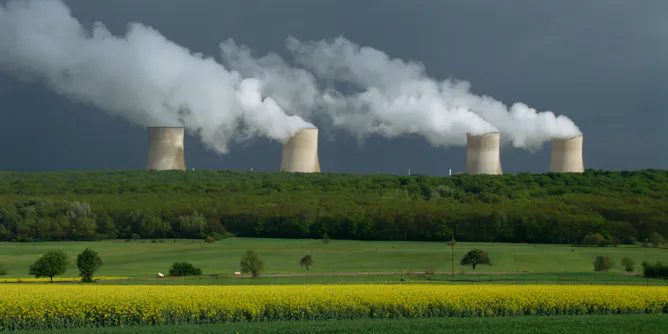
Three researchers take stock of different Union-wide policy approaches to removing and storing carbon emissions in the heavy industry sector.
Articles on European Union Green Deal
Displaying all articles
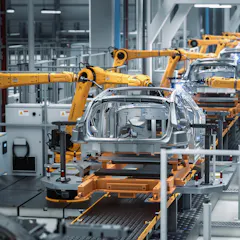
By ‘reshoring’ key industries, the EU can reduce emissions, strengthen supply chains, and mitigate geopolitical risks.
Europe’s regulation on chemicals is imperfect but essential for public health. A reform may streamline processes and increase penalties, but there is concern that lobbying could undermine it.

Current loopholes in EU climate laws would allow affluent private jet passengers to maintain their polluting lifestyle, while the lower and middle classes are compelled to give up low-cost flights.
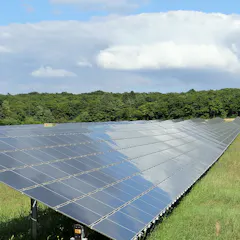
Taking advantage of Europe’s sovereign debt crisis, outside investors have acquired substantial stakes in what have long been regarded as “sovereign” assets that are critical for the EU’s energy strategy.
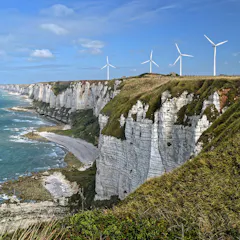
According to a survey of almost 800 climate researchers, 73% are sceptical of the idea of green growth. Instead, approaches such as agrowth and degrowth are gaining ground.
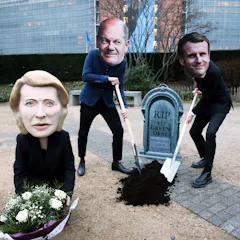
While EU countries are capable of initiating strong joint actions, a divide is emerging between countries with very different, even antagonistic, decarbonisation strategies.
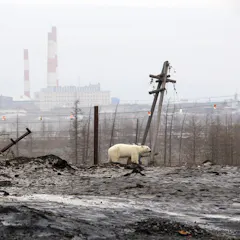
The war in Ukraine threatens to turn back the clock on Russia’s climate progress, with some calling on the country to leave the Paris Agreement and roll back environmental regulations.
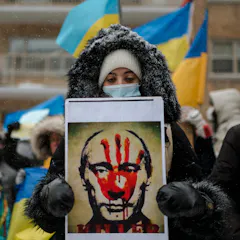
Russian President Vladimir Putin has used his country’s massive energy reserves effectively for political influence. But with war in Ukraine, nations are looking for ways to cut those ties.
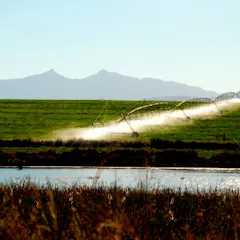
The EU’s trading partners, including South Africa, will have to adhere to new regulations tied to the blocs ‘Farm to Fork’ strategy.
Top contributors
-

Professeure associée et coordinatrice de la chaire « Energy for Society », GEM
-
Directeur de recherche émérite au CNRS, Université Grenoble Alpes (UGA)
-
Associate Professor of Quantitative Analytics, ESCP Business School
-
Research Associate, Bureau for Food and Agricultural Policy
-
Geographer, University of Bern
-
Postdoctoral research fellow in Ecological economics, Universitat Autònoma de Barcelona
-
Senior researcher, University of Fribourg
-
Senior Fellow, Department of Agricultural Economics, Stellenbosch University
-
Toxicologue reglementaire, Agence nationale de sécurité sanitaire de l’alimentation, de l’environnement et du travail (Anses)
-
Postdoctoral researcher at Toulouse Business School, TBS Education
-
Catedrática de Universidad, especialista en Economía y Medio Ambiente, Universidad de Castilla-La Mancha
-
Professor of International Business, TBS Education
-
Profesora ayudante doctora, Universidad de Castilla-La Mancha
-
Research Team Leader - Molecules&Materials, European University Institute
-
Researcher, European University Institute