

There has been a growing recognition that psychology, as a discipline, must engage more deeply with local contexts.
Articles on Eurocentric curriculum
Displaying all articles

The African university cannot be created through changing the intellectual lens and basis alone. Political action is key.

Khanya College’s curriculum was quite different from the one taught at other universities of the time. Its students studied oral African literature and history alongside Western literature.

More than two decades after apartheid ended, South African universities still tend to offer a view of the country and continent that is rooted in colonial and apartheid thinking.

A curriculum can’t be decolonised by simply removing content. This denies students the chance to participate in local policy debates and the global job market. A more nuanced approach is needed.
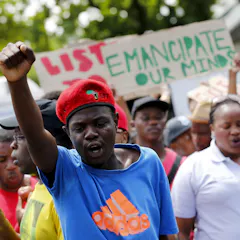
Many works published on decolonisation originate from Ngugi wa Thiongo’s idea of decolonising the African mind. Imperialism, he writes, has left its mark on the minds of the previously colonised.

Africa needs management graduates – but they must be taught with the continent’s specific challenges and requirements in mind.
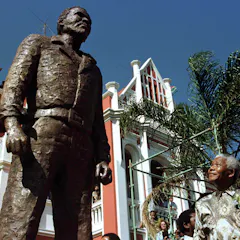
Evidence from an 18-month-old research project suggests that making elements of the Humanities curriculum more Afro-centric boosts student engagement.

A scholar finds black parents are homeschooling kids to protect them from racism and what they see as a Eurocentric education.
Top contributors
-

Professor, Department of Economics, Stellenbosch University
-
Associate Professor, University of Cape Town
-
Post doctoral research fellow, University of Johannesburg
-
Professor of Business Management, Mzumbe University
-
Associate Professor and Graduate Director, Temple University
-
Researcher, Nelson Mandela University
-
Professor and Director, International Centre for Higher Education Management, School of Management, University of Bath
-
Associate Professor, School of Education, Aarhus University
-
Associate professor in Science Education, University of Copenhagen
-
Research Professor, UFS History Department, University of the Free State
-
Associate Professor, Rhodes University