

In most countries, scientific research that uses human embryos has to halt after the 14th day. New guidelines recommend the public’s input in extending the time period.
Articles on Ethics
Displaying 361 - 380 of 879 articles

The FBI and Treasury Department frown on the idea of paying off cyber attackers. But there is sufficient ethical and legal gray areas to make it a real moral quandary for business leaders.

Offering incentives to encourage good health behavior isn’t new, but it does raise concerns. A behavioral scientist explains how rewarding those taking a shot need not keep ethicists up at night.

Video evidence can be powerful at a trial – but it does not always lead to a fair rendering of justice.

Police are sworn to protect the public, but cadets are still trained for battle – not public service – according to a new study examining all 50 US state police academy curricula.
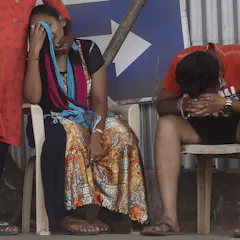
Providing foreign aid is not always straightforward. But here are some practical ways Australia might be able to help India.

It’s easy to call Australian Olympians who receive their COVID shot early ‘queue jumpers’. But the argument for them having early access to the vaccine is more nuanced. Here’s why.

If you are shipwrecked on a desert island with no hope of being rescued, you may not be morally obligated to stay alive.

‘Chimera’ creatures with human organs could be medically useful – but can we really treat them like other animals?
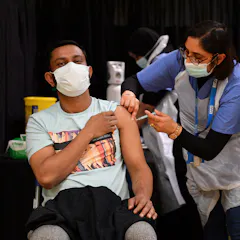
A moral philosopher explains why the ethics of getting or refusing the COVID-19 vaccine are more complex than it might seem.

Am I really eligible? Isn’t there someone more worthy of getting immunized before me? A bioethicist explains that such feelings of guilt are understandable. In fact, they are good for society.

The new Alphabet Workers Union is making clear that changes must be put in place, both in education and on the job, to allow engineers to start taking responsibility for the social impact of their work.

Still in the midst of a global pandemic, the International Olympic Committee’s dream of hosting the Tokyo Games in a “post-corona world” is not possible. But should the Games go ahead at all?

The ethics of idleness have been debated for thousands of years.

While AI is intended to help us, it tempts us to abandon judgment and moral responsibility. And without a proper understanding of how it works, we cannot circumvent its negative effects.

COVID-19 requires us to make ethical decisions like Ancient Greeks and Romans.

The pandemic has exposed inequalities in society. There is concern that tying freedoms to vaccinations may further disadvantage vulnerable groups.
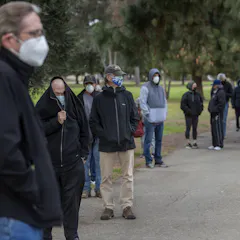
No one likes a long line. But privileging the rich and powerful – as has often been the case – may undermine trust in the vaccine rollout.

In early Christianity, soldiers could be baptized only if they refused to kill other human beings. While this changed over the years, tensions linger over Christian goals.

Medical decision-making is often based on universal principles of fairness. But what happens when systemic racism means the dice are rigged to begin with?
Top contributors
-

Chen Su Lan Centennial Professor in Medical Ethics, National University of Singapore; Distinguished Visiting Professor in Law, University of Melbourne; Uehiro Chair in Practical Ethics, The University of Melbourne
-
Deputy Director, Institute for Ethics, Governance & Law, Griffith University
-
Associate Professor of Philosophy, Deakin University
-
Professor of Philosophy and Director of Applied Ethics Center, UMass Boston
-
Consultant Neonatologist and Professor of Ethics, University of Oxford
-
Lecturer in Bioethics, Monash University; The University of Melbourne
-
Research Fellow, Center for Philosophy and History of Science, Boston University
-
Professor of Bioethics & Medicine, Sydney Health Ethics, Haematologist/BMT Physician, Royal North Shore Hospital and Director, Praxis Australia, University of Sydney
-
Professor of Medicine, Monash University
-
Director of the Master of Bioethics degree program at the Berman Institute of Bioethics, Johns Hopkins University
-
Professor of Bioethics and Humanities, School of Medicine, University of Washington
-
Adjunct Senior Lecturer, Applied Ethics and CyberSecurity, Griffith University
-
Professor of Philosophy, Public Policy and Governance, University of Washington
-
Associate Professor of Pediatrics, University of Cincinnati
-
Senior Lecturer in Digital Ethics; Deputy Director, Centre for AI and Digital Ethics, The University of Melbourne