

Our research investigates the connections among mental health, holistic well-being and relational virtues – ideas that many people think of as ethical or religious.
Articles on Ethics
Displaying 321 - 340 of 879 articles

Many factors influence women’s underrepresentation in investment careers. One that isn’t often discussed: their concerns about ethics.

If virtual characters can be as smart as humans, having free will, can we kill or harm them?

The inquiry’s findings could be a defining moment for South Africa, but only if the work of the Commission leads to concrete action and systemic change.
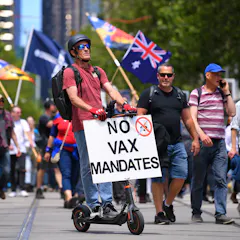
Through lockdowns, vaccine mandates and the spectre of mass death, the pandemic has uprooted our lives and challenged us to think differently about ethics. What might the future hold?

A professor of digital society and an ethics researcher discuss COVID passes and what they mean for the UK.
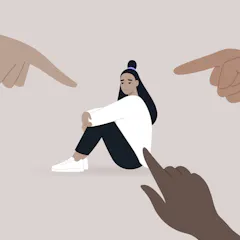
We have moved beyond burning witches and lynching wrong-doers. So we should also stop shaming unvaccinated people. There are better ways to change behaviour.

How the government contracts and pays suppliers in a pandemic demands transparency and strict standards. Some say New Zealand can do better.

Should countries require COVID-19 vaccination for entry while vaccines remain globally scarce?
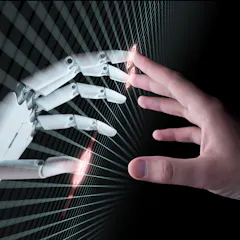
With advances in technology, robots and artificial intelligence have increasingly more sophisticated encounters with humans.

Recent controversies involving academic freedom and responsibility raise important questions about how publicly accountable Aotearoa’s universities should be.
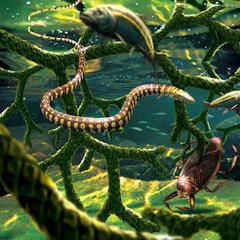
In 2015, a published article described the fossil of a four-legged snake. New research has revealed that it is in fact a lizard, and the fossil is the centre of a scientific ethics debate.

Austria has imposed a lockdown for the unvaccinated. Russia is considering the same measure.

With vaccine mandates kicking in next Monday, the Teaching Council code of professional responsibility offers a guide to handling staffroom divides – if it’s used with care.

Hiding the suffering and deaths of some from public view while showing others implies that certain lives are more valuable.

Deepfakes could strengthen our engagement with history. But there are dangers to the practice, some obvious, others more subtle.

It’s unvaccinated people, not the vaccinated, who are most at risk when unvaccinated people are allowed in shops.

The bill promises to prevent environmental damage and harm where possible, but what will this entail?

The Athens fires were a dangerous reflection of Atomist philosophies that see the world as exploitable, for sale and open to waste and abuse.

There are calls for measures to reduce the burden of red tape and promote and facilitate biodiversity research in South Africa.
Top contributors
-

Chen Su Lan Centennial Professor in Medical Ethics, National University of Singapore; Distinguished Visiting Professor in Law, University of Melbourne; Uehiro Chair in Practical Ethics, The University of Melbourne
-
Deputy Director, Institute for Ethics, Governance & Law, Griffith University
-
Associate Professor of Philosophy, Deakin University
-
Professor of Philosophy and Director of Applied Ethics Center, UMass Boston
-
Consultant Neonatologist and Professor of Ethics, University of Oxford
-
Lecturer in Bioethics, Monash University; The University of Melbourne
-
Research Fellow, Center for Philosophy and History of Science, Boston University
-
Professor of Bioethics & Medicine, Sydney Health Ethics, Haematologist/BMT Physician, Royal North Shore Hospital and Director, Praxis Australia, University of Sydney
-
Professor of Medicine, Monash University
-
Director of the Master of Bioethics degree program at the Berman Institute of Bioethics, Johns Hopkins University
-
Professor of Bioethics and Humanities, School of Medicine, University of Washington
-
Adjunct Senior Lecturer, Applied Ethics and CyberSecurity, Griffith University
-
Professor of Philosophy, Public Policy and Governance, University of Washington
-
Associate Professor of Pediatrics, University of Cincinnati
-
Senior Lecturer in Digital Ethics; Deputy Director, Centre for AI and Digital Ethics, The University of Melbourne