
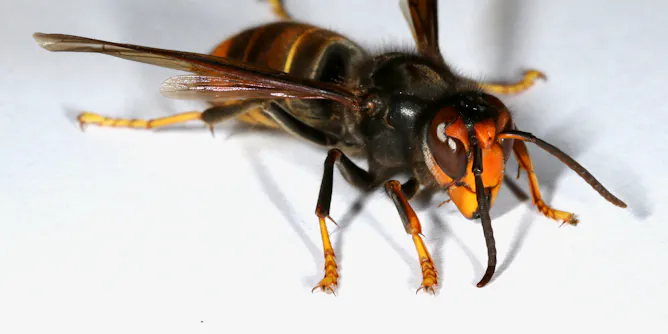
DNA analysis shows almost a third of what the invasive pests have been feeding their larvae consists of honey bees, making eradication vital.
Articles on Eradication
Displaying all articles

Diseases once thought confined to history are making a comeback in Australia. And vaccination is only part of the story.
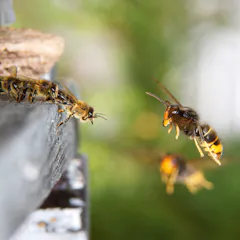
The hornet invasion threatens honeybees, other pollinators and all native insects with no natural defences. Eradication attempts hinge on fast action by everyone.
Indonesia has the world’s second-highest rates of TB – but lack of funding means not enough people are being diagnosed and treated fast enough.

Polio cases in the US, UK and Israel remind us that this could also happen in Australia. Here’s what we should watch out for.
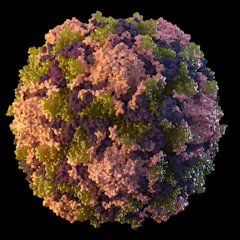
The oral polio vaccine – which is no longer given in the US – relies on a live but weakened virus that can actually be passed from person to person.

Victoria has achieved a remarkable thing. But the virus has not been eradicated. The question then becomes, how well can the state deal with new outbreaks?

Experts are currently debating whether Australia should pursue its current suppression strategy, or switch to an elimination strategy instead. But how different are the two?

The recent spike in new coronavirus cases in the US is not due to a second wave, but simply the virus moving into new populations or surging in places that opened up too soon.

Australia and New Zealand have well and truly ‘flattened the curve’, and there is now a real chance we could eliminate coronavirus in both countries. But what does elimination actually mean?
Significant new insights are emerging for the treatment of malaria, and eventually its eradication.

New Zealand has decided to attempt an eradication of the cattle disease Mycoplasma bovis, which means culling thousands of infected cattle.
Before we decide to eradicate or control an invasive species, like carp, we need plenty of scientific evidence and independent assessments first.
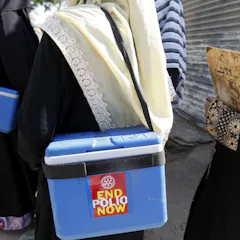
Researchers are piloting a smartphone app to collect better information about who is getting vaccinated and to design better incentives for health workers on vaccination drives.
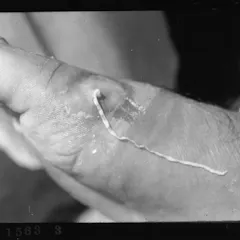
In 1986 Guinea-worm disease infected 3.5m people. Simple interventions have since ensured that in 2013 only 148 cases were recorded. With a final push, this could be the third disease to be eradicated…
Top contributors
-

Professor of Ecology and Entomology, Te Herenga Waka — Victoria University of Wellington
-
Associate Principal Research Fellow, Burnet Institute
-
Professor of Biostatistics and Epidemiology, Adelaide University
-
Honorary Professor, University of the Witwatersrand
-
Professor of Protozoology, University of Bristol
-
Professor in Ecology, Charles Sturt University
-
Assistant Professor of Public Policy, Harvard University
-
Program Manager, Resilience Development Initiative (RDI)
-
Research fellow, Charles Sturt University
-
Associate Professor, School of Population Health, UNSW
-
Professor of Medicine, University of Virginia
-
Professor of Global Biosecurity, NHMRC L3 Research Fellow, Head, Biosecurity Program, Kirby Institute, UNSW
-
Professor of Public Health, American University
-
Children, Social Welfare, and Health Research Officer, Resilience Development Initiative (RDI)
-
Associate Professor Production Animal Health, Te Kunenga ki Pūrehuroa – Massey University