
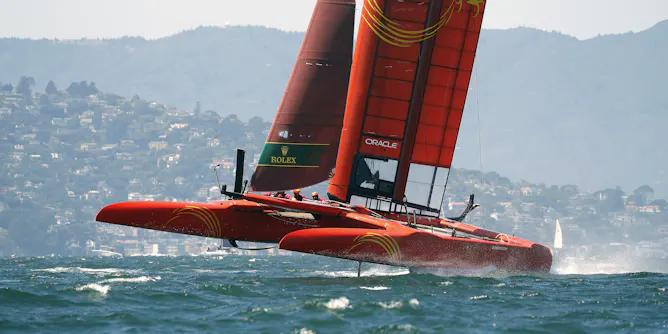
F50 catamarans used in the “Formula One"of sailing can travel at up to 50 knots.
Articles on Engineering
Displaying 181 - 200 of 310 articles
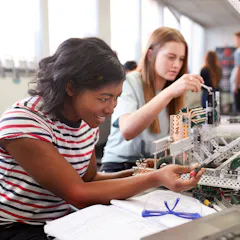
Technological stewardship is a set of values that provide members of the engineering community with guidance for responsible, responsive and agile approaches to design and implementation.

Studying maths is likely to make you smarter and more employable.

Our sense of touch lets us know how hard or soft something is, how solid or pliable it is to handle. That’s an important skill if you want robots to handle things safely.
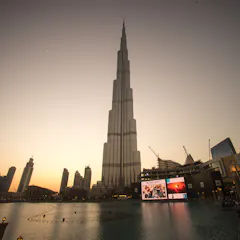
It would be difficult, but we could probably build a tower over 2,000 metres tall, which would be like ten normal skyscrapers on top of each other! This is probably not a very good idea though.
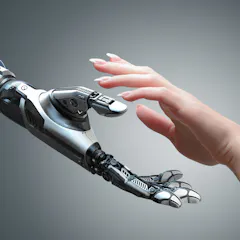
A shift to outcomes-based education will enable students to gain critical automation-resistant competencies to succeed and thrive in the future workforce alongside AI.
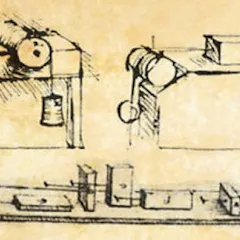
Once called ‘the most important subject no one has heard of’, tribology is now a key part of the fourth industrial revolution.
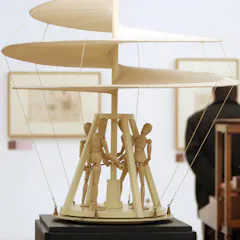
Leonardo’s range of knowledge fascination with flying led directly to the development of modern aircraft, nearly four centuries later.
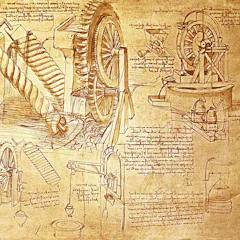
Engineer, artist, mathematician, thinker: Leonardo da Vinci was all these and more.
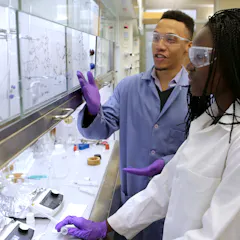
Researchers find promising results for two programs patterned after the Meyerhoff Scholars Program, a renowned initiative launched at UMBC in the 1980s and known to increase diversity in STEM.
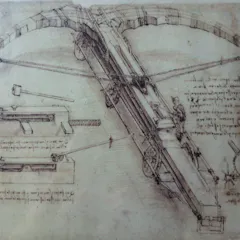
As Leonardo da Vinci found centuries ago, scholars of art, design, engineering and science can work together for mutual benefit.
Technological advances and discoveries are moving at a rate faster than engineering education can keep up with. The solution is a revised approach to teaching engineering.
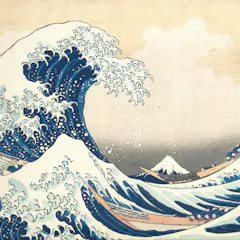
Recreating freak waves can tell us a lot about the nature of the sea.

Its billionaire boss was a strong supporter of exiting the EU. Now the company is moving its headquarters out of Britain, too.

Hazardous professions including agriculture and heavy engineering are already having to find ways to adapt.

The skills shortage in the foundry sector shows there is a continuing demand for “traditional” trades.
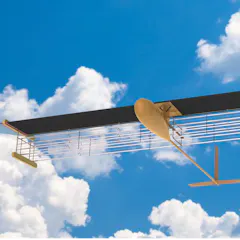
MIT researchers have built ion thrusters with no moving parts pave the way for silent drones.
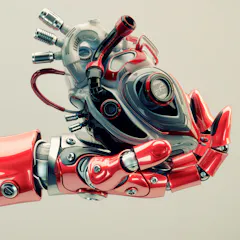
Health care relies on increasingly sophisticated devices for implanting into the body or monitoring it. Yet most med school graduates are not versed in engineering. That needs to change.
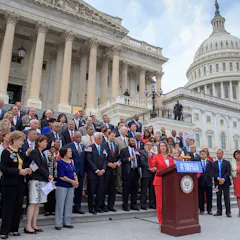
While a divided Congress will likely mean gridlock, there are two economic policies likely to see significant change: trade and infrastructure.
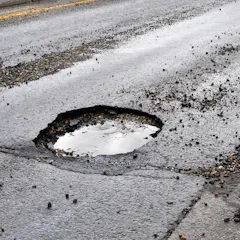
Bumps in the road are dangerous, expensive and difficult to fix.
Top contributors
-

Associate Professor, Civil Engineering, Monash University
-
Vice-President, Academic and Research, University of Prince Edward Island
-
Senior lecturer, North-West University
-
Professor of Psychology, University of Washington
-
Professor/Head of Aviation, CQUniversity Australia
-
Lecturer, Cape Peninsula University of Technology
-
Senior lecturer, University of Wollongong
-
Professor of Engineering Dynamics and Vibration, University of Cambridge
-
Dean of Engineering and Professor, McMaster University
-
Former Academic Research Fellow, Khalifa University
-
Associate Professor of Technology Leadership and Innovation, Purdue University
-
Associate Professor of Mechanical Engineering, Purdue University
-
Head of Engineering, Faculty of Creative Industries, Architecture and Engineering, Southampton Solent University
-
Lecturer in Structural Engineering, Loughborough University
-
Professor of English Language and Literature; University Research Chair & Founding Director, Critical Media Lab, University of Waterloo
