
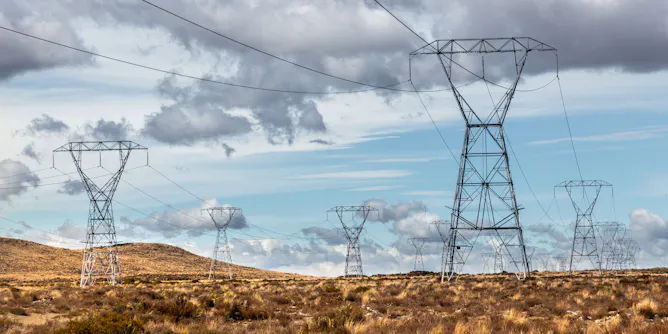
Splitting up NZ’s big gentailers promises more competition and lower power bills. But the economics of separating generation and retail are more complicated.
Articles on Energy market
Displaying 1 - 20 of 41 articles

Iranian tariffs in the Strait of Hormuz may change how oil is traded and priced, with implications for currencies, alliances and global economic power.

Deregulation promised competition but delivered middlemen instead.
The government’s energy package is unnecessarily preoccupied with fossil fuels and ignores important reform work already underway.

Households might win from major electricity sector reform, but there would be powerful and noisy losers. The sums involved will be large, and the politics difficult.
A power surge caused a massive nationwide power cut, but the root cause is still unclear.
Small modular reactors promise to make nuclear power cheaper and safer. But our new report shows they’re still a long way off.
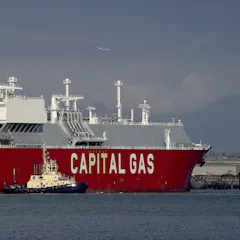
Capping the wholesale gas price is a poor attempt to decouple the domestic market from the volatile international market. The only sure way forward is a domestic reservation policy for the east coast.

A 4-year study of households has shown how the increasing focus on our homes as sites of work, rest and play can increase energy use despite soaring prices.

For the first time, Australia has moved to cap natural gas prices in a bid to stop energy price pain. Is the cap too high – or was it necessary to mollify the producers?

Energy bills are about to hurt. But what can the government actually do to ease the pain?
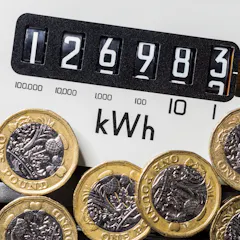
There never was a ‘maximum bill of £2,500’.

Truss heads off imminent crisis while storing up problems for the long term.

Coal plants are exiting the grid faster than expected. We’ll need to redouble efforts to add flexibility into our energy systems and build renewables and storage.

The energy crisis is hitting the east coast hard. But Western Australia is sailing through – because of government intervention in the market.
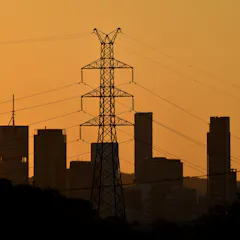
Australia’s energy market operator has suspended the National Electricity Market, due to a perfect storm of coal plants going offline and a spike in fossil fuel prices.

Eraring is the latest in a string of announcements for early coal plant closures. The fundamental reason is the brutal impact of renewables on coal’s profitability.

Here are four ways the current electricity system favours existing, higher emitting technologies. These must be overcome to rapidly cut Australia’s emissions.

The new commitments of state governments go some way to filling the void left by the lack of a national climate policy. The states should, and can, coordinate their efforts. Here’s how.

The assassination of the Iranian general could have lasting effects on energy markets. Which countries could benefit from it and which could be negatively affected?
Top contributors
-

Professor, Crawford School of Public Policy and Director, Centre for Climate and Energy Policy, Australian National University
-
Associate Professor, Griffith University
-
Professor of Law, Deakin University
-
Research Fellow in Energy Economics and Policy, University of Leeds
-
Associate Professor of Economics, Griffith University
-
Senior Lecturer in Marketing, University of Huddersfield
-
Lecturer, School of Economics, Finance and Property, Curtin University
-
Senior Lecturer in Human Geography, University of Sheffield
-
Dean, Distinguished Professor of Law, Professor of International Affairs, Professor of Geography, Penn State
-
Senior Research Fellow, Institute for Energy Systems, University of Edinburgh and Research Coordinator, UK Energy Research Centre, University of Edinburgh
-
Professor of Law, Penn State
-
Tutor in Public and EU Law, School of Law, University of Edinburgh
-
Professor of Resources and Environmental Policy, UCL
-
Professor of Geography and Fellow of the Durham Energy Institute, Durham University
-
Senior Research Fellow in Climate Change and Energy Policy, University of Leeds