
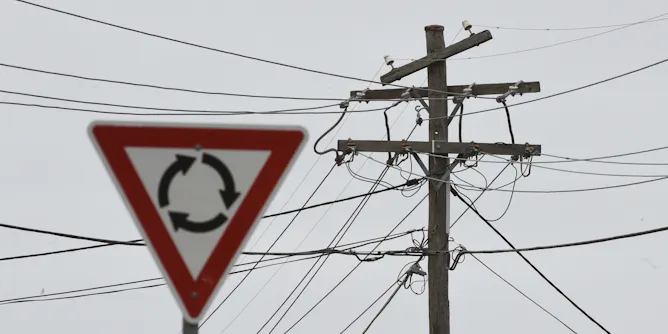
Australia’s energy policy has lost its way over the past couple of decades, which is unfortunate because the challenges – to move to a low-carbon economy without high prices – have never been tougher.
Articles on Electricity networks
Displaying 21 - 40 of 49 articles
Energy isolation would be more expensive and less secure.
There’s a wealth of climate policies to choose from this election – but what will they do electricity prices?
By 2030 renewable energy sources such as solar and wind will cost a similar amount to fossils fuels such as coal and gas, thanks to falling technology costs
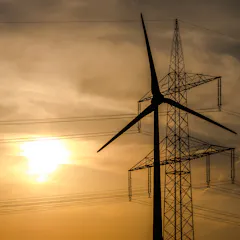
Energy storage is often considered the holy grail of the electricity sector. Great for households, it could be as important in the wider electricity network.
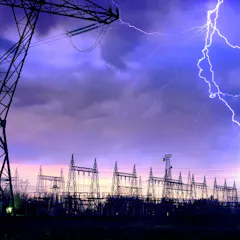
When Facebook goes down it’s an irritation. But as the world moves its data and processing to the cloud, the potential for major loss grows ever greater.
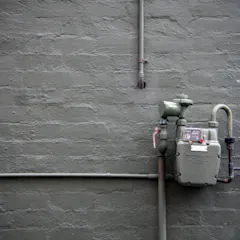
Heating your home using electricity is not just cheaper, it’s more efficient and can be considered renewable.
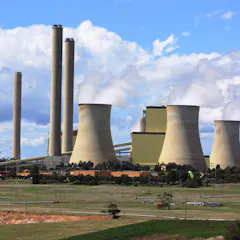
Australia’s new cap on emissions includes aspects of a “baseline and credit” emissions trading scheme. That’s cheaper for businesses, but means more regulation.
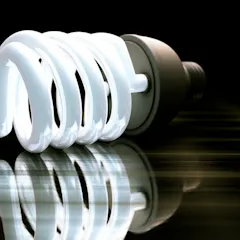
In June this year, forecasts revealed residential and business demand has risen for the first time in five years. The trend could be here to stay, according to a report released today from the Australia Institute.

The internet of things – including the equipment on the power grid – is increasing cybersecurity risks for all critical infrastructure.
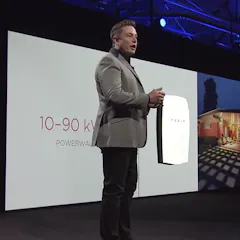
Not everyone will get the chance to cut their household electricity bills from solar powered batteries.
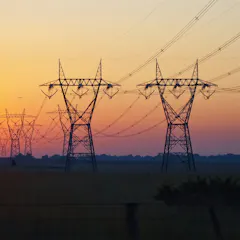
A senate interim report suggests the retrospective write-down of state-owned gold-plated electricity assets. Good luck with that.
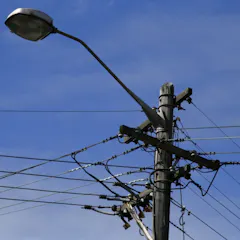
Consumers must play a role in reducing their electricity bills, the government says.
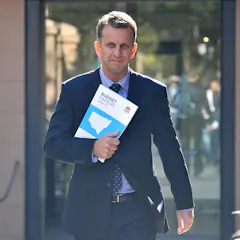
We found that without state-owned electricity revenues, the NSW Coalition government would have struggled to avoid recording deficits in every budget since its election in 2011.

Incentives for cutting peak power demand are cheaper than building ever more infrastructure and sending power bills ever higher. The industry has a chance to embrace this new approach - but will it?

A key plank of the Australian Government’s draft energy policy is to reform electricity pricing so that it more accurately reflects rises and falls in peak demand. New tariffs, such as time-of-use (TOU…
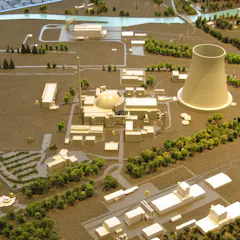
No sooner had foreign affairs minister Julie Bishop announced that Australia should take a fresh look at nuclear power than Prime Minister Tony Abbott responded that nuclear power would only be supported…
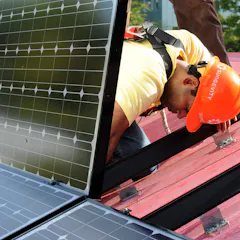
There is no shortage of shouting and dire warnings about the state of the climate and our need to phase out fossil fuels. But there is a more silent revolution happening too — in micropower. Small-scale…
The federal government has now achieved passage of its Direct Action plan through the Senate. Some wheeling and dealing with the cross-benches was required of course – but while the government may oppose…
The Energy Green Paper 2014 released this week by federal Industry Minister Ian Macfarlane provides more clear direction and coverage of critical policy issues than did its 2012 predecessor. However, while…
Top contributors
-

Senior Fellow in Energy and Climate Change, Grattan Institute
-
Senior Research Associate, Renewable Energy & Energy Systems Analyst, UNSW
-
Joint director, Collaboration on Energy and Environmental Markets, and Professor, School of Electrical Engineering and Telecommunications, UNSW
-
Research Director, Institute for Sustainable Futures, University of Technology Sydney
-
Honorary Associate Professor, Centre for Climate Economics and Policy, Australian National University
-
Chief economist, CSIRO energy, CSIRO
-
Professor, Emerging Technologies Research Lab, Monash University, Monash University
-
Research Fellow, Centre for Urban Research, RMIT University
-
Energy Advisor, formerly, The University of Melbourne
-
Senior Research Associate, The University of Melbourne
-
University of Southern Queensland
-
Senior Researcher, Oeko-Institut
-
UNSW
-
Professor of Resources and Environmental Policy, UCL
-
Emeritus Professor, Discipline of Accounting, University of Sydney