

Are we optimising too much?
Articles on Efficiency
Displaying 1 - 20 of 30 articles

Artificial intelligence systems have big environmental costs but are also finding ways to save energy and water, cut emissions and make businesses more efficient.

Ending production of the 1-cent coin will save the government money and could streamline big retailers’ operations. But it could also pinch small businesses and cash-reliant consumers.

While economic forces have streamlined many global dishes into uniform, predictable formats, pizza continues to thrive in all its messy and delicious variety.
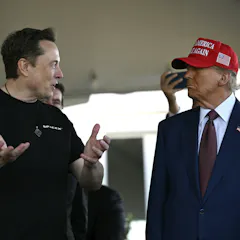
Elon Musk’s ruthless drive for efficiency has served him exceptionally well tech startups, but can the same approach work in government where the stakes are much higher?
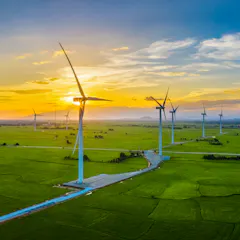
The Indonesian government is carrying out massive budget efficiency. At almost the same time, Vietnam is also doing the same thing. What is the difference between the two?

Past initiatives to entice public servants to take early retirement have done little to reduce the cost of government.
Some companies may be able to improve their efficiency in the short term, but aggressive surveillance can also backfire.
Sufficiency is a new approach to solving humanity’s consumption problems. It’s about using less, ensuring wellbeing for all humans, and staying within planetary boundaries.

How much “customer interaction uncertainty” does your business deal with? The answer should guide your thinking about AI.
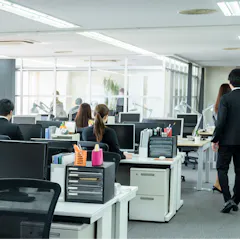
Integrating a rational tool into an irrational environment does not always produce the expected results.
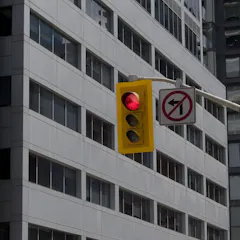
Left turns are dangerous and slow down traffic. One solution? Get rid of them. New research shows that limiting left turns at busy intersections would improve safety and reduce frustrating backups.
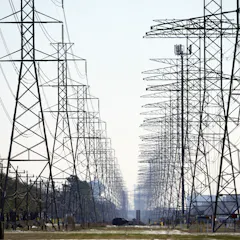
Disasters highlight the cost of society’s love of efficiency. Nature, in contrast, favors resilience. Being more like nature offers benefits for society, especially in the face of the climate crisis.

Netflix has added millions more subscribers as people practice social isolation to control the coronavirus. But service’s diverse menu of content is not an efficient business model.
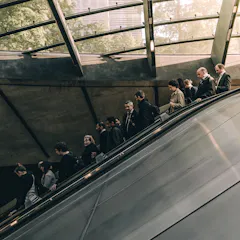
In many cities, convention holds that there’s a lane for walking and a lane for standing on the escalator. But human systems engineers suggest this isn’t the most efficient option for the system.

Low-income, less-educated parents with non-standard work schedules rely most on home child-care providers whose rules would be relaxed under proposed legislation.

Technology has made many aspects of daily life much easier. So why do we still feel so overwhelmed?

Could we really reduce the number of vehicles on our roads from 37m to 9m?

There’s an international push towards low-emissions housing. New research investigates what it’s like to actually live in low-energy houses.

Whether it’s our inboxes and calendars or how companies are structured, we’re obsessed with making things orderly. But research suggests it’s time to break free.
Top contributors
-

Chancellor's Fellow in Sustainable Design, University of Strathclyde
-
Honorary Senior Fellow in Health Service Research, University of Birmingham
-
Visiting Research Fellow, Intelligent Mobility, Manchester Metropolitan University
-
Emeritus Professor of Sociology, University of Nevada, Las Vegas
-
Lecturer, Adelaide University
-
Associate Professor of Economics, School of Business, University of Wollongong
-
Professor of Economics, Director of the Australian Institute for Business and Economics, The University of Queensland
-
Senior Lecturer and Co-Director, Electric Vehicle Centre of Excellence (EVCE), Cardiff University
-
Professor of Economics, University of Exeter
-
Professor, Department of Economics, The University of Melbourne
-
Associate Professor in Education & Technology, University of KwaZulu-Natal
-
Assistant Professor in Accounting, University of Nottingham
-
University of Huddersfield
-
Associate professor, Curtin University
-
Reader in Organisational Behaviour, University of Sussex Business School, University of Sussex