
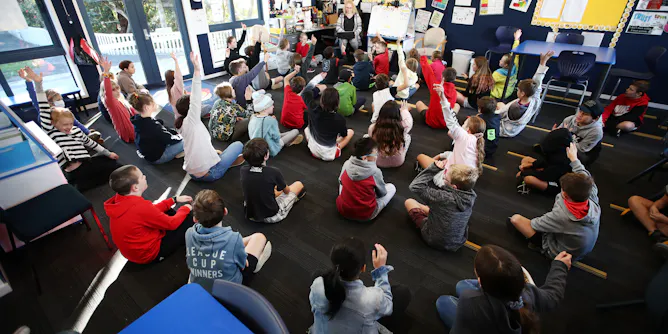
Taking away the duty of boards to give effect’ to te Tiriti o Waitangi undermines the expectation that schools should work for Maori as well as for anyone else.
Articles on Educational equity
Displaying all articles
Quebec research suggests some immigrant students may never make it from language-support placements to mainstream classes.
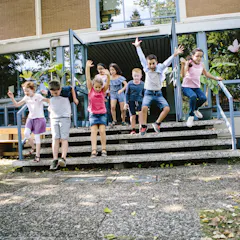
New Zealand’s health and education sectors are largely siloed and separate. But all the evidence points to collaboration within schools leading to better health and educational outcomes for children.

Grades don’t actually measure learning, and they can increase students’ stress and decrease their motivation. A college professor explains an alternative to grading students’ work.
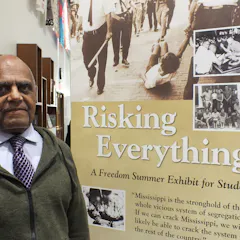
The Algebra Project – a long-standing initiative to teach algebra to Black students who might not otherwise take it – sprang from Bob Moses’ work as a civil rights activist, a historian recounts.

People living outside our big cities face many obstacles to going to university, but the innovations during lockdowns have opened a door to permanently improving their access and experience of study.

Children of parents with degrees are 60% more likely than ‘first in family’ students to want to go to university. The aspiration gap exists throughout school, but equity policies neglect its impacts.

Racial disparities in the tech sector begin well before college.

A strong identity as a scientist is crucial for girls to succeed in STEM fields such as computer science. Are educators recognizing and rewarding the right behaviors?

While providing access to digital technology is important, it won’t even the digital playing field. If teachers can embrace all students’ digital interests as opportunities for learning, it would help.

A former education minister recently suggested Australian governments fully fund private primary schools, like Canada does. But a Canadian educational researcher says this isn’t accurate.
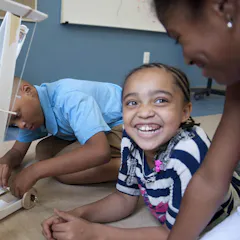
These new findings could help explain why Black students are more likely to be suspended, expelled or otherwise disciplined than other children.
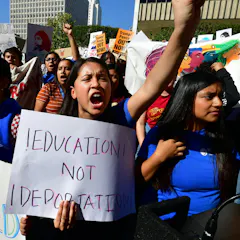
At least for now, hundreds of thousands of students can stay in school without facing new hardships.
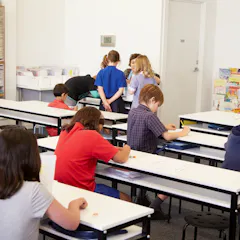
A scholar of intensive after-school ‘hyper education’ says it’s becoming a more common extracurricular activity for children of all ages.
Top contributors
-

Laureate Professor of Education, Director Teachers and Teaching Research Centre, University of Newcastle
-
Lecturer, Teachers and Teaching Research Centre, School of Education, University of Newcastle
-
Lecturer in Statistics, University of Newcastle
-
Research Faculty, Florida State University
-
Associate Professor of History, The Ohio State University
-
Director, Center of Excellence for Minority Women in STEM, Spelman College
-
Ph.D. Candidate of Psychology, North Carolina State University
-
Professor of Psychology, North Carolina State University
-
Professor of English, University of Richmond
-
Senior Lecturer (Nursing), School of Clinical Sciences, Auckland University of Technology
-
Sociologist and Visiting Scholar, Stanford University
-
Professor of Childhood Studies, George Mason University
-
Professor in the School of Education, Edith Cowan University
-
Postdoctoral Fellow at the Peabody College of Education and Human Development, Vanderbilt University
-
Professor of U.S. Immigration Studies, Amherst College