

The story of how money injections became the go-to policy for tackling economic crises.
Articles on Economic theories
Displaying 21 - 40 of 52 articles

Massive stimulus plans combined with rising production costs could lead to expectations that inflation will rise. And that alone could trigger an inflationary spiral not seen in 25 years.
Weeks, an Emeritus Professor of Economics at the School or Oriental and African Studies, had a long and distinguished career.

Financial scandals have damaged the integrity of both clubs. With the rewards for cheating so high, harsher punishments are needed.
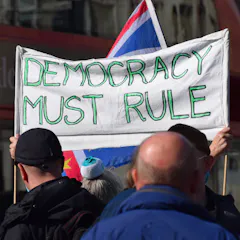
Unlike older visions of economic democracy which started with class or the collective, the starting point now should be the individual
To understand an economic reality where growth is increasingly more qualitative than quantitative and where environmental constraints need a careful understanding, economics needs a major overhaul.

Investors are increasingly concerned about climate change, but for the markets to deploy their full capacities, the dominant principles that guide them need to be revised.

The humble zipper has some profound things to tell us about innovation, competitive advantage and international trade.

For economics to play a more helpful, critical role, it must abandon blind faith in the free market and embrace the social, historical, and environmental context in which economics actually happens.

Nothing has changed since the 2008 financial crisis. Orthodox theory continues to structure the entire financial industry, yet there is an urgent need to study the social and political nature of markets.
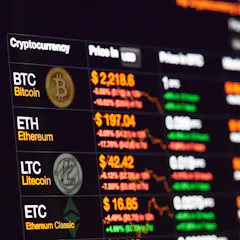
It’s not a scam. It also won’t make you fabulously wealthy. Initiative Q wants a stable private currency for payments processing rather than a vehicle for speculation.

Australia’s unemployment rate may have to fall much more before we see any wages growth.

The economic theory of comparative cost advantage is more akin to natural law – it can’t be wished away. And during the ongoing trade war ignited by Donald Trump, it has never been more relevant.
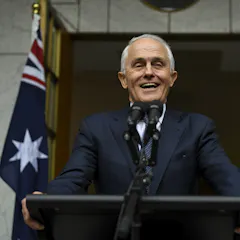
Our revolving door prime ministers are the result of the politicians being too responsive to what we think, and there being too few of them.

A new study claiming to debunk this core part of behavioural economics suggests we really need a new and improved model for loss aversion.

News that Australian CEO pay has soared to a 17-year high at a time when ordinary workers’ wages are flatlining is ultimately bad news for economic growth and prosperity.
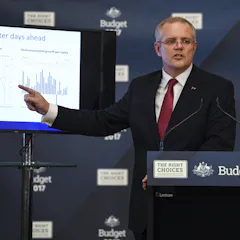
The budget was extraordinary in many ways. It is an abandonment of restraint on taxes by a liberal government. It is nakedly populist and it also acknowledges that government debt can be productive.

If we continue to base our views of the charity sector on incorrect assumptions and perceptions we run the risk of doing considerable damage to a national asset.

Economics doesn’t have all the answers – at least not for those looking to escape ideology.
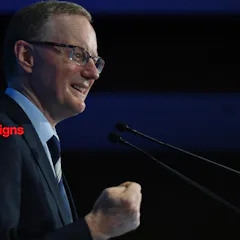
It is a puzzle as to why businesses are reasonably confident but not willing to invest.
Top contributors
-

Scientia Professor of Economics, UNSW
-
The University of Queensland
-
Senior Lecturer in Economics, Lancaster University Management School, Lancaster University
-
Professeur d’économie, Mines Paris - PSL
-
Professor of Finance at l’ESILV et à l'EMLV, member of De Vinci Research Center, Pôle Léonard de Vinci
-
Associate Professor, Economics, MacEwan University
-
Professor of Finance, University of York
-
Professor, School of Accounting and Finance, UWA Business School, The University of Western Australia
-
Senior Professor, People, Organizations and Society, GEM
-
Maître de conférences, Conservatoire national des arts et métiers (CNAM)
-
Chair & Professor of International Business, University of Manchester
-
Professor of Political Economy, The University of Queensland
-
Associate Professor, School of Economics, University of Sydney
-
Professor, Université de Lorraine
-
Senior Lecturer in Economics, The Open University