
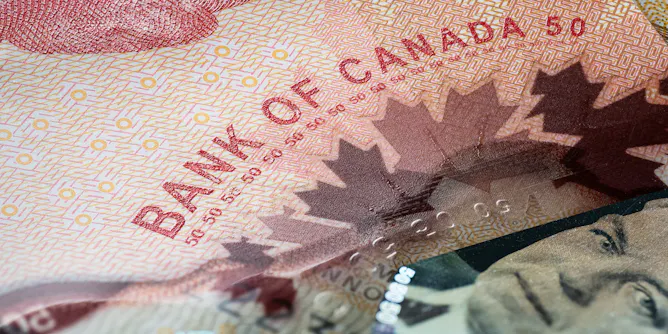
A heterodox school of economic thought known as modern monetary theory has significant implications for how Canadians understand public debt and deficit spending.
Articles on modern monetary theory
Displaying 1 - 20 of 22 articles
Canada faces interconnected challenges of climate instability and social inequality, and our current economic approach may be part of the problem.

In the first year of the pandemic, Australians were given a glimpse of a truth so unnerving that economists and politicians normally keep it to themselves.
Whether a budget should be in surplus or deficit depends on the circumstances of the time. Gillard didn’t recognise it, Abbott didn’t recognise it. At last the message is getting through.

The movie is more than a metaphor for climate change. It is a metaphor for where 40 years of neoliberal economic policies have left us.

Governments like ours choose to borrow, they don’t have to.

Massive stimulus plans combined with rising production costs could lead to expectations that inflation will rise. And that alone could trigger an inflationary spiral not seen in 25 years.

From money creation to COVID to uncertainty to the end of rapid economic growth, Peter Martin’s summer reading list is unsettling and uplifting.

The Commonwealth can never become insolvent. It ought to help out the states.
Chifley, Menzies, Holt, Gorton, McMahon, Whitlam and Fraser targeted budget deficits.

While necessary during the crisis, government borrowing isn’t costless. Longer term, it might depress living standards.
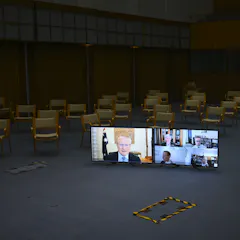
The Reserve Bank Australia has exhausted the limits of monetary policy, There’s no magic pudding, says governor Philip Lowe.

Congress is spending trillions of dollars trying to rescue the US economy and support workers and businesses. Can America afford it? ‘No sweat,’ according to modern monetary theory.

Creating lots of new money is supposed to produce runaway inflation. The longer that it doesn’t happen, the more this branch of economics appears to have a point.

Modern Monetary Theory is suddenly popular because it implies governments can spend as much as they need to. But that spending comes with risks.

We could welcome the news that prices have been rising much more slowly since the coronavirus pandemic – or we could get nervous.

Modern Monetary Theory allows governments more freedom to run deficits, freedom the Australian government might need.

History suggests we can run sizable budget deficits while shrinking the budget debt burden. Mid last century our leaders weren’t afraid to say so.

Critics complain that government debt saddles future generations with a financial burden. The critics are wrong.

There are limits on how much governments can spend without earning, although increasingly politicians are behaving as if there are not.
Top contributors
-

Associate Professor, Torrens University Australia
-
Scientia Professor of Economics, UNSW
-
Visiting Fellow, Crawford School of Public Policy, Australian National University
-
Senior Lecturer in Economics, The Open University
-
Economic Researcher, York University, Canada
-
Part-Time Professor of Economics, The New School
-
Emeritus Professor of Economics (Griffith University) and Teaching Associate (University of Queensland), Griffith University
-
Professeur d'économie, ESSEC
-
Senior Teaching Fellow in Economics, Lancaster University
-
Professor of Economics, Griffith University
-
Honorary Fellow, School of Social and Political Sciences, The University of Melbourne
-
Lecturer and postdoctoral researcher in Ecological Economics and Climate Policy, Department of Geography, Planning and Environment, Concordia University
-
Associate Professor of Economics, School of Public Policy and Urban Studies Program, Simon Fraser University
-
Professeur d'économie, ESSEC
-
Graduate Researcher Teaching Fellow, Deakin University