
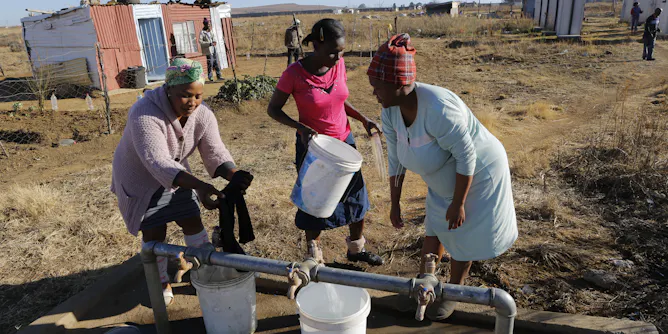
The latest World Bank report on South Africa addresses solutions to the country’s economic challenges.
Articles on Economic growth
Displaying 221 - 240 of 390 articles

The positive energy that’s greeted the new South African President, Cyril Ramaphosa, will turn to protest if economic challenges are not addressed quickly.

Politicians and economists call for emissions cuts while also embracing free trade – they can’t have it both ways.

To reap the benefits of strong business investment without a costly tax giveaway, Australia must continue to play to its strengths.

The Reserve Bank is clinging to sunny GDP forecasts, but stubbornly low inflation and low wage growth mean even these look weak.

Trapped in low growth trajectory, South Africa needs to boost small business development.

South Africa needs a robust economic policy agenda to make it more open, productive and inclusive.

Earth has limited resources, so we can’t keep using them up. We need to look post-growth.

South Africa’s idea of radical economic transformation is missing a critical element.

While many market observers blame the growing threat of inflation for the stock market crash, the real culprit may be concerns that the economy is about to slow.
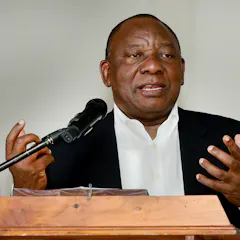
President Jacob Zuma shouldn’t be allowed to detract from the momentum that Cyril Ramaphosa, the new president of the ruling ANC, has started to build.

The lost incentives to give are likely to make a bigger difference than the small uptick in economic growth expected from the new law.

The billionaires, business leaders and other elites who gathered in Davos praised the president’s policies, yet research on the politics of economic growth suggests it’s too soon to celebrate.
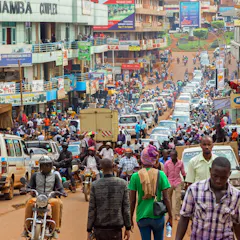
Metropolitan areas are key to economic prosperity of countries. But this is affected when the population grows too fast like in Uganda’s Kampala, where growth has outpaced infrastructure development.
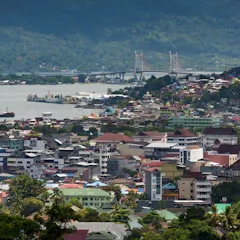
Comparing real Maluku and synthetic Maluku (a Maluku without prolonged conflicts) shows that Maluku could have 60.3% more economic growth had it not experienced conflicts.
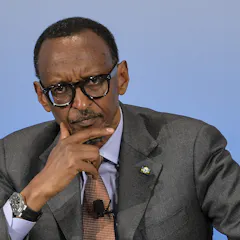
The Rwandan model can’t be replicated easily given that it depends heavily on political dominance and tight, centralised control of patronage networks.

Calestous Juma believed that Africa needed an integrated science, technology and innovation framework. The continent can make this happen.
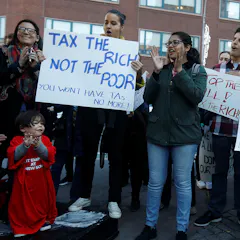
Universities play a vital role in promoting economic growth, something the writers of the Republican tax plan have apparently forgotten.
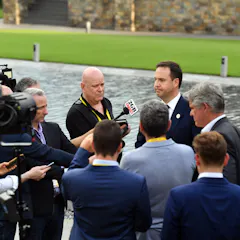
Many provisions in the Trans-Pacific Partnership have been suspended after the United States pulled out. But there’s still much to debate about the regional free trade agreement.

The problem with Africa’s model of industrial growth is that it privileges the formal at the expense of the informal and big corporations at the expense of small businesses.
Top contributors
-

Visiting Fellow, Crawford School of Public Policy, Australian National University
-
Scientia Professor of Economics, UNSW
-
Dean of Business School, University of Southern Queensland
-
Honorary Research Fellow, City Political Economy Research Centre, City St George's, University of London
-
Senior Lecturer in Economics, The Open University
-
Professor of Economics & Business, Allegheny College
-
Research associate at African Centre for Cities, University of Cape Town
-
Senior lecturer, Canberra School of Government, University of Canberra
-
Senior Research Fellow, World Institute for Development Economics Research (UNU-WIDER), United Nations University
-
Principal Research Fellow, Melbourne Institute of Applied Economic and Social Research, and Professor of Economics, Department of Economics, The University of Melbourne
-
Professor of Finance, University of Liverpool
-
Professor of Applied Economics, Massachusetts Institute of Technology (MIT)
-
Professor of Business Economics, University of Birmingham
-
Professor, Griffith Law School, Griffith University
-
Academic Director, School for International Training, The University of Melbourne