
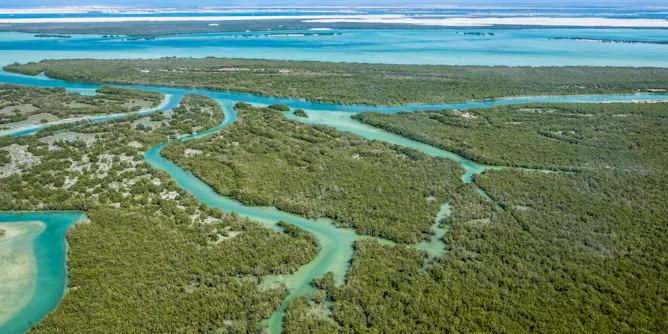
Mangrove forests grow in the tidal lagoons of tropical coastlines and they could actually benefit from climate change. Here’s what that means for us.
Articles on Ecology
Displaying 361 - 380 of 538 articles

Sharks eating seagrass? Sounds fishy, but the reality is that animals don’t conform to the strict categories we try to place on their diets.
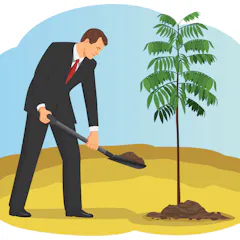
Planting trees is a popular way for companies to clean up their image. Unfortunately, it may cause more problems than it solves.
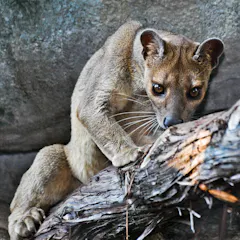
The fossa, Madagascar’s largest predator, is a cat-like carnivore that eats everything from insects to lemurs. Because they are rare and elusive, scientists know very little about them, including how many there are.
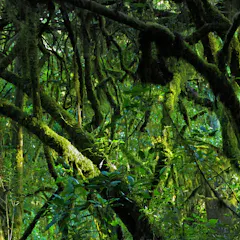
Rainforests may have played far more of a role in shaping human evolution than previously thought.

Huge fires roared through Yellowstone National Park in the summer of 1988, scorching one-third of the park. Since then the park has been a valuable lab for studying how forests recover from fires.

The $444 million awarded to the Great Barrier Reef Foundation has been criticised as a politically calculated move. But governments have been asking what the reef can do for them ever since colonial times.

Was Darwin inspired by the tropical wildlife of his travels to discover natural selection? Actually, pigeons, worms and barnacles were far more prominent in his thinking.
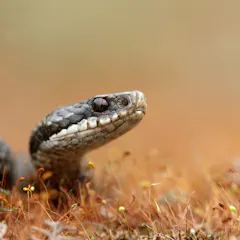
It’s a bumper year for lizards, a mixed bag for butterflies and a dismal time for frogs and toads …
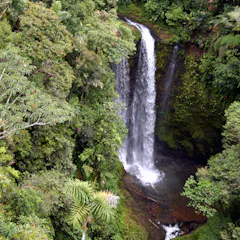
What drives the emergence and disappearance of species? By modeling the fundamental processes of evolution and ecology on geographical scales, new research spotlights topography and climatic shifts.

New findings from the Chagos Islands are a perfect parable for the Anthropocene.
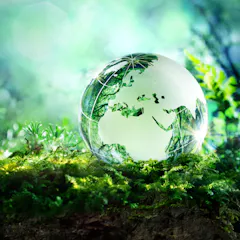
We have long wondered why Earth has stayed habitable enough for life to evolve over billions of years.

Ken Starkey defends the importance of business schools, while Martin Parker says ‘bring in the bulldozers’.
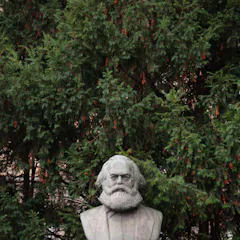
Marx believed that exploitation of workers and of nature went hand-in-hand.
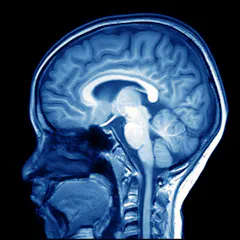
The large human brain has been thought to result from social demands. But new research challenges this idea.
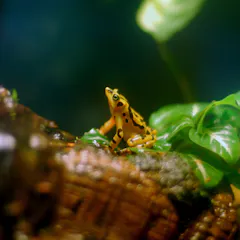
Chytrid fungus has caused a global “amphibian apocalypse,” killing frogs worldwide. Now some appear to be evolving resistance – but a closely related fungus threatens newts and salamanders.
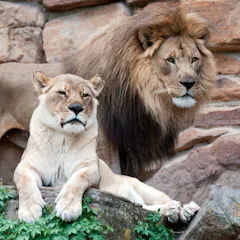
People used to think that boy lions had big shaggy manes to protect their necks from being bitten or scratched during fights. But scientists soon realised this idea didn’t make much sense.

Ecology is in the midst of a technological revolution. From tiny sensors that can be fitted to animals, to swarms of remotely-piloted drones, researchers have a host of new ways to study the natural world.
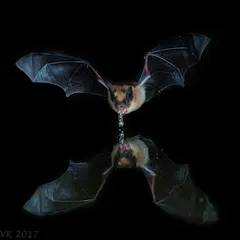
Scientists often use animals and plants as indicators to assess whether ecosystems are polluted. Tracking bats, which cover wide areas and need clean water, could become a way to find potable water.

Politicians and economists call for emissions cuts while also embracing free trade – they can’t have it both ways.
Top contributors
-

Matthew Flinders Professor of Global Ecology and Node Leader in the ARC Centre of Excellence for Indigenous and Environmental Histories and Futures, Flinders University
-
Professor of Conservation Biology, School of Life and Environmental Sciences, University of Sydney
-
Associate Professor in Entomology, University of Sydney
-
Professor in Wildlife Ecology and Conservation, School of Life & Environmental Sciences, Deakin University
-
Lecturer in the School of Applied Sciences, Edinburgh Napier University
-
Professor in Ecology, Charles Sturt University
-
Senior Research Scientist of Ecology and Evolutionary Biology, University of Connecticut
-
Associate Professor, Ecology, Northumbria University, Newcastle
-
Professor of Biology, Boston University
-
Associate Professor of Wildlife Ecology, University of Florida
-
Assistant Professor of Ecology and Evolutionary Biology, University of Connecticut
-
Professor of Sustainability, Azim Premji University
-
Emeritus Professor of Ecology, University of Salford
-
Professor of Pyrogeography and Fire Science, University of Tasmania
-
Postdoctoral Researcher in Mycology, West Virginia University