
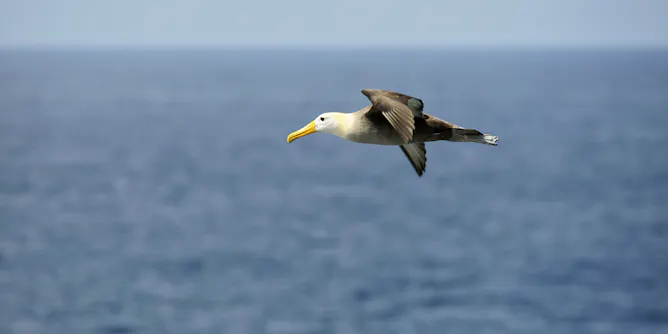
Grief is an understandable response to witnessing harm to places and species that matter to us.
Articles on Eco-anxiety
Displaying 1 - 20 of 31 articles
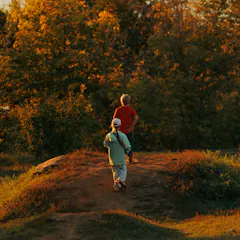
Even quite young children are watching, thinking and feeling things about the future of the environment. Those feelings deserve to be taken seriously.
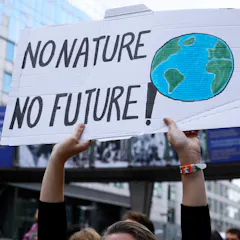
New research questions the “eco-anxiety” label and whether it really encompasses the complexity of the emotional, mental or physical distress young people feel over the planet’s woes.
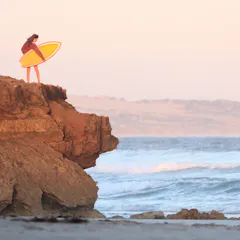
South Australia’s algal bloom is stopping people from swimming, surfing and fishing in their usual spots – and the impact on mental health can be profound.
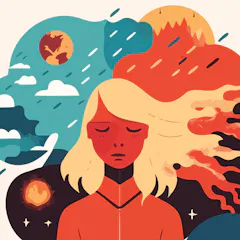
Climate anxiety is not yet officially recognised as a mental disorder, but it’s a natural fear response.
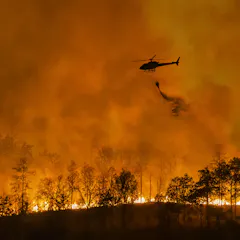
Climate change is not only taking a toll on the planet, but our mental health. One of the world’s most public-facing climate scientists tells us how she deals with its intimate knowledge.
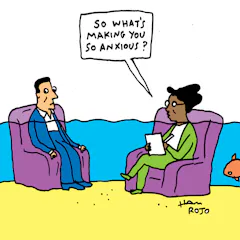
Online searches for the terms “eco-anxiety” and “climate anxiety” have risen dramatically in the last five years. New research explores what this means and how it might help catalyse action.
Finding ways to support climate solutions can help you bolster against debilitating and paralysing climate anxiety.

At this moment of eco-anxiety, First Nations spiritualities, with their emphasis on balance and responsibility, may help us better live in harmony with all things.

It’s often challenging to live up to your new year’s resolutions – but becoming greener is surprisingly easy.
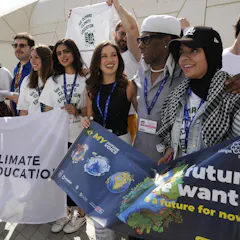
Embracing hope in the good, alongside recognizing the bad, can reduce eco-anxiety, improve mental health and may just be the key to driving strong and meaningful climate action.

Activists with autism, bipolar disorder and other conditions spoke about finding purpose in environmental activism.
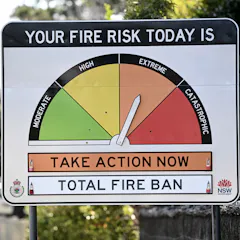
We’ve had an early start to the bushfire season and there’s more to come. No wonder spring isn’t always a celebration.
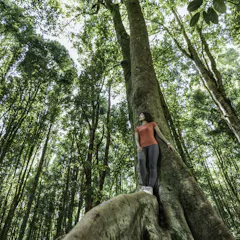
A therapist shares advice for harnessing your stress over climate change and other environmental harms and putting it to work.

Scientists need safe spaces to understand and process “climate emotions”. Group therapy helps people find the strength and resilience to continue their important work, without harming their health.
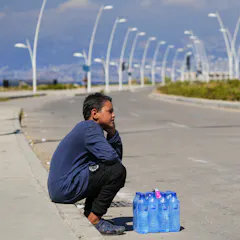
Climate anxiety is real and must be considered as a core component of any climate mitigation or adaptation and resilience strategy.
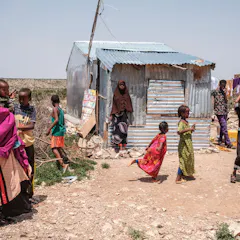
Exploring the potential intersections between climate change and violence against children is crucial.

Getting involved in collaborative projects can help students feel they can make a difference.

You probably already use AI in your life - take time to think about how these tools help you.

Tips for coping with eco-anxiety, from a psychologist.
Top contributors
-

Lead Policy Fellow for Mental Health, Imperial College London
-
Lecturer, University of Canberra
-
Conjoint NHMRC Early Career Fellow, The University of Queensland
-
Lecturer, Department of Social & Policy Sciences and PhD Candidate in Education
-
PhD Candidate, Fenner School of Environment and Society, Australian National University, Australian National University
-
Senior Research Fellow, Africa Centre for Evidence and Stockholm Environment Institute, University of Johannesburg
-
Research Associate, Environmental Sustainability Research Centre, Brock University
-
Senior Researcher in Behavioural Science and Psychology, Maastricht Economic and Social Research Institute on Innovation and Technology (UNU-MERIT), United Nations University
-
Independent Researcher, Political Ecologist and Ecotherapist, Queen's University Belfast
-
Research Fellow in Social Psychology, UNSW
-
Professor of Child and Youth Psychiatry
-
Doctor of Environmental Science, University of Southampton
-
Associate Professor in English Language and Linguistics, York St John University
-
Professor in Education, Gender and International Development, UCL
-
Professor, Sustainable Food Systems, Dalhousie University