
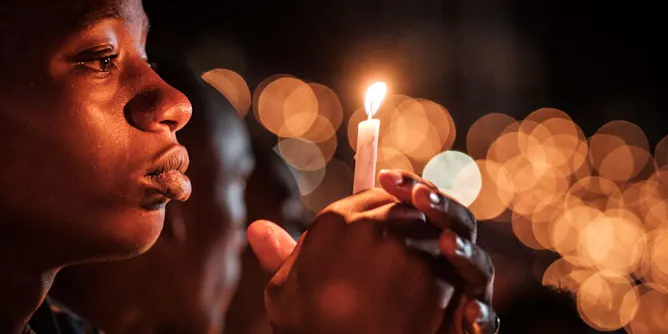
Young people have little desire to bring up their parents’ divisions, but older Rwandans remain fearful of a resurgence of tensions.
Articles on Eastern DRC
Displaying 21 - 40 of 45 articles
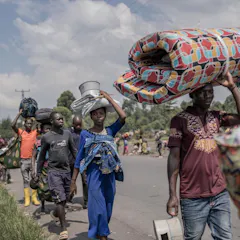
Regional countries are embroiled in a geopolitical struggle over influence and survival.
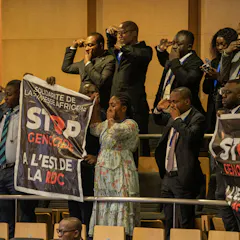
Protests in Kinshasa are an indictment of the lack of attention to the Congolese crisis.
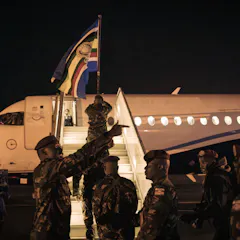
Chances of longer term peace are small because of the DRC’s assumption that it can achieve peace through sheer military force.

Regional rivalries have functioned as oxygen, allowing the rebel group to survive and grow.
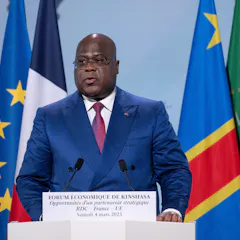
Plenty remains to be done to improve the lives of Congolese citizens.
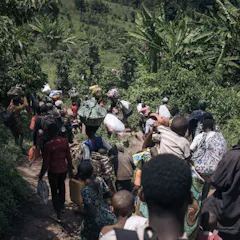
The international effort to address three decades of violence in eastern DRC has drawn in the UN, east African troops and now a southern African force.
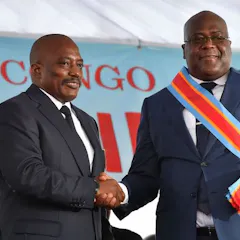
Laurent Kabila and his son Joseph were the Democratic Republic of Congo’s third and fourth presidents.

Central to the DRC’s politics is a broken relationship between the seat of government in Kinshasa and underrepresented groups in the eastern region.
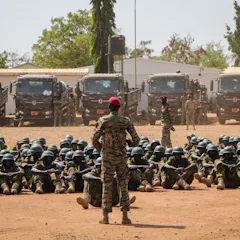
The causes of violence in the DRC are complex. Narrowing them down to the single lens of ethnicity can be misleading.

A comprehensive strategy does not seem to be an immediate priority for Congolese authorities with an eye on elections.
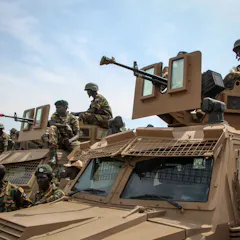
The region’s forces are seen as important in addressing the long-running conflict in the DRC – but their involvement is complicated.
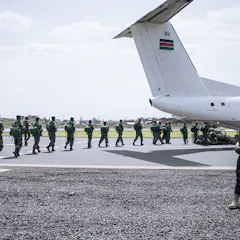
Insecurity, especially in the DRC’s South Kivu, is considered a serious threat by Burundi’s army.
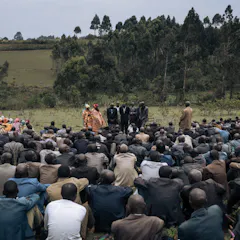
The Banyamulenge have been viewed as strangers in their own country – the violence targeting them revolves around this misconception.
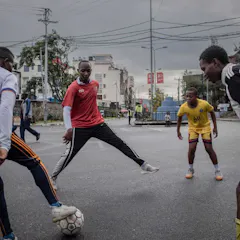
Football provides a way for unpopular elites to build political capital – but also creates space for citizens to voice dissent.
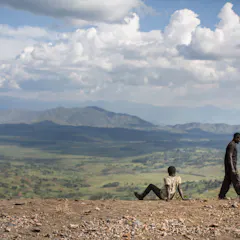
Destructive mining in Congo’s protected areas is rampant because it generates money for citizens, officials and armed groups.
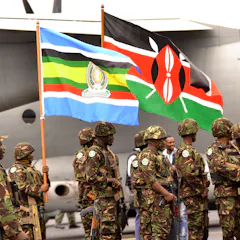
There are advantages to a regional force overseen by the East African Community – particularly as the bloc is leading new political talks.
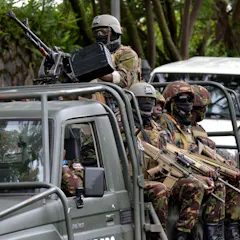
Consolidating peace efforts across the vast territory has proved difficult for close to three decades. Scholars explain why.
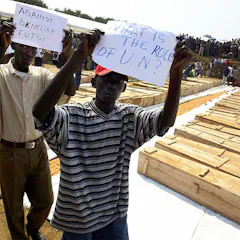
Violence in the Democratic Republic of Congo is used to win a place in government, not to overthrow it. And it keeps working.
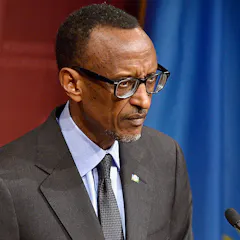
The US has become one of Rwanda’s staunchest defenders.
Top contributors
-

Postdoctoral Research Associate, King's College London
-
Visiting Researcher, University of Leeds
-
Researcher and lecturer, City University of New York
-
Lecturer in Political Science, Binghamton University, State University of New York
-
Research Affiliate, University of Pretoria
-
Professor in International Development, University of Antwerp
-
Associate Professor International Law, Roskilde University
-
Professor of International Relations, Norwegian University of Life Sciences
-
Research Director of the Insecure Livelihoods Project, Ghent University
-
Senior researcher, Danish Institute for International Studies
-
Adjunct assistant professor, Roskilde University
-
Assistant professor, Utrecht University
-
Assistant Professor, School for International Studies, Simon Fraser University
-
Emeritus Professor of Law and Politics Institute of Development Policy (IOB), University of Antwerp
-
Postdoctoral research fellow, University of Antwerp