

A new report shows Canada’s $10-a-day child care has generated real returns, but unlocking more benefits depends partly on bolstering the child-care workforce.
Articles on Early childhood educators
Displaying 1 - 20 of 23 articles

Parents and educators sometimes avoid having conversations about grief with children because they don’t know what to say. Here are some tips for how to approach it.

While most services meet national standards, there have been reports of centres operating with unqualified staff, abusive practices and substandard food.

Ontario must seize the promise of Canada-wide early learning and child-care funding before it becomes another missed opportunity.

The Early Childhood Education Report offers detailed profiles capturing how each province and territory are doing with implementing Canada-wide early learning and child care.

Our review explored what leads to early childhood educator burnout in 13 countries, including Australia.

A Canadian peer support program for early childhood educators is helping staff feel valued and avoid burnout.

The system has several elements and many problems. Making it fit for purpose will take a lot of work and even more resources than those that have just been announced.

Research confirms that a focus on restoring the well-being of educators is vital to deliver the gains promised by huge new investments in early childhood learning and care.

The two biggest states have jointly committed to a huge investment in early childhood education and learning over the next decade. But delivering high-quality universal preschool access won’t be easy.

This week’s announcements will add to the need to train more early childhood workers and to ensure they are more diverse in a way that better reflects our multicultural society.
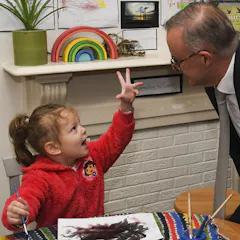
Cutting the cost of childcare for families won’t help them if there are no places available at local childcare centres or people to staff them.

Kindergarten educators who taught from home during COVID-19 and who were primarily responsible for their own children self-reported poorer mental health than those without these responsibilities.
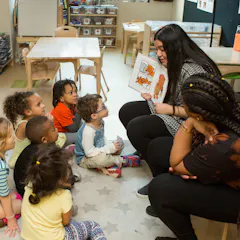
Staff recruitment and retention challenges aren’t seen in public child-care centres, where educators are paid substantially more, are unionized and have professional development opportunities.

The pandemic highlighted Australia’s reliance on early childhood educators, while adding to their existing stresses. A study of how educators fared identifies three key factors in their well-being.
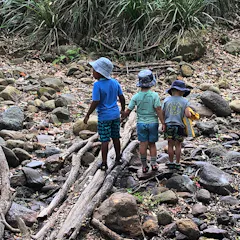
New research demonstrates the many aspects of nature play that make it a great way for young children to gain STEM knowledge.

They’re among the lowest-paid in the country but are working many hours unpaid to meet the demands of accreditation. With 73% wanting to leave the profession in the next three years, change is needed.

Beyond addressing key staffing issues, developing high-quality early childhood programs must involve using school boards to expand access and grow spaces while offering more affordable fees.

Families play a vital role in the process of skill formation, which is just as important as the role of schools.

Choosing child care when returning to paid work can be hard and to the uninitiated the terms can be confusing. One alternative to long day care in a larger centre is known as family day care.
Top contributors
-

Adjunct Professor, Department of Applied Psychology and Human Development at Ontario Institute for the Study of Education (OISE) and Executive Director at the Atkinson Centre, University of Toronto
-
Associate Professor in the Early Childhood Education, University of New England
-
Fellow in Early Childhood Policy, Atkinson Centre, Ontario Institute for Studies in Education, University of Toronto
-
Associate Professor, Faculty of Education, Southern Cross University
-
Honorary Senior Fellow, The University of Melbourne
-
Professor and Director, Mitchell Institute, Victoria University
-
Policy Fellow, Mitchell Institute, Victoria University
-
Professor, University of Canberra
-
Senior Research Fellow, REEaCh (Research in Effective Education in Early Childhood) Hub, The University of Melbourne
-
Amelia Church is a Friend of The Conversation.
Senior Lecturer, Melbourne Graduate School of Education, The University of Melbourne
-
Professor & Director of REEaCh (Research in Effective Education in Early Childhood) Hub, The University of Melbourne
-
Professor, Department of Pediatrics, University of British Columbia
-
Professor, Education, Environmental Sustainability and Childhood Studies, Swinburne University of Technology
-
Research Fellow in Statistics and Developmental Psychology, The University of Queensland
-
Research Associate, Offord Centre for Child Studies, McMaster University