
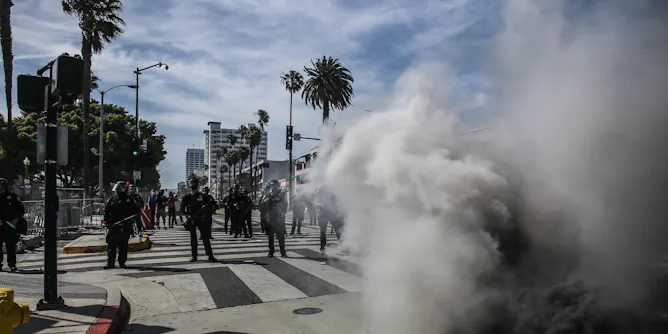
Emily St John Mandel’s new novel presents divergent visions of our world and future – particularly of the US as a state at a crossroads.
Articles on Dystopian literature
Displaying all articles
Visions of environmental disaster are shaping world literature.
Three recent developments in AI – in video games, wearable technology and education – suggest that building something like Stephenson’s Young Lady’s Illustrated Primer is possible.
The dread that AI evokes seems a distraction from the more disquieting scrutiny of humanity’s own dark nature.

Supernatural thriller or character-driven thought experiment? Chris Flynn’s Orpheus Nine imagines the personal toll of a tipping point for our destabilised world.
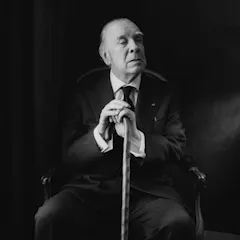
Borges imagined an endless library that contained every possible permutation of letters. The truth is out there, but it’s embedded among hordes of lies and gibberish.
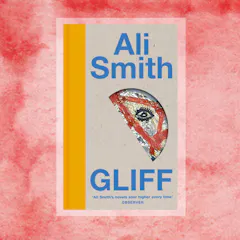
Gliff is set in a dystopian Britain – a kind of fairy tale of the future in which two children navigate a world which seems increasingly baffling and hostile.
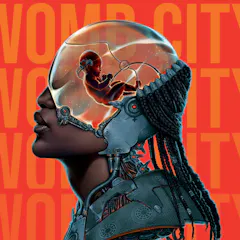
Tlotlo Tsamaase’s first novel adds to an exciting and growing body of African science fiction.
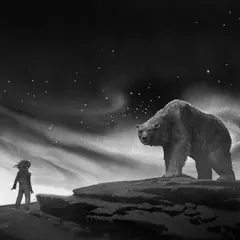
Climate stories that focus on solutions are more likely to inspire positive environmental action.
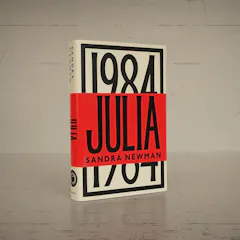
Julia offers contemporary readers new ways of thinking about Orwell’s novel.

Three debut Australian novels explore diverse territory: the recognisable real world of parental estrangement, and a dystopian near-future where it never stops raining.
Noongar author Claire Coleman’s new novel forces us to question what we value and how we live by combining dystopia and utopia, in a near-future very like our own.

‘Dark Souls’ draws on the literary theme of the ‘last man’ that emerged from the work of French author Jean-Baptiste Cousin de Grainville and those inspired by him.
Top contributors
-

Professor of Sustainable Practice, University of Southampton
-
Professor of Modern History, University of Bristol
-
PhD Candidate of English, Dalhousie University
-
Associate professor, University of Johannesburg
-
Emeritus Professor in English and Writing, University of Sydney
-
Director of AustLit, Associate Professor in Digital Cultural Heritage, The University of Queensland
-
PhD Creative Writing, School of Humanities, Adelaide University
-
Professor of English Literature, Anglia Ruskin University
-
Roger J. Kreuz is a Friend of The Conversation.
Associate Dean and Feinstone Interdisciplinary Research Professor, University of Memphis
-
Assistant Researcher, School of Languages and Culture, The University of Queensland
-
Professor of English and Literary Arts, University of Denver
-
Faculty Associate, PhD Candidate in Human and Social Dimensions of Science and Technology, Arizona State University
-
Professor of Geography, Newcastle University
-
Senior Lecturer in Creative Practice and Public Humanities, The University of Melbourne