

Disasters weaken support systems that take years to rebuild, at the same time people caught in them are under extraordinary financial and psychological stress.
Articles on drug treatment
Displaying 1 - 20 of 28 articles

Researchers hope that transparency around where the money is going will help counties use the funds more effectively.
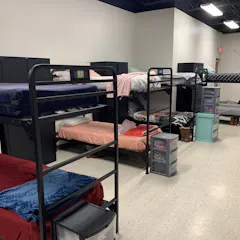
A Philadelphia neighborhood is pushing back against the city’s plan to expand an existing shelter to serve people in active addiction.

LGBTQ+ people face barriers to accessing substance use services, but research shows there are ways to make them more inclusive and supportive.
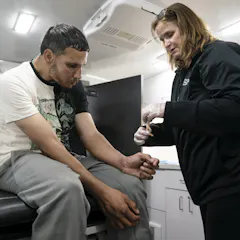
A group of academics look at the global evidence to examine the potential impact of supervised injection sites in Philadelphia and the US.

Instead of forcing people into substance use treatment, provinces should work with municipalities and health boards to expand life-saving safe use sites and tackle the housing crisis.

Decriminalization helps recharacterize drug addiction as a chronic health condition instead of a criminal activity, reduces the stigma associated with drug use and improves treatment options.

Here’s what the Australian Federal Police’s new campaign gets wrong.

It’s hard to get an accurate picture of how the pandemic has influenced drug use, but initial data suggests treatment services are reporting increased demand.

For many who know someone who has lost a loved one, it can be hard to know what to say or how to respond. For those who have lost a loved one, the silence can be deafening. Some things to keep in mind.

Right now, you’re living in a kind of industrial revolution – where biotechnology, information technology, manufacturing and automation all come together to form synthetic biology.

Many more women probably use drugs than official figures suggest. And they certainly face more harms.

Shalom House calls itself the ‘strictest drug rehabilitation centre in the country’ but evidence of its so-called success is anecdotal at best.

Drug use is down – but that’s a long way from the whole story.

Trials into the effectiveness of drugs and treatments struggle to recruit enough participants, yet we rely on their results anyway.

Around 2.3% of Aboriginal and Torres Strait Islander Australians 15 years and over report using speed or amphetamine in the past year. This is similar to the general population.

I conducted interviews with 26 young women in alcohol and drug treatment services in Victoria. More than half of them disclosed a history of sexual abuse and 20 spoke about cutting themselves.
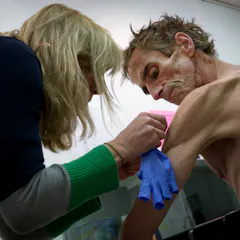
Hoping to avoid the pitfalls and tropes of drug genre photography, documentary photographer Aaron Goodman spent a year following three addicts enrolled in a heroin-assisted treatment program.
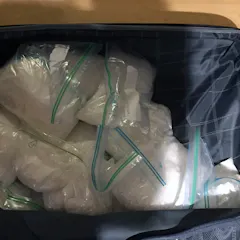
The ice taskforce’s report sends a clear message about the importance of focusing on drug use as a health issue. This signals an important shift in thinking.

Stigma toward heroin use might prevent a lot of people from using the drug, but these attitudes don’t help people who are dependent.
Top contributors
-

Adjunct Professor at the National Drug Research Institute (Melbourne based), Curtin University
-
Honorary Fellow, Department of Health Sciences, University of York
-
Associate Professor of Sociology, Bentley University
-
MRC Methodology Research Fellow, University of Aberdeen
-
Senior Lecturer of Addiction, Edith Cowan University
-
Director, Synthetic Biology Future Science Platform, CSIRO
-
Associate Professor of Population Health, New York University
-
Professor of Virology & Infectious Diseases, University of Liverpool
-
Senior Lecturer, Youth Work & Youth Studies, Social Equity Research Centre, RMIT University
-
Pre-doctoral researcher, University of Aberdeen
-
Professor in Molecular Sciences, The University of Western Australia
-
Hon. Professor Drug Policy, London School of Hygiene & Tropical Medicine
-
Lecturer and Researcher, Department of Genetics; & SU/ UCT MRC Unit on Risk and Resilience in Mental Disorders, Stellenbosch University
-
Professor in Criminology, Loughborough University
-
Professor of Health Services Research, University of Aberdeen