
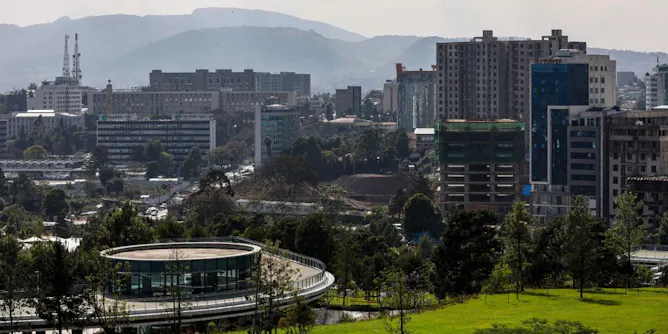
Demolitions in Addis Ababa have become common as the state seeks to attract private and foreign capital to modernise the city.
Articles on Displacement
Displaying 21 - 40 of 51 articles
A case study of a mainly Latino neighborhood in Houston shows that when residents value a neighborhood as it is, they can forestall large-scale redevelopment.

Research shows that health care plus opportunities create the best environment for refugee success in Canada. Not only does that benefit refugees, but society as a whole.
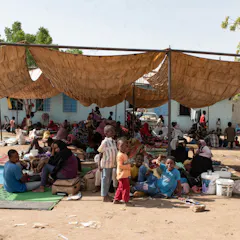
Sudan is the site of one of the world’s worst humanitarian crises, with around 25 million people in need of urgent assistance.
Brazil faces a future of increasing climate threats ranging from floods and forest fires to droughts and rising sea levels.

A new study of Florida’s fiscal vulnerability to climate change finds that flooding directly threatens many local tax bases.
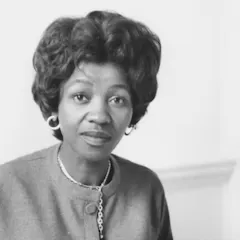
These columns demonstrate that Noni Jabavu’s concerns from 1970s are still relevant today.
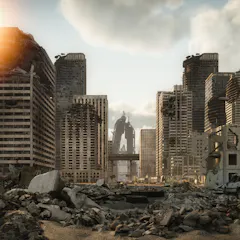
Urban spaces are a repository of people’s beliefs, memories and collective conscience.

The U.S.-led invasion of Iraq in 2003 led to civilian death and displacement. Twenty years later, Iraqis are telling their stories of conflict and trauma as they move towards healing.
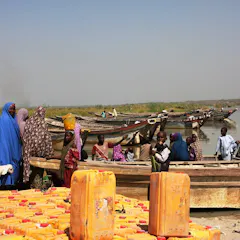
The insecurity in the area has serious implications for development and the well-being of people, especially young people.
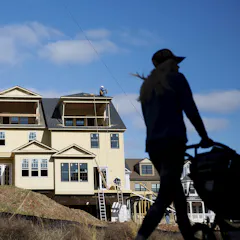
A longtime critic of Atlanta’s BeltLine explains how the popular network of parks has increased inequality in the city and driven out lower-income residents.
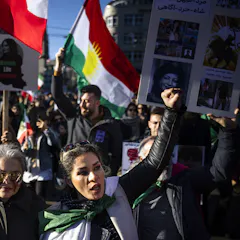
There are a range of new flashpoints and ongoing deadly conflicts the world has largely ignored due to the focus on Ukraine.
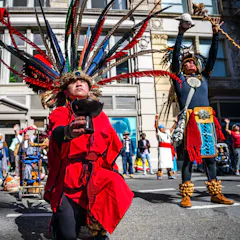
Geographic, cultural and political identity are all part of being Indigenous.
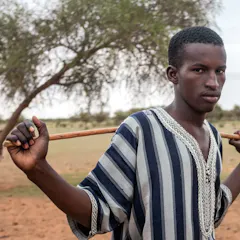
Millions of Africans could be uprooted or trapped where they are through climate-induced displacement and migration.

Experts share their insights into Nigeria’s flooding challenge and steps needed to alleviate their worst effects.
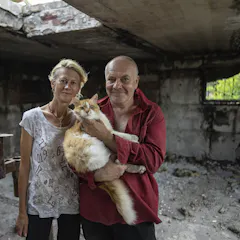
An anthropologist explains how years of conflict have made Ukrainians reassess their priorities and relationships.
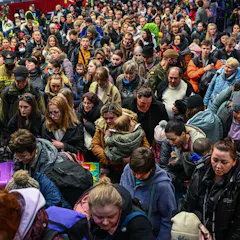
Putin has a history of forcing civilians to migrate during a conflict, part of a broader strategy to overwhelm other countries with new refugees and destabilize their economies.

Even once the war in Ukraine ends, the millions of people who fled from their homes might not be quick to return. The faster the war ends, the more likely it is they will go back.
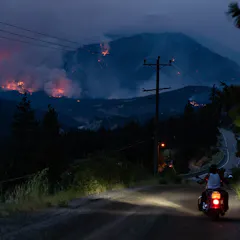
While climate migration may be on the rise in Canada, it has been disproportionately impacting Indigenous people and communities for years.
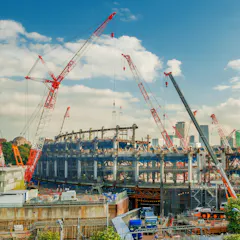
The cost of the Olympics is often justififed by the investment and regeneration hosting brings about. Local residents, though, rarely benefit
Top contributors
-

Senior Research Associate, Institute for Environment and Human Security (UNU-EHS), United Nations University
-
Associate Professor of Urban & Environmental Design, University of Khartoum
-
Professor of Human Geography, University of Leicester
-
Associate Professor of Landscape Architecture and Urban Planning, Texas A&M University
-
Head of Urbanism and Associate Professor of Urban Studies, School of Architecture, Design and Planning, University of Sydney
-
Associate Professor of Urban and Regional Planning, Florida State University
-
Associate Professor of History, University of Richmond
-
Science + Technology Editor, The Conversation
-
Associate Professor of Sociology, Colorado State University
-
Former Lead Research Fellow at Uni of Warwick, Currently a Policy and Programme Officer at UNWFP, Chad, University of Warwick
-
Producer, The Conversation Weekly Podcast, The Conversation
-
Professor of Anthropology, University of Northern Iowa
-
PhD Candidate, Sustainable Urbanisation, University of Lagos
-
Assistant Professor of Sociology, Georgetown University
-
PhD Candidate, School of Social Sciences, University of Tasmania, and Senior Research Consultant, Institute for Sustainable Futures, University of Technology Sydney