

People with disability die of conditions such as cancer, heart disease and diabetes at a much higher rate than the rest of the population.
Articles on Disability royal commission
Displaying 1 - 20 of 23 articles
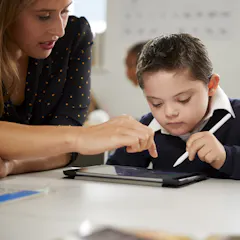
The national response to the disability royal commission provides yet more uncertainty over the future of special schools in Australia.
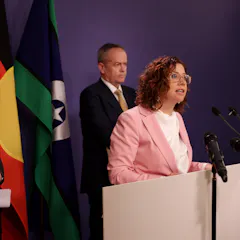
The federal government has only fully accepted 13 recommendations of 172 for which it has primary or shared responsibility with the states.

A parliamentary committee has recommended a dedicated act to protect human rights. Here’s how it could work.

The absurd humour which the film is being lauded for is often at Bella’s ‘primitive’, ‘monstrous’ or ‘damaged’ actions: words which have been used to describe disabled people throughout history.

Focusing on specialist schools for students with disability misunderstands the royal commission report’s point and misses its major implications for all schools.

The government taskforce responding to the disability royal commission recommendations needs to learn from the stories shared and also how they were communicated.
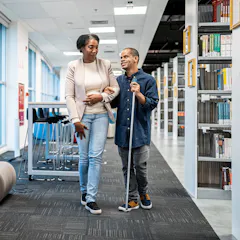
One recommendation from the Royal Commission into Violence, Abuse, Neglect and Exploitation of People with Disability, could be the game changer that will impact everything – a disability rights act.

The disability royal commission recommended providers offer redress to people who experience harm while in their care. But reparations for past harms were not addressed.
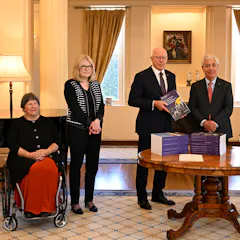
The disability royal commission’s final report makes 222 recommendations, including ensuring people with disability are considered in national housing and homelessness plans.

The disability royal commission has heard from thousands of people with disability and their families. But the response must involve everyone.
Chalmers was careful during the campaign to reject the idea of a tax-to-GDP cap. He is going to have to raise much more tax, and start a conversation about how – beginning with next week’s budget.
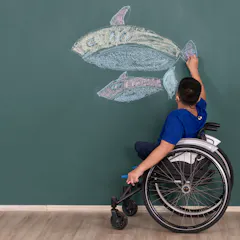
Almost 90% of students with disability go to mainstream schools but an increasing number are going to special schools.

In a new survey, almost two-thirds of parents reported having trouble securing a vaccination for their child or children with disability.
The UN has twice called on Australia to dismantle its indefinite detention system for people with cognitive impairments and mental illness, which disproportionately affects Indigenous people.

Programs designed to enhance legal access for people with cognitive disabilities accused of a crime are more humane and could be more cost effective than long-term detention.

The government has announced several ‘practical changes’ to the NDIS. While these edge the scheme in the right direction, some impracticalities continue to underpin it.
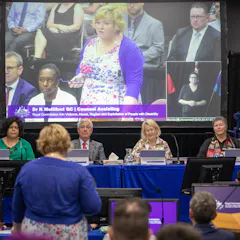
Thousands of Australian students are disengaged from school and leave early. Governments have provided alternative learning options for these students, but are these having unintended consequences?

The experiences of Aboriginal and Torres Strait Islander Australians must be at the forefront of the Royal Commission into Violence, Abuse, Neglect and Exploitation of People with Disability.

The royal commission will give people with disabilities an opportunity to share their experiences. But it needs to ensure they’re supported and have the same access to services as others do.
Top contributors
-

Lecturer in Education, University of Newcastle
-
Professor, Disability and Community Inclusion, Flinders University
-
Professor, Public Service Research, UNSW
-
Senior Lecturer of Wellbeing Science, The University of Melbourne
-
Senior Lecturer in Special and Inclusive Education, RMIT University
-
Visiting Fellow, Crawford School of Public Policy, Australian National University
-
Professorial Fellow, University of Canberra
-
ARC Research Fellow in Indigenous Health, Disability and Community Development, University of Sydney
-
Emeritus Professor, The University of Melbourne
-
Senior Lecturer, Crawford School of Public Policy, Australian National University
-
Associate Professor, Faculty of Law, University of Technology Sydney
-
Professor, Law Faculty, Monash University
-
Professor of Human Rights Law, Monash University
-
Professor and Director of the Centre for Inclusive Education, Queensland University of Technology
-
Associate Professor of Practice, School of Health Sciences and the Centre for Disability Research and Policy, University of Sydney