
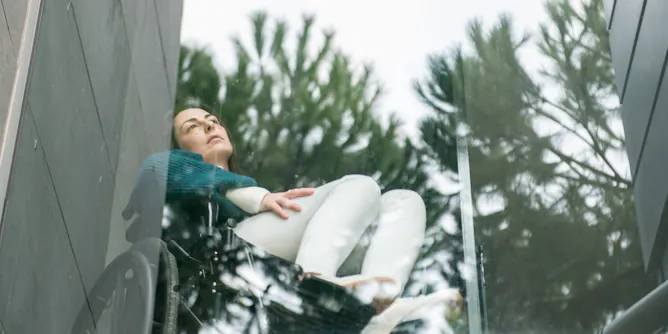
A decade on from the establishment of the NDIS, we spoke to participants. Their feelings about it ranged from frustration to joyous gratitude.
Articles on Disability
Displaying 281 - 300 of 668 articles
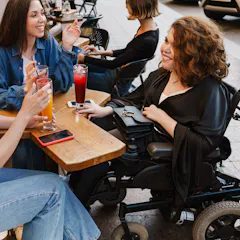
Placing plastic straws, a life sustaining accessibility tool, under the same restrictions for sale as tobacco products is overly harsh, and detrimental to the dignity and inclusion of disabled people

Refugees from non-English speaking backgrounds with disabilities face the twin obstacles of English language courses that don’t work for them and disability services that don’t speak their language.

Deaf people from different parts of the world can have different accents, whether they speak, sign or both.
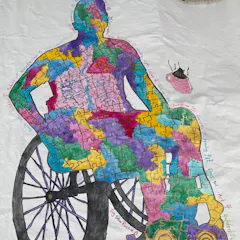
Stigma and discrimination can be upsetting to talk about and hard to describe. Creative activities can help to bring these experiences to light.
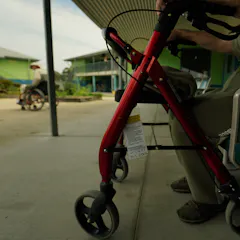
People with disability in prison may need help with personal hygiene, reading, filling in forms, understanding rules, participating in criminal justice proceedings, or making complaints.

People who are vaccinated are less likely to get long COVID, with lower rates of symptoms reported among those who have had their booster.

The real Pennhurst – a hospital name-checked in the latest series of Stranger Things – was a place of segregation and abuse.

We need to take an urgent look at how we manage and treat long COVID. If we don’t start planning now, the problem will only get worse.
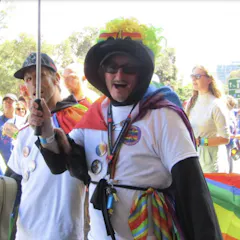
People with intellectual disabilities face additional barriers to access and participation in community, which means their voices are often missing from LGBTQ+ events.
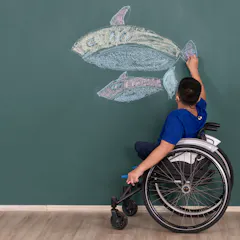
Almost 90% of students with disability go to mainstream schools but an increasing number are going to special schools.
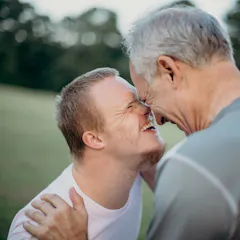
For many Australians, there is no clear distinction between the two labels: chronic conditions can result in disability and disability can increase vulnerability to a range of chronic conditions.
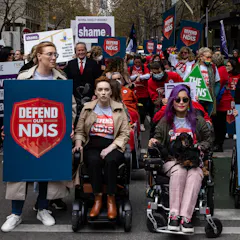
The short-term NDIS priorities for the new government are to rebuild trust and restore it to its original intention.

Research shows there can be profound business benefits to hiring people living with intellectual disability.
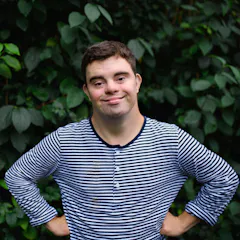
An archaic law means many people with disability are not allowed to vote. Other countries are changing their rules and so should Australia.
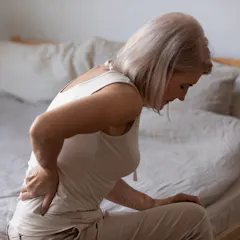
Measures to curb growing rates of opioid use are also making it difficult for people with long-term, chronic pain to get ongoing prescriptions.

Mental health labels can be powerful and hurtful. We sat down with young patients, families and doctors to brainstorm new names for mental health conditions.
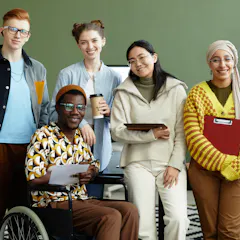
Diversity terms often involve decades of scholarship being reduced to a single word. Understanding them – and knowing how to explain them – is crucial.

If hospitals know a person has an intellectual disability, they can tailor communication and care to improve their treatment and health outcomes.
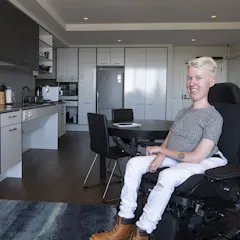
We interviewed people living with disability before and after they moved into purpose-built housing that fosters independence. The change for them was profound and cost-saving.
Top contributors
-

Professor, Public Service Research, UNSW
-
Professor, University of Sydney; RMIT University
-
Adjunct Professor, Summer Disability Research Centre, La Trobe University
-
Professor, Rehabilitation, Ageing and Independent Living Research Centre and Occupational Therapy Department, School of Primary and Allied Healthcare, Monash University
-
Professor of Social Inclusion - UTS Business School - Co-Lead UTS Disability Research Network - Australian Centre for Olympic and Sport Studies - Centre for Sport, Business and Society, University of Technology Sydney
-
Senior Research Fellow, Crawford School of Public Policy, Australian National University
-
Professor, Social Policy Research Centre, UNSW
-
Professor in Internet Studies, Curtin University
-
Senior Lecturer of Wellbeing Science, The University of Melbourne
-
Professorial Fellow, University of Canberra
-
Professor of Sociology, University of Alberta
-
Associate Professor, Sociology, University of Toronto
-
Lecturer, Australian Catholic University
-
Adjunct Associate Professor, Murdoch University
-
Professor, Director, Griffith Inclusive Futures, Griffith University, Griffith University