
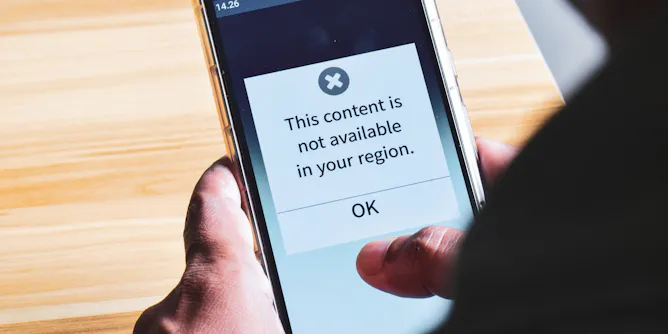
VPNs are becoming a popular option for people wanting to access overseas content. But they’re much more than that – and sometimes legally murky.
Articles on digital rights
Displaying 1 - 20 of 23 articles

Digitalising social protection overcomes several inefficiencies – but also creates barriers that prevent access for millions of people.

At a time of increasing unease about the checks and balances for the use of AI, some African countries are spending more on harmful surveillance of their citizens.

Setting up AI-free ‘sanctuaries’ could allow us to reap the technology’s benefits while offering vital safeguards to our cognitive capacities and privacy.

The fast-growing educational technology industry is poorly regulated and profits from user data. Australian law, education departments and schools can all do more to improve safeguards for children.

Canada needs to overhaul its approach to addressing online harms if it wants to remain a human rights leader and champion of internet freedom.

Applications of artificial intelligence have been shown to include discriminatory practices. This creates a need for meaningful rights-based regulations to ensure that AI will not exacerbate inequalities.

There is something beautiful about African languages carrying science, fictionalised of course, into imagined futures.
Can we make the web more inclusive or will our online reality always be a lawless wasteland of trolls and lies?

The law is out of step with technology that means anyone can manipulate your images in hyper-realistic ways.

A report based on public consultations conducted by Sidewalk Labs has still not answered many pressing concerns about privacy and consent in Toronto’s Quayside development.
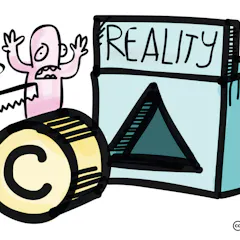
In an example of the law of unintended consequences, the Copyright Directive is likely to cement the US tech giants’ grip, rather than provide space for others to grow.

Victims could be entitled to redress – but it won’t be easy.
It’s time for a new discussion about the rules around privacy and politics in Australia – one in which the privacy interests of individuals are front and centre.

Could an employer or platform claim copyright in a chat group? We’d first have to accept that conversations in a chat group are protected by copyright.

A co-operative project that maps services in Dhaka shows how communities of citizens can be more than passive users of the digital platforms that increasingly shape our daily lives.

The corporate world has taken the lead in promoting various creative/smart city visions, which struggle to be inclusive, let alone entrust citizens with control over their lives.

Laws cannot keep pace with technological advances – but that may not be a bad thing.

If there are forward-thinking minds within Labour that could bring fresh thinking to internet issues, they didn’t get the call.

Australia’s Smart Cities Plan largely conveys a limited role for people: they live, work and consume. This neglects the rich body of work calling for better human engagement in smart cities.
Top contributors
-

Professor of Strategic Design, Queensland University of Technology
-
Digital Research Fellow, Institute of Development Studies
-
Professor of Cultural Economy, Adelaide University
-
Institute Associate, Institute for Culture and Society, Western Sydney University
-
Professor of Law, University of Sydney
-
Professor of Law, Bournemouth University
-
Director, Human Rights Centre, PI and Co-Director, ESRC Human Rights, Big Data and Technology Large Grant, University of Essex
-
Former data protection and surveillance stream lead, Allens Hub for Technology, Law and Innovation, UNSW Law Faculty, UNSW
-
Senior Research Fellow, Digital Media, Western Sydney University
-
Lecturer in Information Technology, Intellectual Property and Media Law, University of East Anglia
-
Researcher, University of Sydney
-
Permanent Researcher, Centre national de la recherche scientifique (CNRS)
-
PhD researcher in the fields of Popular Culture and Postcolonialism, The University of Western Australia
-
Professor of Communications, University of Glasgow
-
Professor of Media, School of Media, Film, and Journalism, Monash University