

South Africa’s G20 presidency’s Digital Economy working group tried to make progress on digital inequality, high data costs and weak broadband. How did they do?
Articles on digital inequality
Displaying all articles

E-textbooks have potential to enhance inclusivity and engagement in engineering education.
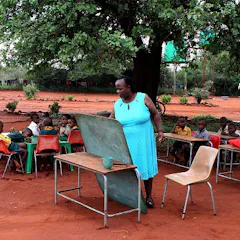
South Africa has no comprehensive national media literacy programme. Often it comes down to individual teachers and schools to make learners more media literate.

There is little evidence organisations consider digital accessibility by default. It usually happens if they have a senior accessibility champion in their ranks, or when they get sued.
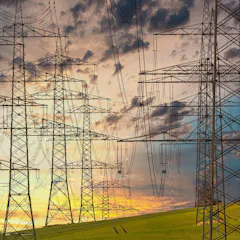
Many vulnerable people are unable to engage with their energy usage online, leading to higher bills and even debt and illness.

The shift to emergency remote teaching and learning enabled academics to start questioning some long-held assumptions about in-person teaching and learning.
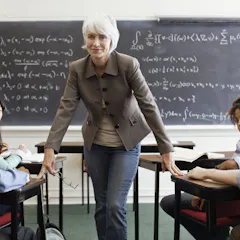
Contributing to global knowledge, from the lens of local experience, can lead to solutions to universal problems such as inequality and climate change.
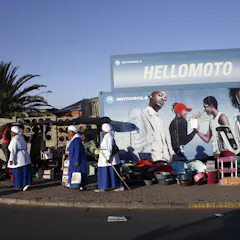
Policies need to address human develop challenges, if people are to be equitably brought on line.

The ideas about the Fourth Industrial Revolution being punted by the World Economic Forum will fail to contribute to economic growth and job creation, and will amplify existing inequalities.
Top contributors
-

Adjunct Professor, Nelson Mandela School of Public Governance, University of Cape Town
-
Lecturer in Journalism and Global Communication, University of Sheffield; Independent Social Research Foundation
-
Academic Director: Digital Learning, Faculty of Commerce, Law and Management, University of the Witwatersrand
-
University of the Witwatersrand
-
Associate Dean (Teaching and Learning), School of Science, Edith Cowan University
-
Researcher in Digital Inequality, Sheffield Hallam University
-
Adjunct Senior Lecturer - Science and Mathematics, Edith Cowan University
-
Lecturer, Cape Peninsula University of Technology
-
Director Internationalisation., Rhodes University
-
Professor and Chair, Department of Journalism, Stellenbosch University
-
Assistant Dean: Teaching and Learning (Faculty of Commerce, Law and Management), University of the Witwatersrand
-
Senior Research Associate: Digital Economy, University of South Africa
-
Research Fellow, School of Geographical Science, University of Bristol