

While Trump’s proposal to impose 100 per cent tariffs on foreign films may prove to be more bluster than policy, it reflects language ideologies that have long constrained the American film industry.
Articles on Dialect
Displaying all articles
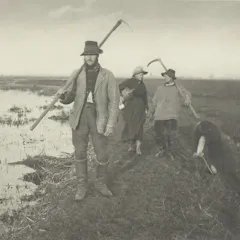
People with a common history – often due to significant geographic or social barriers – often share genetics and language. New research finds that even a dialect can act as a barrier within a group.

It came about through sustained contact with native Spanish speakers who directly translated phrases from Spanish into English, a form of linguistic borrowing called ‘calques.’

The difference between a language and dialect is just as much about politics as it is linguistics.

The schools inspectorate’s policies about language are harmful to the most marginalised members of society.

Standard English is but one of a myriad ways of speaking the English language. No child should be penalised for speaking another

Fear of strangers extends beyond racism and discrimination against people who look like they might come from another place – it includes people who sound different, too.

Why do some people greet each other with a kiss? How does the custom vary from place to place? This article is excerpted from the forthcoming ‘Atlas of Regional Expressions.’
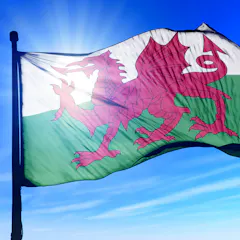
Cwtch, drive and brammer are all commonly thought of as Welsh dialect terms, but they have actually come from all over the world.
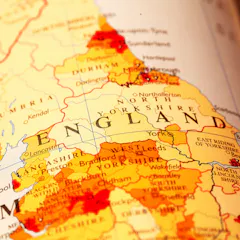
Northern dialects are actually close to original English – despite what southerners might say.
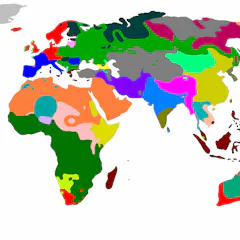
Why our understanding of the relationship between ‘place’ and ‘language’ is crucial for social justice.

Probably the most famous ‘Welsh’ word, ‘cwtch’ is the perfect example of a dialect term.
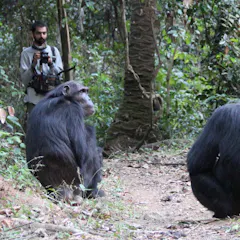
Do chimpanzee talk to each other? Scientists follow and record chimpanzees in the wild to find out – and to fill in details about how human language might have evolved.

Trainee teachers with northern accents are under pressure to speak ‘the Queen’s English’ in the classroom.

Humans behave like atoms when viewed from a distance.

The founder of the West Virginia Dialect Project hopes to debunk some of the myths about the way Appalachian people speak and instill pride in a rich, oft-maligned culture.
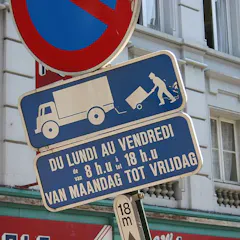
People who speak two or more variations on a language get the same cognitive benefits as multilingualists.
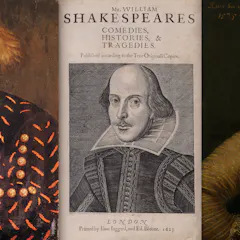
Shakespeare’s use of dialect is a key argument used by those who stand by the traditional author. But these so-called “Warwickshire dialect” words are nothing of the sort.

During the 20th century, English accents began to pick up traits from the capital. In the west of Scotland, though, something different has been going on.
Top contributors
-

Reader in English Language, Swansea University
-
Professor of Linguistics, West Virginia University
-
Senior Lecturer in Mathematics, University of Portsmouth
-
Reader in Experimental Pragmatics, Department of Theoretical and Applied Linguistics, University of Cambridge
-
Reader in Language and Education, University of Manchester
-
Associate Professor of Ecology, Evolution and Behavior, University of Minnesota
-
Senior lecturer in TESOL and Applied Linguistics, Manchester Metropolitan University
-
Professor of English Language, University of Glasgow
-
Associate Professor of English Language, University of Leeds
-
Associate Professor of English Language and Literature, University of South Carolina
-
Professor of Linguistics and English, Florida International University
-
Associate Professor of Political Science, Westminster College
-
Head of the School of Philosophy, Psychology and Language Sciences; Professor of Linguistics, University of Edinburgh
-
Reader in Critical Applied Linguistics, Manchester Metropolitan University
-
Assistant Professor of Biological Sciences, Vanderbilt University