
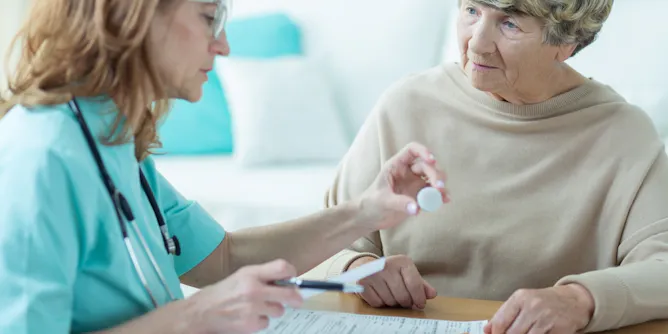
Nurses have taken on a surprising number of tasks that were once the preserve of doctors. And they do them exceptionally well.
Articles on Diagnosis
Displaying 141 - 160 of 163 articles
Artificial intelligence is already transforming a range of industries but it has still to make an impact on healthcare. So what’s the hold up?

In Australia, only three infectious diseases are known to be transmitted from ticks to humans: Queensland tick typhus; Flinders Island Spotted Fever; and Q fever.
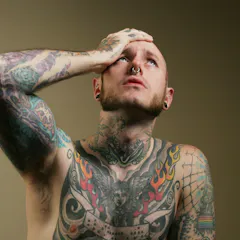
Tattoos often seem like a good idea in the moment, but tattoo regret is common. There is good reason, not the least of which is infection.
Opinion in the medical establishment is sure to be divided as to whether AI helpers are a good thing or just a flashy toy.

Irrational prescriptions are a major global health problem. The World Health Organisation estimates that more than half of all medicines are inappropriately prescribed, dispensed or sold.
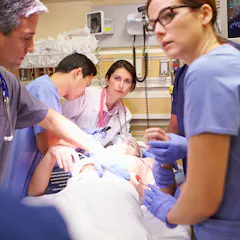
Cognitive traps can steer doctors away from the right diagnosis.
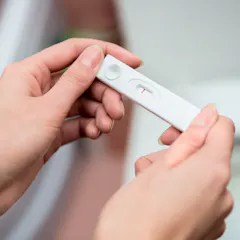
Developments in miniaturisation can give us point-of-care tests for grave conditions such as cancer and heart disease.
With an estimated 100,000 health and fitness apps available, it seems there is an app for everything – from tracking your bowel movements to practising your pimple-popping technique.
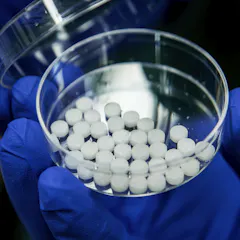
A ‘cure’ for cancer is elusive, but scientists are working on ways to detect – and even prevent – cancer cells from spreading through the body.

By tying funding to disability categories, schools and parents are being put under pressure to seek a diagnosis for their child in order to get funding support.
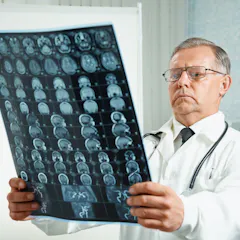
Humans can only do so much when it comes to diagnosing what’s wrong with a patient. So why not let machines take over? They learn faster than humans and never retire.
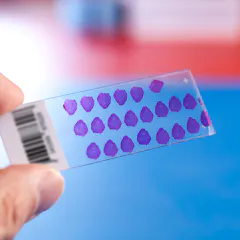
By definition, a rare disease isn’t always easy to spot but there are ways to make it easier to do.
To avoid ineffective treatments, we need a new way to identify and reduce questionable care. A new Grattan Institute report shows how to do it.
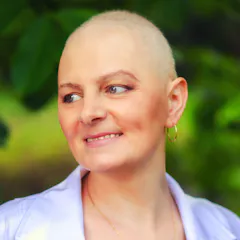
The rate of Australians dying from cancer is on a steady, downhill trajectory, thanks to powerful advances made in prevention, diagnosis and treatment of the disease.

A new way of matching cancer biomarkers in bodily fluids could lead to produce detection technology that doesn’t need expensive labs.
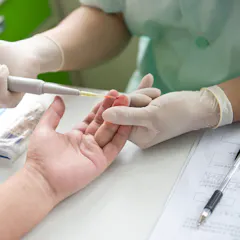
A new fingerprick test given at the patient’s bedside predicts Ebola infection within minutes.
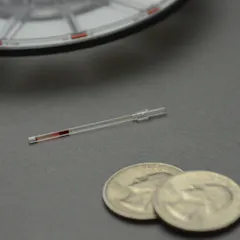
Every year, 300,000 children are born with sickle-cell disease, primarily in Africa and India. It is a genetic disorder that causes some blood cells to become abnormally shaped. The result is that those…

It sounds like a scene from a science fiction novel – an army of tiny weaponised robots travelling around a human body, hunting down malignant tumours and destroying them from within. But research in Nature…
Robin Williams’s suicide has led many to open up about depression in an effort to raise awareness about how many people are living in misery. One of the most common themes in this public discussion has…
Top contributors
-

Associate Professor, Epidemiology, Deakin University
-
Professor Emerita, Nursing, School of Nursing and Midwifery, Griffith University
-
NHMRC Emerging Leader Research Fellow, School of Public Health, University of Sydney
-
Deputy Director, The Kids Research Institute Australia, Professor of Autism Research, The University of Western Australia
-
Professor of Clinical Epidemiology, Sydney School of Public Health, University of Sydney
-
Professor of Psychology, The University of Melbourne
-
Professor & Senior Principal Research Fellow, The Kids Research Institute Australia
-
Professor of Biomedical Engineering, University at Buffalo
-
Professor of Anatomy, Lancaster University
-
Honorary Enterprise Professor, School of Population and Global Health, and Department of General Practice and Primary Care, The University of Melbourne
-
Associate Professor of Educational Studies in School Psychology, University of Calgary
-
Senior Research Officer, Blood Cells and Blood Cancer Division, WEHI (Walter and Eliza Hall Institute of Medical Research)
-
Director, Nephrology and Kidney Care Services, Melbourne Health
-
Senior lecturer, Manchester Metropolitan University
-
Lecturer in Law, Sydney Law School, University of Sydney