

The history of the rubber ‘boom’ reveals why.
Articles on Development
Displaying 201 - 220 of 367 articles

Power imbalances and inequality lie at the heart of the international development industry. But the Oxfam scandal shows that organisations mustn’t succumb to it.
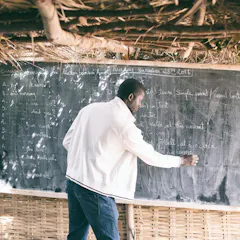
How to explore the pathways for an objective alliance between demographic dynamics and youth education in sub-Saharan Africa.

It seems there is a gap between what companies publicly assume or state they are doing with the sustainable development goals and what they are actually doing.
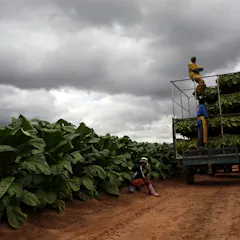
The unresolved compensation of Zimbabwe’s evicted white farmers needs to be settled quickly, as it stands in the way of economic recovery.

Developing country governments need to give attention to the risks associated with new technologies and develop context-specific responses.

Brought to its knees by the recklessness of the Zuma presidency, the South African economy needs a new deal. The ANC’s new leader Cyril Ramaphosa needs to act quickly if he’s going to make his mark.

Discussions around inequality have lacked hard data – until now. A new report shows inequality levels around the globe.
African countries, like Nigeria and Ethiopia, increased their food production using a system-wide approach, and not the traditional reliance on isolated projects.
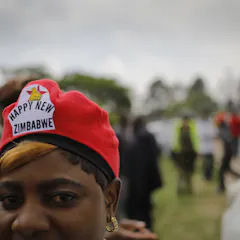
Zimbabwe has two lost decades to move on from. Fortunately, there are many ways out.

New South African research supports evidence that urbanisation has a positive impact on people’s lives and must be managed appropriately for development.
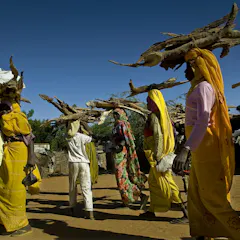
With better access to energy, women in developing nations could spend more time working or in school. But Energy Secretary Rick Perry’s claim that fossil fuels improve women’s lives misses the mark.
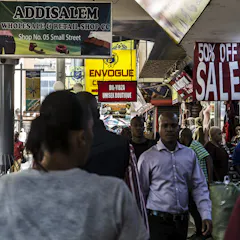
Johannesburg’s central business district is developing into a major cross border shopping hub, servicing the broader sub-Saharan region and has a potential to grow even further.
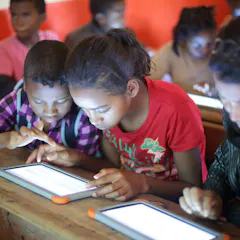
Information and communication technologies (ICT) offer new opportunities for improving basic education in Africa.

The world’s population has reached 8 billion and is expected to climb to nearly 10 billion by 2050. Why will population growth inevitably continue? Should we try to reduce or stop this growth?

Breast cancer could kill 76,000 Indian women a year by 20220, according to new research.

Raising the status of the African languages to that of official languages in South Africa post-1994 led to an explosion of translation and interpreting work in local and foreign languages.
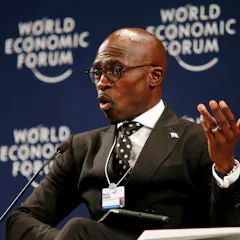
Privatisation talk in South Africa shows how state owned enterprises are being used as tools for enrichment by the connected and less as key elements of development.

Its been 13 years since Mauritius introduced codes of corporate governance for listed companies with mixed results. Its experience is useful for other developing countries looking to do the same.
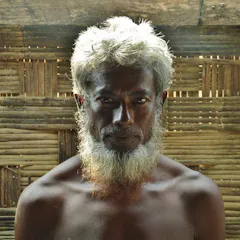
Alongside the present horrors being inflicted against the Rohingya in Myanmar, we must consider the broader political and economic context that continues to marginalise minority groups.
Top contributors
-

Distinguished Research Professor and Australian Laureate, James Cook University
-
Associate Professor, Florida Institute for Built Environment Resilience, University of Florida
-
Associate Principal Research Fellow, Burnet Institute
-
Professor of Economics, University of Copenhagen
-
Professor of African and Development Studies, University of Edinburgh
-
Lecturer in Human Geography, University of Salford
-
Professor of Sustainability, Azim Premji University
-
Lecturer in Economics, University of the Witwatersrand
-
Professor of World Politics, SOAS, University of London
-
Economist, UNSW
-
Sr. Associate Vice President for Research and Research Professor, University of Oregon
-
Senior Lecturer, Griffith Law School, Griffith University
-
Senior Lecturer, International Development and NGO Management, University of East London
-
Professor: International Business & Strategy, Wits Business School, University of the Witwatersrand
-
Reader in Development Economics, University of Manchester