

When a country becomes more diverse,
new demographic tensions may emerge between people who feel that they own their country’s identity – and people who feel they’ve been left out.
Articles on Demography
Displaying 81 - 100 of 136 articles

For the first time in decades, the 2020 census will include a question asking whether or not each counted person is a citizen. On April 23, the Supreme Court will hear arguments on this idea.

People who are 65 and up can expect to live longer than ever before. Does it make sense to keep classifying everyone in this group as old? A pair of demographers argue for ‘age inflation.’

In the US, non-whites have higher birth rates and make up the bulk of new immigrants. As white people lose their demographic majority, some will resist the accompanying political changes.

A look at key data shows that the world is much better off today than ever before in history.

Older. More suburban. Less fertile. More diverse. This year, Americans grappled with some major shifts in the demographic landscape.

China wants its citizens to have more children. But they are reluctant to.

Today, 8 out of every 10 Americans live in a city or suburb.

More than two dozen states and cities are suing over a controversial new citizenship question.

It’s very difficult to measure whether a conception was intended. But those data are vital to understanding women’s choices.

One Nation leader Pauline Hanson said Australia is “the highest-growing country in the world”, with population growth “double than a lot of other countries”. Is that right?
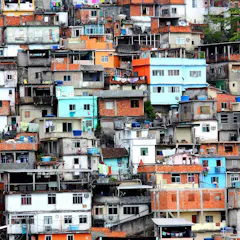
Fifty years ago biologist Paul Ehrlich published ‘The Population Bomb,’ an apocalyptic warning that overcrowding would lead to wars and famine. Here’s what the book got right and wrong.
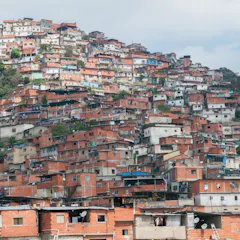
The global population is climbing faster and faster. What will this mean for future generations?

Over the past 45 years, women have married later, attained higher education and joined the workforce in record numbers. Could it all be turned back?

Large-scale emergencies can be a strain, even in one of the world’s richest countries. Population growth, income inequality and fragile supply chains may make the problem worse.

Most European nations have seen suicide rates fall by 20 percent or more. Research is limited, but some studies blame US inequality.

Poverty rates across the suburban landscape have increased by 50 percent since 1990. This suburbanization of poverty is one of the most important demographic trends of the last 50 years.

The number of births in the US is down 2 percent. That pops the country’s ‘fertility bubble’ – and brings numbers closer in line with peer countries.

Over the last 50 years, Americans have steadily gotten older, more bicoastal and less likely to move to a new city.

Most people think of entrepreneurship as a young person’s game. But the highest-growth firms in the US come from entrepreneurs who are 45 years old.
Top contributors
-

Demographer, POLIS Centre for Social Policy Research, Australian National University
-
Professor of Social Science and Public Policy, Hong Kong University of Science and Technology
-
Professor of Sociology, Texas A&M University
-
Distinguished Professor of Sociology and Demography, Penn State
-
Professor of Demography, University of Cape Town
-
Halford Mackinder Professor of Geography, University of Oxford
-
Professor of Demography, The University of Texas at San Antonio
-
Professor of Demography and Social Statistics., Obafemi Awolowo University
-
Professor of Demography, University of Ibadan
-
Honorary Professor of Demography, Macquarie University
-
Assistant Professor in the Sociology of Population, Florida State University
-
Adjunct Associate Professor, University of Tasmania
-
Shelby Cullom Davis Professor of International Security and Director of the Center for Strategic Studies, The Fletcher School, Tufts University
-
Associate professor, University of Ibadan
-
Gilles Pison is a Friend of The Conversation.
Anthropologue et démographe, professeur émérite, Muséum national d’histoire naturelle (MNHN); Ined (Institut national d'études démographiques)