

John Thompson was more than just another Washington bean counter. His resignation may affect which party controls Congress after 2020.
Articles on Demographics
Displaying 161 - 180 of 199 articles

Nine out of 10 rural places experienced increases in diversity from 1990 to 2010. Data show a more diverse future is guaranteed across all of America, and there’s no going back.

A future of trade wars and isolationism will not solve the grand challenges which are dragging down fragile economies.
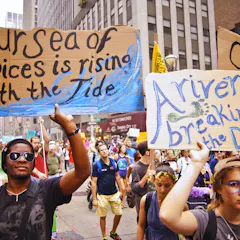
Unlike other issues, climate change has broad support among millennials across political parties and races. But it’s unclear that they’ll convert that into political activism.
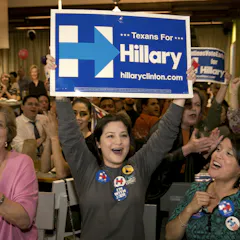
How southern accents, Puerto Ricans and bias at the polls could change the map of traditional swing states as we know it.
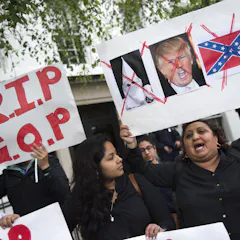
Donald Trump’s racist appeals to white fear may have doomed his campaign – and his party.
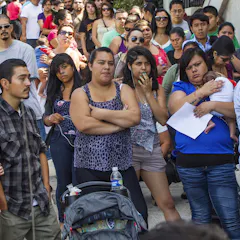
How can we possibly know how many millions of people are living in the U.S. illegally? Demographers have actually refined a simple formula that’s worked pretty well since the 1970s.

New data suggests humans may not get older than 125 years. But should we take it seriously? Every time a limit to lifespan has been proposed in the past it has been surpassed.

Algorithms can discriminate, even when their designers don’t intend that to happen. But they also can make detecting bias easier.

The numerical basis used to study African economies suffers from major knowledge gaps. This needs to improve if numbers are to inform policies that will encourage growth and push back poverty.

To win government, Labor needs a net gain of 19 seats nationally – and that’s the exact number of marginal seats being fought over in Queensland this election.

Superannuation, health and child care are among the issues that are likely to matter most to voters in the bellwether NSW seats of Eden-Monaro, Robertson and Lindsay.

The idea of family is still undergoing fundamental change, but progress towards an egalitarian era may be hamstrung by class and wealth.

Scenarios on global trends over the next 20 years point to some serious challenges for Africa. Whatever actually happens, it’s important for the continent to put in place mitigation strategies.

Do the countries affected by Zika have the capacity to deal with a baby boom if pregnancies are delayed?
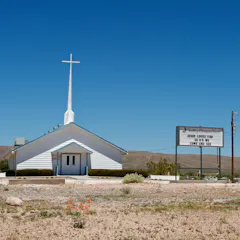
Twenty-three percent of Americans say they are not religiously affiliated. Our core values may be encouraging us to reject organized religion.

The retailer’s emblematic ad should have stuck their grandad in a rocket and blasted him straight to party central.

Research shows baby booms are generally bad news for the economy – at least for the boom’s babies.

There are compelling educational reasons to employ more black academics in universities and to give them all the support they’ll need to become professors.

In 1970 there were 269 male university students per 100 female university students. However females overtook males in 1987 and now there are 80 males for every 100 females.
Top contributors
-

Professor of Sociology, Texas A&M University
-
Gilles Pison is a Friend of The Conversation.
Anthropologue et démographe, professeur émérite, Muséum national d’histoire naturelle (MNHN); Ined (Institut national d'études démographiques)
-
Professor of Marketing and Psychology, University of Colorado Boulder
-
Professor of Sociology, Eastern Michigan University
-
Honorary Professor of Demography, Macquarie University
-
Distinguished Professor of Sociology and Demography, Penn State
-
Professor of Sociology, Florida State University
-
Professor of Demography, The University of Texas at San Antonio
-
Assistant Professor in the Sociology of Population, Florida State University
-
Demographer, POLIS Centre for Social Policy Research, Australian National University
-
Ph.D. Candidate in Communication, UMass Amherst
-
Visting Instructor in Sociology, University of South Florida
-
Professor of population and development studies, University of Kinshasa
-
Boeing International Professor of Statistics and Sociology, University of Washington
-
Research Director of the Center for Employment Equity, UMass Amherst