
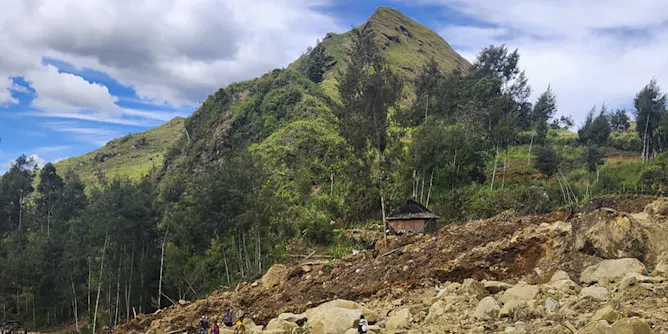
Deforestation can make landslides more likely. But by itself, replanting trees isn’t enough to remove the risk.
Articles on Deforestation
Displaying 61 - 80 of 408 articles
Understanding how humans came to exert such enormous pressure on Earth’s ecosystems can inform more sustainable ways of living.
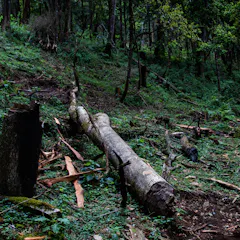
Ghana is losing forests because of cocoa farming, firewood harvesting, mining and logging.
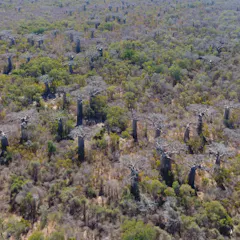
In Madagascar, communities and scientists are growing tens of thousands of baobab seedlings to restore the 1,000-year-old forests.

There’s been an increase in the amount of runoff generated from rainfall as land is altered by settlement and deforestation.

What harm can a road do? Plenty. Once built, illegal roads let loggers, miners, poachers and landgrabbers into the jungle, and the felling begins.
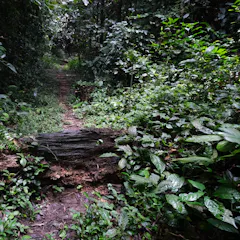
Nigeria’s forest resources have dwindled and are in danger of disappearing in a few decades if nothing is done to save them.

Research suggests these forests could disappear by the 2070s.
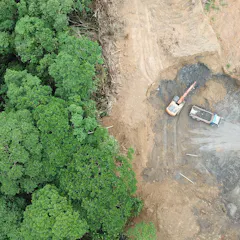
A recently published report sheds light on how 350 big companies and 150 financial institutions are falling behind with goals to halt and reverse deforestation.
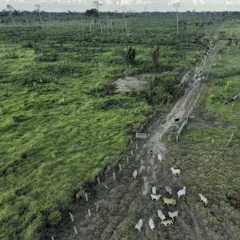
Effective use of genomic identification could revolutionize the control of the illegal timber trade.

Green anacondas are the world’s heaviest snakes, and among the longest. it’s remarkable this hidden species has slipped under the radar until now.
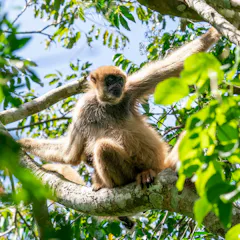
Trees in Brazil’s Atlantic Forest depend heavily on primates for their survival, but agriculture and deforestation are threatening them both.
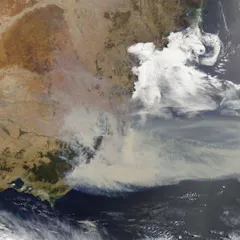
The most comprehensive Australian carbon budget assessment completed to date shows the nation flip-flops from source to sink of carbon emissions, depending on the prevailing conditions.
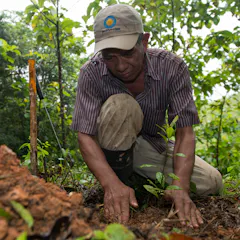
It might seem counterintuitive to suggest timber harvesting when the goal is to restore forests, but that gives landholders the economic incentive to protect and manage forests over time.
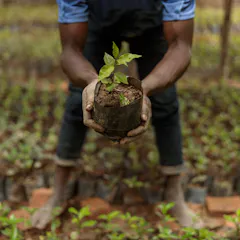
When forest communities have secure rights and tenure, the results can be miraculous.
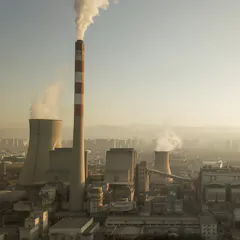
Record emissions are fast shrinking the remaining amount of carbon dioxide we can emit if we are to limit global warming. At current rates, we’ll use up the budget for a 1.5°C outcome in seven years.
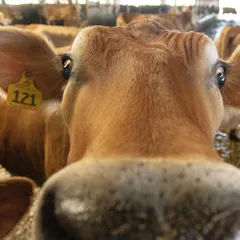
Food systems are increasingly disrupted by climate disasters, while also being a major contributor to climate change. World leaders at COP28 vowed to do something about it.
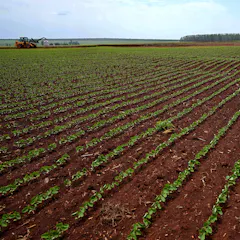
Diminishing forests reduces the capacity of the Amazon and Cerrado to regulate rainfall patterns. That’s bad for communities, but also bad for business and global food security.
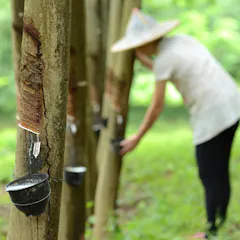
Rubber plantations are replacing forests, particularly in tropical regions.

News about the growing ecological crisis may cause people to feel grief and fear. It is understandable to seek relief from these feelings and look for good news. But what if grief is the good news?
Top contributors
-

Distinguished Research Professor and Australian Laureate, James Cook University
-
Professor in Conservation Science, School of the Environment, The University of Queensland
-
Professor of Conservation Science, Lancaster University
-
Moran Professor of Conservation and Development, University of Cambridge
-
Chief Research Scientist, CSIRO Environment; Executive Director, Global Carbon Project, CSIRO
-
Professor of Environmental Management, The University of Queensland
-
Professor Emeritus of Latin American Studies and Geography, University of Florida
-
Honorary Associate Professor, The Crawford School of Public Policy, Australian National University
-
Reader in Ecology and Conservation Biology, Manchester Metropolitan University
-
Principal Scientist, Center for International Forestry Research – World Agroforestry (CIFOR-ICRAF)
-
Honorary Professorial Fellow, The University of Melbourne
-
CGIAR
-
Senior Research Associate, University of Johannesburg
-
Professor and Climate Scientist, Department of Geography, Planning and Environment, Concordia University
-
Professor of Geography, University of Florida