

New innovations in understanding how a dead body breaks down can be scaled globally.
Articles on Decomposition
Displaying all articles
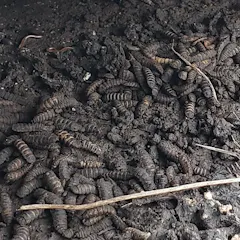
New research highlights the prevalence of maggots as an easily obtained, nutrient-rich supplement of ancient hominin diets.

An accurate estimate of when someone died is a critical part of forensic investigations. In extremely cold conditions, molecular biology can provide critical information where the naked eye cannot.
Pigs, specifically those weighing around 60kg, are useful in human decomposition studies.

With the help of the microbes that once played an essential role in keeping you alive, the building blocks of your body go on to become a part of other living things.
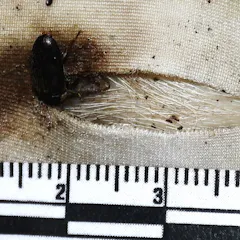
Fatal stabbings are the leading cause of homicide in countries with restricted access to firearms, including Australia. New research could help solve these cases.
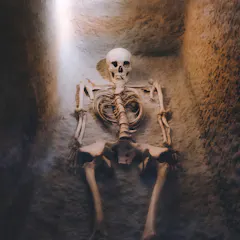
Burial land is running low in certain parts of the world. It’s about time we started to consider the environmental cost of our final resting place.

Fungi underpin life on Earth, but are far less well catalogued and understood than animals and plants. Three scientists call for including fungi in conservation strategies and environmental laws.
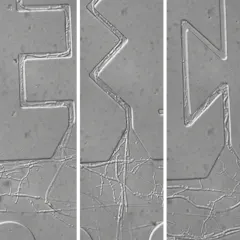
Using tiny ‘soil chips’, researchers have observed the forgaging strategies of fungi at a microscopic scale for the first time.

Nutrients and energy contained within dead animals are repurposed and repackaged into living, breathing insects.
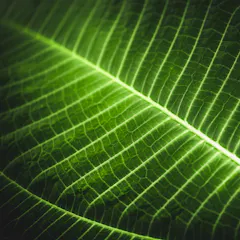
Researchers are figuring out how plants respond to the presence of human cadavers. The findings could prove important for discovering the locations of murder victims or mass graves.
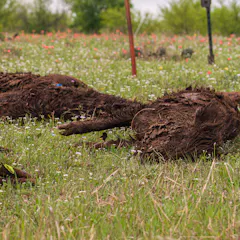
Death is a natural part of ecosystems. But it’s unusual for a large number of animals to all die at once. Researchers are investigating how a mass mortality event affects what’s left afterwards.

Lakes are the final resting place for many of the Earth’s plants – and these organic graveyards are about to get a whole lot busier.

The cycles of life, in their fierce glory, are reflected in a stunning exhibition of nature photography.
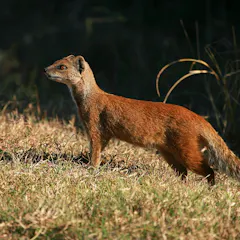
Scavengers play an important but often poorly understood role in how fast bodies decompose.
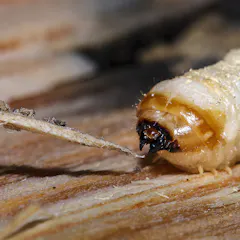
It’s thanks to decomposition brought about by beetles and fungi that we’re not all buried under dead organic matter.
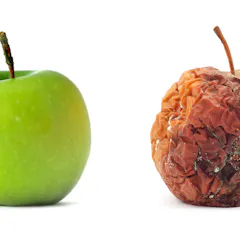
Anyone for a 2,512-day-old burger?
Top contributors
-

Professor in Biological Anthropology, Division of Clinical Anatomy and Biological Anthropology, University of Cape Town
-
Associate Professor of Forensic Science, Murdoch University
-
Post-Doctoral Researcher, University of Cape Town
-
Curator of Mycology at New York State Museum, Bard College
-
Assistant Professor of Biological Sciences, Mississippi State University
-
Honorary Associate Professor, Forest Measurement and Management, Fenner School of Environment and Society, Australian National University
-
Professor and Canada Research Chair, Trent University; University of Cambridge
-
Adjunct Lecturer in Forensic Sciences, Murdoch University
-
Postdoctoral Researcher in Mycology, West Virginia University
-
Researcher, Lund University
-
Environmental Biologist, Institute of Environmental Sciences, Jagiellonian University
-
Professor of Plant Sciences, University of Tennessee
-
Associate Lecturer, Department of Biology, Lund University
-
Graduate Student in Biological Sciences, Mississippi State University
-
Professor of Environmental Microbiology, University of Tennessee