

A psychologist explains how your brain helps you save money.
Articles on Decision making process
Displaying all articles

New research shows the choices we make, and our perceptions of the world, are biased by our initial impressions.

The collective behavior of robot swarms is a route to making small, simple, inexpensive robots – and offers insights into how people make group decisions and adapt to changes.

New research suggests there’s often a mismatch between how you respond and what the other person wants to hear.

During Mental Health Week, let’s look at why some people, such as those experiencing depression or substance dependency, struggle to make decisions like everyone else.

How mathematically proficient are you? And do you have the skills to back up your level of math confidence? The answers to those questions may have ramifications for your financial and physical health.
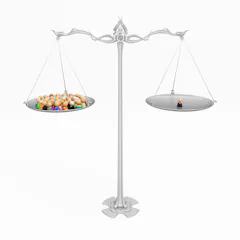
A decision-making process that relies on intuitive feelings rather than careful deliberation invites a host of biases that make bad decisions and disproportional consequences far more likely.

New research confirms that people tend to rush to judgment, in spite of believing their own decisions and those of others are carefully based on lots of evidence and data. And that can be good or bad.
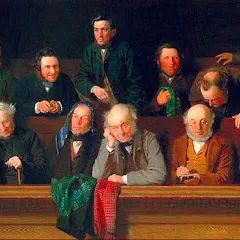
It’s not just race, gender and socioeconomic status that affect juror bias; sometimes it’s the actual way people on juries assess evidence and make decisions.
Top contributors
-

Lecturer in Psychology, Glasgow Caledonian University
-
Research Assistant Professor of Psychology, The Ohio State University
-
Visiting Scholar of Marketing, Cornell University
-
Lecturer and Head of the Prediction and Decision-Making Lab, The University of Melbourne
-
UQ Amplify Researcher, The University of Queensland
-
FNRS Research Fellow, Université Libre de Bruxelles (ULB)
-
Postdoctoral Research Fellow, The University of Melbourne
-
Associate Professor of International Law, Ono Academic College
-
Postdoctoral Researcher at Harris Public Policy, University of Chicago
-
Ben L. Fryrear Chair in Marketing and Associate Professor of Business Administration, University of Pittsburgh
-
Professor of Consumer Psychology, Anglia Ruskin University
-
Psychiatrist, The University of Queensland
-
Professor of Psychology, University of Oregon
-
Director, Center for Science Communication Research, University of Oregon
-
Associate Professor and Head of Decision Neuroscience Laboratory, The University of Melbourne