
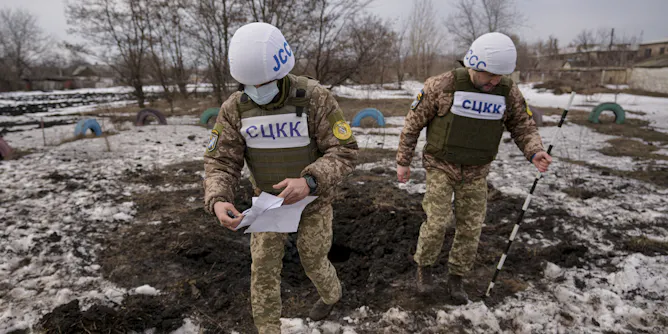
Attacking your own side and blaming your foe has a long history and a firm grip on the popular imagination. But the internet makes it difficult to pull off – and less desirable.
Articles on Deception
Displaying 21 - 40 of 41 articles
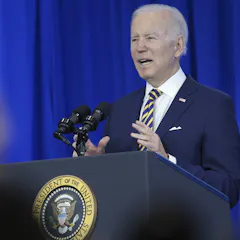
A political philosopher argues that while all American presidents may lie, those who appear to lie for the public good are often celebrated.
Communication scholars have long wondered not just who lies the most, but also whether people tend to lie more online, in person or over the phone.

Deceptively labeled buttons, choices that are hard to undo, web designs that hide options – these dark patterns are how some websites trick people into giving up their money and information.
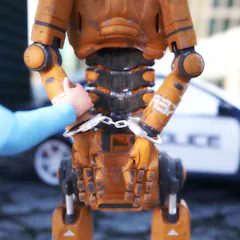
The Federal Trade Commission is rattling its saber at the technology industry over growing public concern about biased AI algorithms. Can the agency back up its threats?

Mimicking other groups and making false claims of responsibility are popular deception tactics used in terrorism.
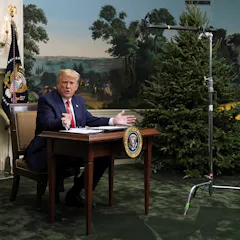
If citizens disbelieve the institutions that count ballots and the organizations that accurately report on those results, it will be impossible to agree on what a legitimate election looks like.
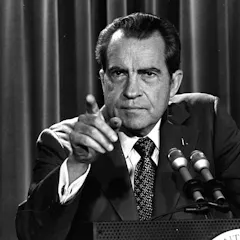
Some presidents have lied for honorable reasons, while for others the lies have been simply self-serving.

In the wake of the New Deal, the business community realized that appealing to widely shared American values could get the public to oppose measures that curbed corporate power.

How does a man with no education convince everyone he is a priest, professor and doctor?

Online lies can often be easy to detect, by searching for images and phone numbers and exploring social media profiles. Some people lie anyway – and countless others take the bait.

‘For Petrov and Boshirov the interview has very high stakes – and throughout the interview they both appear very anxious and uncomfortable.’

Vocal deception may have played a key role in our progression from primitive nonverbal noises to complex, controlled speech.
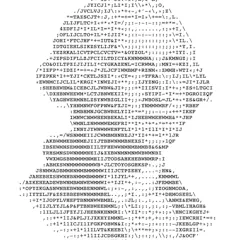
Reading something that sows doubt about a widely agreed-upon fact – even the election of George Washington as president – can have a profound effect.
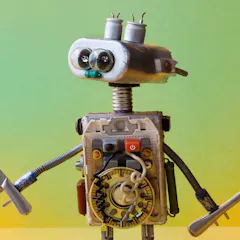
Robots have already learned to cheat when playing games. How do we teach them morals if we want them more involved in our everyday lives?

Psychologists observed young children in real time figuring out how not to tell the truth.

The ‘privilege of unknowing’ allows onlookers to learn not to see, or otherwise sense, queer difference.

Images of South African police on social media are part of a carefully scripted performance in which the police service is heavily invested.
Biological deception, which involves organisms manipulating the behaviour of other animals through the presentation of “false…
Primate communities with high levels of co-operation will contain a large proportion of cheaters. Research by scientists…
Top contributors
-

Professor of Philosophy, Public Policy and Governance, University of Washington
-
Herbert J. Ellison Professor of Russian and Eurasian Studies, University of Washington
-
Senior Lecturer in Zoology, University of Hull
-
Senior Research Fellow, Department of Psychology, University of Portsmouth
-
Senior lecturer, Queensland University of Technology
-
Professor of Law, Keele University
-
Professor, Director of the Centre for Robotics, Queensland University of Technology
-
Professor of English, University of Minnesota
-
Professor of Bioscience Education, University of Hull
-
Professor of Psychology, University of California, San Diego
-
Lecturer in English, Iowa State University
-
Research Associate at UCT's Centre of Criminology, Consultant at the Institute for Security Studies (ISS), University of Cape Town
-
Principal Lecturer in Wildlife Conservation, Nottingham Trent University
-
Associate Professor of Communication, Michigan State University
-
PhD Researcher, Nature and Function of Human Nonverbal Vocalisations, University of Sussex