

Artificial intelligence is emerging as a key cybersecurity tool for both attackers and defenders.
Articles on Cybersecurity
Displaying 221 - 240 of 814 articles

Smart devices can make our lives easier. But they also present security risks.
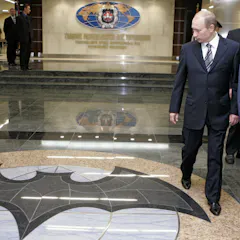
Troop buildups and diplomatic negotiations highlight the threat of a major land war in Europe. In cyberspace, Russia has been attacking Ukrainian infrastructure and government operations for years.

Federal and state governments are turning to a facial recognition company to ensure that people accessing services are who they say they are. The move promises to cut down on fraud, but at what cost?
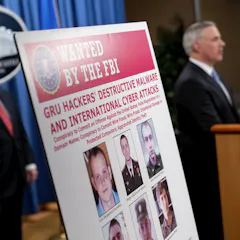
Russia probably has the means to attack US electrical grids and otherwise create havoc but probably won’t go that far. Instead, watch for disinformation aimed at undermining the US and NATO.

The US has made a dent in Russian cyber criminal gangs. But tensions with Russia and the shadowy nature of hacking keep the threat level high.

It’s time to think differently about how we address the password problem.

Log4Shell is the latest hacker exploit rocking the internet, and it’s arguably the worst yet. The vulnerability is in an obscure piece of software used on millions of computers.
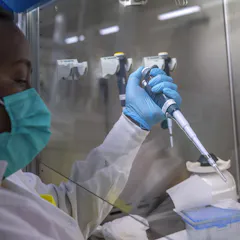
Keeping biomedical data private is important, but so is sharing it for research. Game theory can help researchers accomplish both.

A comic-based curriculum for after-school programs could hold the key to unlocking girls’ interest in careers in cybersecurity.
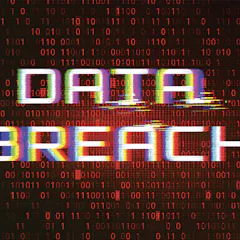
Data breaches have become a fact of life. Here are articles from The Conversation that detail the threat, why it happens and what you can do to protect yourself.
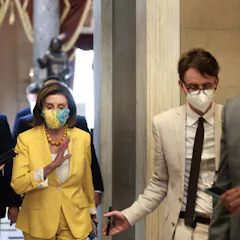
The government uses a process called public procurement. A professor of public policy explains how the process works and how it is increasingly used to achieve social goals.

The internet has created new threats to national security and population welfare. The Canadian government needs an oversight department to address cybersecurity and educate their citizens.

Weirdness is a clue about fraudulent email messages. But it takes more than a sense that something’s wrong to get people to investigate.

An increasing number of cyberattacks threaten critical infrastructures. These attacks exploit weaknesses in outdated and insecure systems.
The COVID-19 pandemic has meant an increased dependence on digital technologies. However, this comes with a serious threat to our personal privacy and property.

As schools and colleges confront the challenges of COVID-19, cybercriminals exploit weaknesses in the computer networks and online systems.
Sweeping police powers for online surveillance and hacking raise concerns over privacy and security.
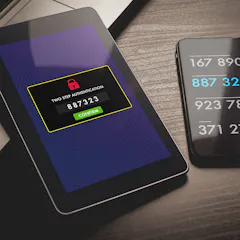
Despite its known vulnerabilities, SMS-based 2FA is used as a security measure by several major organisations, including the Big 4 banks.
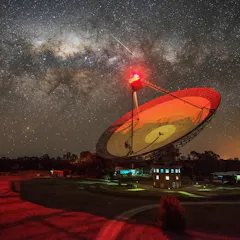
The growth of online and space activity make traditional ideas of national security increasingly outdated.
Top contributors
-

Professorial Fellow, University of Canberra
-
Teaching Professor of Computer Science and Electrical Engineering, and Associate Director, UMBC Cybersecurity Institute, University of Maryland, Baltimore County
-
Professor of Cyber Security Practice, Edith Cowan University
-
Professor of Business Law and Ethics, Indiana University
-
Senior Lecturer in Networking, The Open University
-
Director of UWA Centre for Software Practice, The University of Western Australia
-
Associate Professor, School of Engineering, RMIT University
-
Lecturer in Software Engineering, Monash University
-
Head, The Cyber Academy, Edinburgh Napier University
-
Professor of Management, University of North Carolina – Greensboro
-
Professor of Cybersecurity, Head of School of Computer Science and Informatics, De Montfort University
-
Adjunct Professor, Australia-China Relations Institute, University of Technology Sydney
-
Professor, Information Security Group, Royal Holloway, University of London
-
Professor, Department of Computer Science, University of Surrey
-
Professor of Cybersecurity, School of Computing and Information Systems, The University of Melbourne