
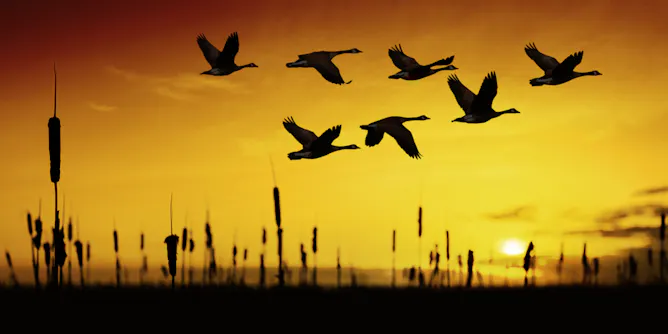
Geese honk loudly and point their bills toward the sky when they’re ready to start the migration. Here’s how they know it’s time, how they navigate and how they conserve energy on the grueling trip.
Articles on Curious Kids US
Displaying 281 - 300 of 334 articles

Some rainstorms drench you in a second, while others drop rain in a nice peaceful drizzle. A meteorologist explains how rainstorms can be so different.

Your faithful friend’s view of the world is different than yours, but maybe not in the way you imagine.

Physicists can use bright, hot lasers to slow atoms down so much that they measure -459 degrees Fahrenheit.

How do people in a special airplane flight get to float like there is no gravity – just like astronauts? An aerospace engineer explains.

Mmmmmmm. That smells delicious. Wait, how do you know that?

You might have already felt what it would be like inside a cloud made of condensed water vapor.

Epidemiologists focus on diseases among groups of people. They also study the spread of disease among animals.

Wind travels all over the world. Where does it come from, and why?

One anthropologist found 1,072 similar words for ‘mom’ and ‘dad’ in the world’s languages. It turns out a mix of biology, culture and encouragement from parents explains this phenomenon.

The movies make it seem like someday we’ll be able to make people and objects grow really big or shrink really small. Whether this will be possible comes down to the smallest of things.

The term ‘Big Bang’ might make you think of a massive explosion. Put the thought out of your head. Rather than an explosion, it was the start of everything in the universe.
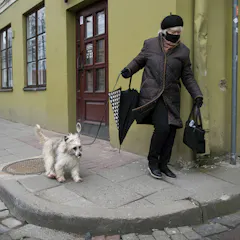
Pets might not protect us from the coronavirus, but they can help us get better.

Have you ever felt a piercing pain in your head when you eat something cold?
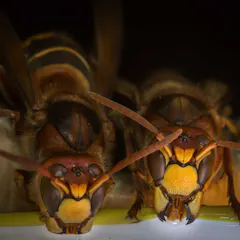
Bees aren’t the only species that has a queen.

Accents differ depending on where we’re from, even in the same country.

When the holes – also called ‘eyes’ – don’t appear in a batch, cheesemakers say the cheese is ‘blind.’

Leaving your coat at home on a cold winter day doesn’t automatically mean you’re going to get sick. But it could make you more susceptible to germs.

You’ve had your own personal set of fingerprints since before you were born, and they’ll be with you throughout your whole life.
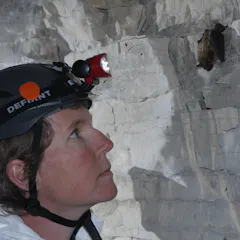
Researchers are puzzled by a fungus that is killing millions of bats.
Top contributors
-

Distinguished Professor Emeritus of Anthropology, Binghamton University, State University of New York
-
Assistant Professor of Astronomy and Astrophysics, University of Maryland, Baltimore County
-
Professor of Astronomy, UMass Lowell
-
Professor of Biology, Clarkson University
-
Associate Professor of Veterinary Clinical Sciences, Oklahoma State University
-
University Distinguished Professor of Astronomy, University of Arizona
-
Doctoral Student in Biomedical Sciences, University of South Carolina
-
Lecturer in Geosciences, University of Montana
-
Assistant Professor of Gastroenterology and Hepatology, School of Medicine, University of Washington
-
Executive Dean of the College of Arts, Sciences & Education and Professor of Biological Sciences, Florida International University
-
Assistant Professor of Biological Anthropology, University of Tennessee
-
Professor and Chair of History Department, Colorado State University
-
Vice President of Academic Affairs and Dean of the College, Grinnell College
-
Associate Professor of Physics, University of Richmond
-
Associate Professor of Astronomy, Boise State University