
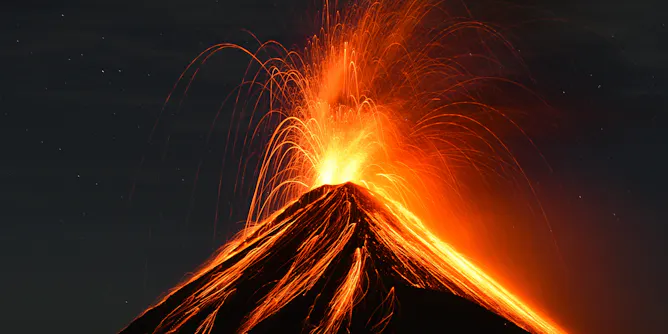
Volcanologist Martin Mangler explains how volcanic eruptions work to push lava into the air. Listen on the The Conversation’s Curious Kids podcast.
Articles on Curious Kids
Displaying 21 - 40 of 825 articles

As one piece of more than a century of baseball traditions, eye black is part science experiment, part routine and part uniform.

Listen to the The Conversation’s Curious Kids podcast to hear astronomer Michael Lam on what theories scientists have for what came before the Big Bang.
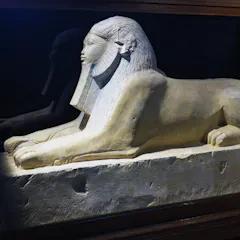
There is evidence of people who crossed gender boundaries even in ancient civilizations, though the terms naming them have evolved over time.
Listen to the The Conversation’s Curious Kids podcast to hear evolutionary biologist Tom Smulders explain.

There’s a separate justice system for people under 18 because their brains are still developing. Treating them as adults can turn them into repeat offenders.

The podcast where kids ask questions direct to academics is back for a second season.

Whether or not there’s a will, the results are the same.

Centuries-old habits shaped today’s fashion standards.
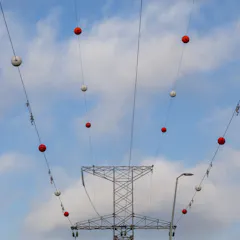
Aviation marker balls don’t help with electricity flow or improve the efficiency of the power lines. But they do have a very important job.
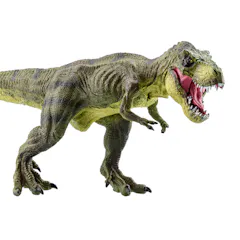
If humans had the same arm proportions as a T. rex, a 6-foot-tall person would have arms about 11 inches long.

An expert in traumatic brain injuries explains why you need to protect your noggin.

You can feel wet when you can see water and when you can’t see water. You can also feel dry even when there’s a lot of water vapor in the air – like during a fire.

Science itself isn’t ‘truth,’ but it is an activity with the goal of getting closer to the truth.

While direct evidence of multiple universes is hard to come by, indirect evidence raises intriguing possibilities.
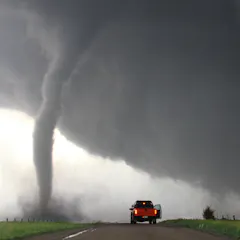
When you’re inside a vortex, your body experiences things the news cameras can’t capture.
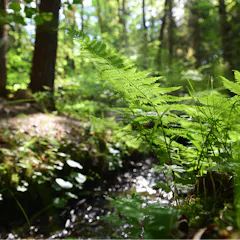
Plants changed the atmosphere, built soil and created ecosystems that allowed animals like us to thrive. But first they had to make their way from the water to the land.
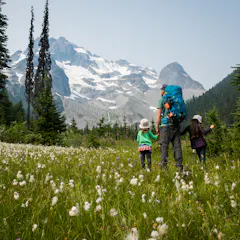
The answer has to do with the air we breathe and that bright white snowpack, as an atmospheric scientist in Colorado explains.

Wars can start due to a disagreement, fear, or a desire for more power.
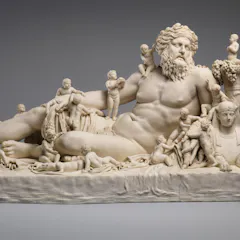
Nudity can express everything from innocence to sexual desire, from triumph to defeat.
Top contributors
-

Reader in Astrophysics, Keele University
-
Associate Professor of Science & Medicine, Bond University
-
Professor (Astrophysics), University of Southern Queensland
-
Associate Dean of Innovation and Engagement, Swinburne University of Technology
-
PhD Candidate, University of Southern Queensland
-
Distinguished Professor Emeritus of Anthropology, Binghamton University, State University of New York
-
Professor, Philosophy of Science, The University of Melbourne
-
Professor, Macquarie University
-
Researcher, The University of Melbourne
-
Assistant Professor of Medicine, Bond University
-
Professor of Science Communication and Chemistry, University of Hull
-
Lecturer, University of Southern Queensland
-
Associate Professor, School of Animal and Veterinary Science, Adelaide University
-
Principal Lecturer in Wildlife Conservation, Nottingham Trent University
-
Whale Scientist and Lecturer, Faculty of Science and Engineering, Macquarie University