
Wikipedia has grown steadily in size and importance, but a shrinking core of volunteer administrators is straining the organization.
Articles on Crowdsourcing
Displaying 1 - 20 of 30 articles

The surge in online purchases is increasing parcel delivery traffic and emissions. One solution is to take advantage of the trips people are already making to get parcels to their destinations.
Wikinomics nailed the rise of an internet economy based on openness and collaboration. But it did a poorer job of foreseeing the dangers.

People across Latin America are demanding greater political participation. Some countries, including Colombia and Chile, have responded by involving citizens in the making of their constitutions.

Buying and selling stocks – with real or play money – is a way to harness the wisdom of the crowd about questions like who is going to win a competition.

A recent extortion scam involved threatening to leave unfavourable reviews to restaurants unless they paid up shows the dangers of relying on the wisdom of crowds.
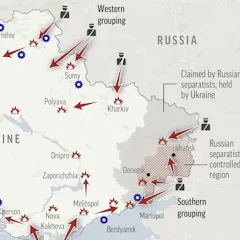
Geographers often talk about the ‘silences’ of maps – what’s missing and unseen. Those silences can be as meaningful as what’s shown.

As scientists frantically try to find drugs to slow COVID-19’s spread, citizen science offers an opportunity for all of us to get involved.

20 years ago, who could predict how much more researchers would know today about the human past – let alone what they could learn from a thimble of dirt, a scrape of dental plaque, or satellites in space.
Patents aren’t the only means of rewarding inventors, and they may not always be the best. Competitions work surprisingly well, if done properly.

Hundreds of archaeologists provided on-the-ground data from across the globe, providing a new view of the long and varied history of people transforming Earth’s environment.

A new book on so-called ‘new power’ can help us understand transformations in journalism like increased collaboration and use of digital technologies for investigative journalism.

Professor Samir Brahmachari’s innovative Open Source Drug Development allows thousands of researchers to work together to discover novel therapies for under-studied diseases.

The internet has been the bogeyman of democracy over the last 12 months. It’s time to harness its power and redress the balance.

We can overcome the tyranny of inaccessible science hardware by building a movement for equity in science.

Tools like Amazon’s Mechanical Turk allow psychology researchers to recruit test subjects from around the world. But the system can also be exploited.

If the site is increasingly where people are getting their news, what could the company do without taking up the mantle of being a final arbiter of truth?

This method of crowdsourcing science legwork is ready to expand into other disciplines – and maybe the amateurs themselves can start calling some of the shots.

The Italian government tried to limit the type of companies that could use crowd-sourced funding with poor results, Australia can learn from this.

If you want the best tool for making educated guesses, then you’d better get the basics right.
Top contributors
-

Computer Science researcher, University of Southampton
-
Former Director General, Council of Scientific and Industrial Research (CSIR) and Academy Professor, Academy of Scientific and Innovative Research (AcSIR)
-
Professor of Information Systems and Services, University of Sydney
-
Associate Director, Community-Engaged Research, Stanford University
-
Associate Professor of Public Policy, Communication, and Information, UMass Amherst
-
Emeritus Professor of Cognitive Psychology, The University of Queensland
-
Senior Lecturer (Associate Professor) in Entrepreneurship and Innovation, University of Surrey
-
Associate Professor, Faculty of Law, UNSW
-
Professor of Geography and Environmental Science, Memorial University of Newfoundland
-
Professor of Animal-Computer Interaction, The Open University
-
Lecturer, Agents, Interaction, and Complexity Group, University of Southampton
-
Senior Research Fellow, Horizon Digital Economy, UnBias, University of Nottingham
-
Coordinator, Synthetic Biology Strategic Research Initiative, University of Cambridge
-
Assistant Professor, Information Systems, University of Canberra
-
Professor of Information Studies, Syracuse University