
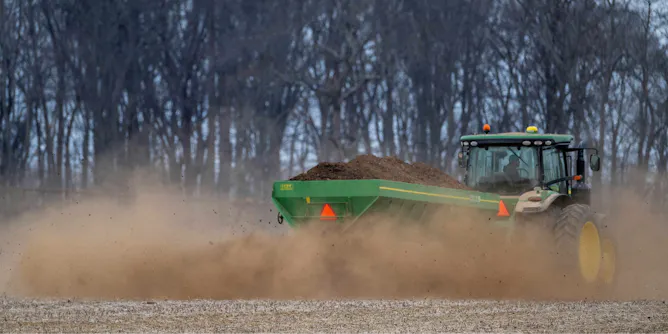
Fertilizer is more expensive and in shorter supply. Without the right amounts of fertilizer at specific times, yields drop, food prices increase and food shortages result.
Articles on Crop yield
Displaying all articles
Better photosynthesis could boost crop yields by up to 60% – and a tiny box made of proteins could help.

Spiders liquefy their prey in order to consume it, and this makes it challenging to determine what spiders eat. A new approach that uses DNA barcoding is helping researchers figure out spider diets.
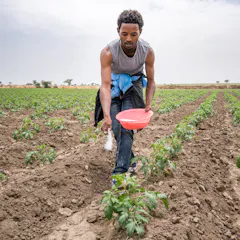
Farmers who use little or no fertiliser can use ecological practices to increase their yields.
Algorithms can help determine what farm inputs and policies can boost food production.
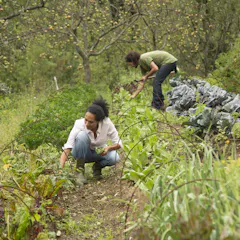
Permaculture – a mashup of ‘permanent’ and ‘culture’ – is a way of doing agriculture that’s inspired by the resilience and biodiversity of healthy natural ecosystems.
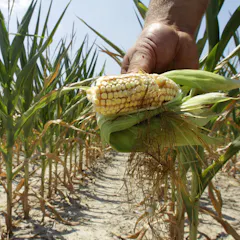
Much of the US has been experiencing heat waves in recent weeks. An economist explains how the often record-high temperatures can affect the economy.
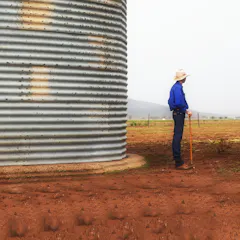
New ABARES research examines the climate change challenge facing Australian farmers
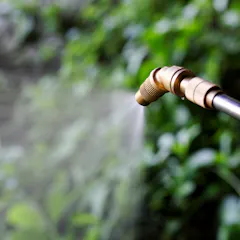
Paraquat’s potentially lethal effects on humans are well known. But our research has found it also causes serious environmental damage.
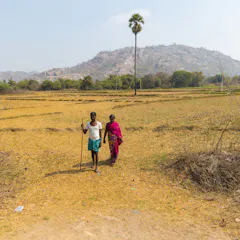
There is a long-term agrarian crisis, as yields are stagnant, water runs out and topsoil blows away.
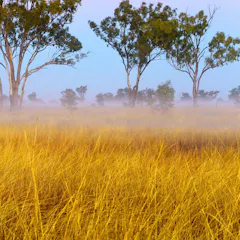
Aboriginal people once used native grasses to produce bread. So let’s resurrect Australia’s ancient breadmaking tradition.
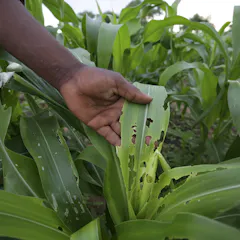
Farmers should use biopesticides - naturally occurring substances that kill pests such as the fall armyworm - instead of using pesticides, which are often highly toxic.

As the climate changes and the population grows, meeting the demand for food will become more difficult as arable land declines. But an international team of scientists has figured out an innovative solution to dramatically bumping up crop yields.
Top contributors
-

Assistant professor, Louisiana State University
-
Adjunct Professor, Centre for Biodiversity Genomics, University of Guelph
-
Researcher, TIGR2ESS Programme, University of Cambridge
-
Professor, Southern Cross University
-
Research scientist at Plant Breeding Institute, University of Sydney, University of Sydney
-
Lecturer in Human Geography, University of Sydney
-
Cropping Systems Ecologist, Rothamsted Research
-
Postdoctoral Researcher, Department of Geography, University of Cambridge
-
Senior Lecturer, Faculty of Health, Southern Cross University
-
Associate Professor, Department of Economics, Fordham University, Fordham University
-
Associate Professor, University of Sydney
-
Senior Lecturer, Evidence Based Healthcare, Faculty of Health, Southern Cross University
-
Lecturer in Integrated Crop Management, University of Neuchâtel
-
Professor, Integrative Biology, University of Guelph
-
Professor of Economics, University of Arizona