

The age of AI is leading to barriers being put up across the open web. This could be the fix.
Articles on Creative Commons
Displaying all articles
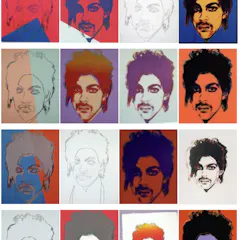
Is it unfair to make money from works that borrow from copyrighted work?
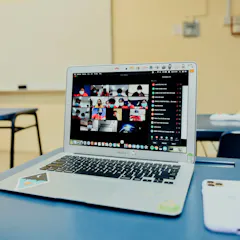
Distance learning requires not only the right technologies, but also policies that respect intellectual property and personal data. Open educational resources are an approach that is gathering support.

Scientists and science publishers are sharing information as fast as they can during the COVID-19 pandemic. Speed and openness bring new challenges, but they are the way forward for research.
We publish all articles under a “Creative Commons” license. This means any news organisation, blog, website, newspaper or newsletter can republish our pieces for free.
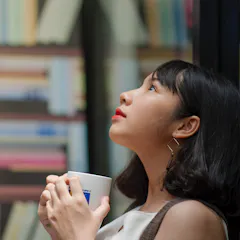
Universities and colleges could eliminate textbook fees if they supported the creation of open educational resources.

Open access study material can help reduce the costs of education, improve skills and improve lives for millions of people.
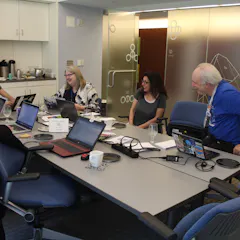
While most Wikipedia editors are volunteers, some are employed by Wikipedia. The Science History Institute’s Mary Mark Ockerbloom offers insight into the “Wikipedian in residence” program.
The Conversation was established as a charity in the UK six years ago. Its purpose? To provide the public with trustworthy and accessible expert analysis and research-based news. It was, and is, fundamentally…

From the curious to the serious – a bird’s eye view of the unique ways in which The Conversation covers the world.

Imagine if we could specify our general privacy preferences in our devices, have them check privacy policies when we sign up for apps, and warn us if the agreements overstep.
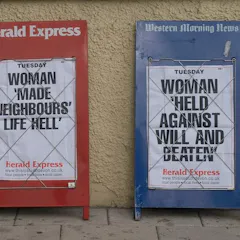
Previous government aid packages for local papers have instead helped Fleet Street’s ‘big beasts’.
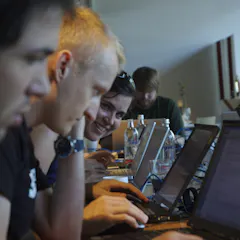
Online activism now means creating alternative ways to work, communicate and protest.
South Africans’ access to important knowledge and research is incredibly limited. In this time of Open Access, why is this the case – and will it ever change?
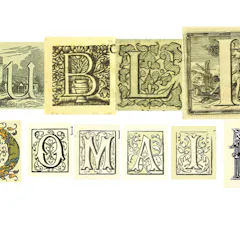
Artistic works in the public domain may be free, but they form the basis of derivative works worth millions to the economy.

Amid the intense discussion surrounding the release of the Australian government’s budget 2014-2015 one notable feature of the budget documents has seemingly gone unremarked by most commentators. The budget…
The digital age has presented many and diverse challenges for copyright law. The rapid uptake of digital, networked technologies led to widespread online distribution of content, as well as the emergence…

Britain’s National Portrait Gallery has opened up its image database to allow free downloads for non-commercial and academic uses, in a move welcomed by art historians. “This is very welcome, and increasingly…
Top contributors
-

Barrister at Queensland Bar and member, Creative Commons Australia
-
Adjunct Legal Researcher, Queensland University of Technology
-
Lord Kelvin Adam Smith Fellow in Social Sciences, University of Glasgow
-
Researcher, University of Pretoria
-
Senior Experimental Scientist, CSIRO
-
Senior Experimental Scientist, CSIRO
-
Joanna Mendelssohn is a Friend of The Conversation.
Honorary Senior Fellow, School of Culture and Communication, The University of Melbourne
-
Professor of Communications, University of Westminster
-
Scholarly Communications Librarian, University of the Witwatersrand
-
Professor of Law, Florida International University
-
Editor in Chief, Medical Journal of Australia, Queensland University of Technology
-
Associate Professor of Law, IESEG School of Management, Univ. Lille, CNRS, UMR 9221 - LEM - Lille Économie Management, IÉSEG School of Management
-
Professeur des Universités en Histoire des Sciences, Université de Lorraine
-
Professor of German Studies / Chair, Department of Germanic and Slavic Studies / Director, Waterloo Centre for German Studies, University of Waterloo
-
Professor of Digital Communication, Director of QUT Digital Media Research Centre, Queensland University of Technology