
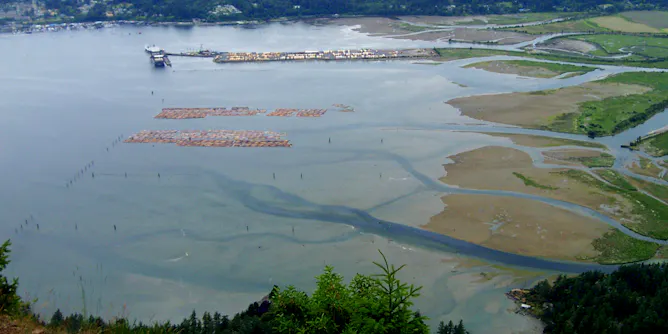
Fibreglass is denser than seawater, and it sinks quickly and accumulates in sediments where many coastal organisms live and feed.
Articles on Cowichan
Displaying all articles

Can Aboriginal title truly co-exist with fee simple title — the ownership of full, permanent property rights? Recent First Nations agreements show no one has complete control over their land.

We tend to view private property as a sacrosanct, never-changing principle. But property rights are legal constructs — never absolute and always evolving.
Top contributors
-

Postdoctoral Researcher, Department of Biological Sciences, Simon Fraser University
-
Adjunct professor, Simon Fraser University
-
Associate Professor of First Nations Studies; Adjunct Professor of Education, University of Northern British Columbia
-
Associate Professor, Law, University of Victoria
-
Associate Dean Indigenous & Associate Professor, Faculty of Law, University of Victoria