
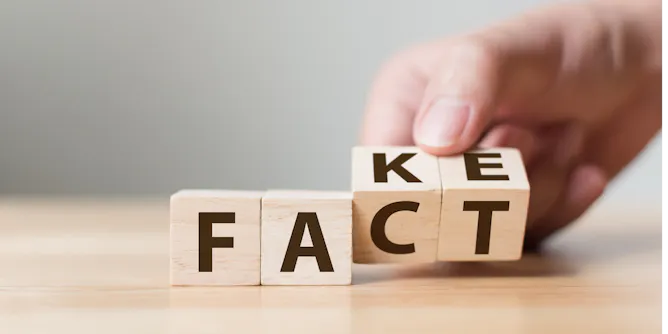
It can be easy to despair about the problem of misinformation. But the problem is smaller than you might think.
Articles on COVID misinformation
Displaying 21 - 39 of 39 articles

Spotify will pull Neil Young’s music after the musician demanded the streaming service remove The Joe Rogan Experience from its platform, as an episode of the podcast promoted COVID misinformation.

New recommendations on how to fix the issue of COVID misinformation don’t go far enough.

Fact-checking risks oversimplifying and distorting Americans’ political conflicts, while not actually helping people find ways to work together productively.

Skeptics may make demands for absolute certainty to undermine science and delay action. Critiques may not be in the interest of advancing science and public health, but by someone with an agenda.

Pediatricians and other health care providers can take some concrete steps toward building trust and counteracting anti-vaccination misinformation.
Living with someone who believes in anti-vaccination misinformation can tear families apart, say experts.

Clive Palmer says vaccines don’t work and Craig Kelly is among those misinterpreting statistics to suggest COVID vaccines are causing more deaths overseas.

Holding contrarian views - despite a lack of personal expertise - is just part of being human. Here’s the psychology behind what we choose to believe.

Emotive claims, like COVID vaccination being unethical or coercive, are more likely to be shared on social media. But we can fight back.

They’re calling for advice before using bleach or disinfectant. Or they’re calling to ask about side-effects after gargling, spraying or bathing in them. It’s a worry.
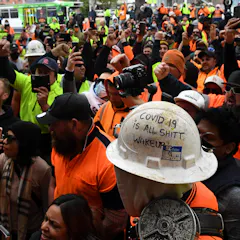
Even if the construction union wanted to oppose the government’s vaccine mandate, there’s not a lot it could do.
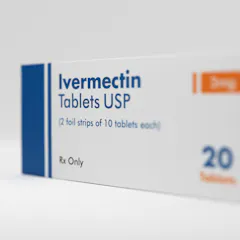
Ivermectin is the most recent example of a medication touted as a miracle drug for COVID-19 without solid medical evidence supporting its use.
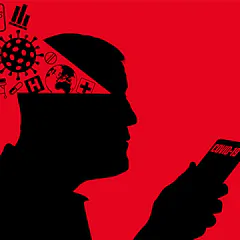
Anti-vaccine activists are using the side effect reporting system to spread fear and misinformation about the COVID-19 vaccines. But the database could also be used as a gauge for public concerns.
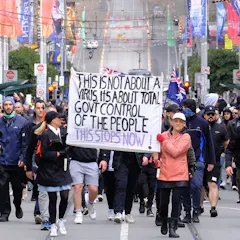
Equality and corruption perceptions appear to explain more than 80% of the differences in trust levels between nations.

Combating vaccine misinformation on social media requires blocking sources of misinformation – and giving researchers access to data about how misinformation spreads.
Many scientists believe attention is the key to tackling fake news – and that a form of ‘priming’ can help.
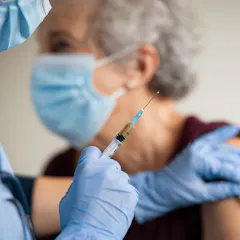
We surveyed social media users from vulnerable groups and found 73% got their vital news from social platforms. How can we protect these people from vaccine misinformation?
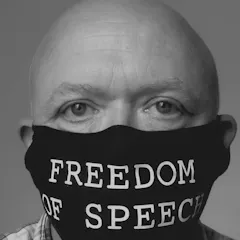
Under cover of the coronavirus many countries are passing more draconian media laws.
Top contributors
-

Professor of Information Systems, Michigan State University
-
Assistant Professor of Communication and Political Science, The Ohio State University
-
Chair of Cognitive Psychology, University of Bristol
-
Lecturer in Psychology, University of Cambridge
-
Assistant Professor of Behavioral and Community Health Sciences, University of Pittsburgh
-
Associate Professor of Health Law, Policy and Management, Boston University
-
Assistant Professor of Pediatrics, University of Pittsburgh
-
Assistant Professor of Public Health, University of Pittsburgh
-
Postdoctoral fellow, McGill University
-
Professor of Social Psychology in Society, University of Cambridge
-
Senior Lecturer in Media and Communications, Swinburne University of Technology
-
Professor of Political Science, Australian Catholic University
-
Lecturer in Psychology, Swansea University
-
Professor of Public Communication, Centre for Freedom of the Media, University of Sheffield
-
Senior Lecturer, UNSW