

The B16172 variant of concern risks spreading in the UK when restrictions on indoor socialising ease on May 17.
Articles on COVID-19 vaccines and variants
Displaying 21 - 40 of 45 articles
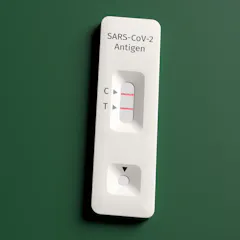
There’s still a lot we don’t know about the latest variant of concern: B16172.

It sounds too good to be true, a vaccine that can protect against future virus variants. But governments around the world are keen to learn more.
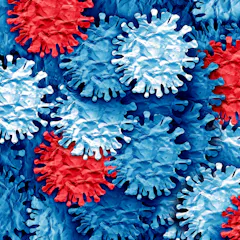
Coronavirus is 30,000 RNA ‘letters’ long, meaning there are over a quintillion possible genome permutations.
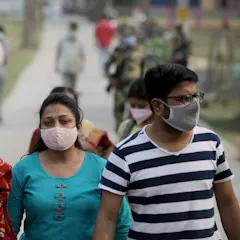
Britain moves to protect itself from the B1617 variant, which vaccines may be less effective against.
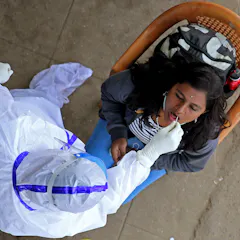
A coronavirus variant with a double mutation has been found in the UK, with cases currently doubling every week.
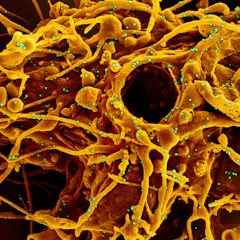
Variants of the original SARS-CoV-2 are now in wide circulation. That means the third wave of COVID-19 has come with new questions about the variants, their effects and what might come next.

With changing recommendations about AstraZeneca’s COVID-19 vaccine making headlines, many people have questions about its use.

As the US vaccinates millions more people each day, the novel coronavirus works to survive. It does this by mutating. So far, several variants are worrisome. A virologist explains what they are.

A new coronavirus double mutation found in India is better shaped to invade our cells.

COVID-19 variants of concern have changed the game. We need to recognise and act on this to avoid future waves of infections, yet more lockdowns and restrictions, and avoidable illness and death.

The US lags in testing coronavirus samples from COVID-19 patients, which can help track the spread of the virus and the emergence of new variants. But labs are ramping up this crucial surveillance.
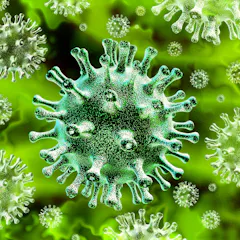
Scientists around the world are trying to come up with universal coronavirus vaccines to combat the emergence of variants. But what are these vaccines and are they even possible?
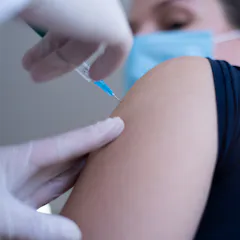
Decades of experience with influenza offers insights into how we should handle new SARS-CoV-2 variants, and the threat they pose to vaccine effectiveness.
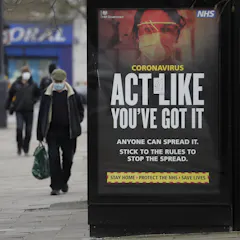
A virologist breaks down everything you need to know about the UK variant.

With four COVID-19 vaccines approved for use in Canada, it’s time to answer FAQs about efficacy, immunity, eradication and variants.
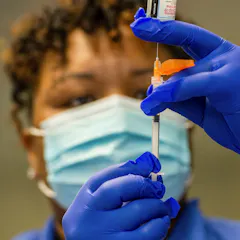
Researchers are closely watching the coronavirus mutants to make sure vaccines can be adjusted if necessary. But scientists don’t know whether vaccines will be effective in those already vaccinated.

With multiple variants of concern now present in the UK, attention is turning to when updated vaccines for them will be ready.
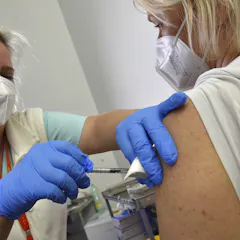
The FDA has indicated booster shots, to cover coronavirus variants, won’t need to go through lengthy phase 3 clinical trials. Instead, they can be tested in smaller trials, which will save time.

The real concern is if two variants infect the same cell and swap genetic material.
Top contributors
-

Instructor of Human Immunology, Emory University
-
Professor, Biology, York University, Canada
-
Associate Professor in Cellular Microbiology, University of Reading
-
Assistant Professor of Global Health and Microbiological Sciences, Executive Director - Center for Sustainable Development (Earth Institute), Columbia University
-
John Thwaites is a Friend of The Conversation.
Chair, Monash Sustainable Development Institute & ClimateWorks Australia, Monash University
-
Associate Research Professor, Barcelona Institute for Global Health (ISGlobal)
-
Science Lead Genomics & Bioinformatics, ESR
-
Research Fellow, The Peter Doherty Institute for Infection and Immunity
-
Professor of Epidemiology, Medicine, and Infectious Diseases and Microbiology, University of Pittsburgh
-
Postdoctoral researcher, The Peter Doherty Institute for Infection and Immunity
-
Associate Professor in Viral Immunology, University of Birmingham
-
Director, COVID-19 genomics UK Consortium (COG-UK) and Professor of Public Health & Microbiology, University of Cambridge
-
Professor of Health Psychology and Director of the UCL Centre for Behaviour Change, UCL
-
Senior Lecturer, The University of Queensland
-
Professor of Medicine, Bond University