
Comparing COVID-19 vaccines with others that are less effective makes people see them more favourably.
Articles on COVID-19 vaccines
Displaying 241 - 260 of 596 articles

Exclusion from clinical trials, lack of data and inconsistent information made it difficult for pregnant and breastfeeding people to make decisions about COVID-19 vaccines early in the rollout.

Vaccine hesitancy in parents shouldn’t mean adolescents can’t get vaccinated.

Hotspot neighbourhoods with greater COVID-19 risk exposure continued to have higher infection rates even when they achieved vaccination levels equal to lower-risk neighbourhoods.

COVID vaccines don’t contain any live virus to shed. Here’s the science to put the myth of viral shedding after the COVID vaccine to bed.
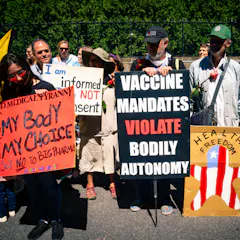
Vaccine resistance movements have always been led by white, middle-class voices and promoted by structures of racial inequality.

If Big Pharma wants to achieve the ultimate image makeover, it must capitalize on the current public good will about its COVID-19 vaccines by prioritizing socially responsible practices.
The latest UK data shows that nearly two-thirds of people who died of COVID between February 1 and June 21 had been vaccinated.
If you’re in Sydney, the advice is for people to bring forward the timing of their second AstraZeneca shot, and for the under 60s to consider having it if they can’t get hold of Pfizer.
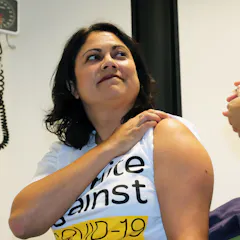
The latest survey shows COVID-19 vaccine acceptance is at 81%, but it suggests low reach for the government’s vaccination ads, with only four in ten people saying they’ve seen them on television.

Psychological theory and evidence do not support fear appeals overall.
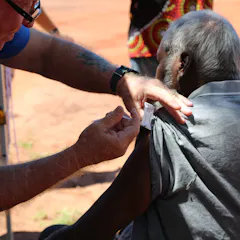
As the delta strain spreads in Australia, there is increasing urgency to ensure Aboriginal and Torres Strait Islander people are vaccinated.

Weeks do matter when it comes to the Delta strain. With Australia still heavily reliant on the AstraZeneca vaccine, for now it makes sense to reduce the time between the first and second jab.
People who are vaccinated and still contract COVID-19 are less likely to develop severe symptoms, be hospitalised, or die from it.

The rise of the Delta variant does seem to be associated with more COVID transmission in schools than what we’ve seen previously. But kids are much less likely to become severely unwell.

People who haven’t gotten vaccinated for COVID-19 often have complex reasons for their relunctance or may face other barriers. Lumping them all together undercuts the vaccination campaign.

We should move rapidly to reduce fear, improve vaccination rates, improve treatments and reduce complications as we do with other diseases we can’t eliminate or fully protect against.
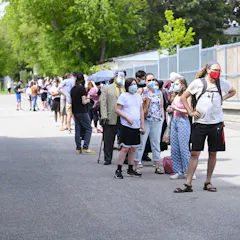
With youth ages 12 and over eligible for COVID-19 vaccination — and as trials for younger children move ahead — parental hesitancy is emerging as the new challenge for COVID-19 vaccine programs.
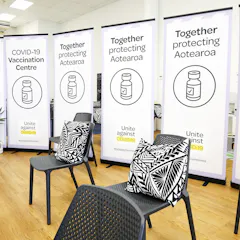
People in Canterbury have been told to be patient as their vaccination is delayed by weeks, but regional disparities in the vaccine rollout are unacceptable as we face new COVID-19 variants.
Delta plus might reduce the efficacy of the vaccines currently in use. But we can’t be sure because we’re yet to see good data on this variant.
Top contributors
-

Professor, School of Population Health, UNSW
-
Professor, The Children's Hospital at Westmead Clinical School and Sydney Infectious Diseases Institute, University of Sydney
-
Early Career Research Leader, Emerging Viruses, Inflammation and Therapeutics Group, Menzies Health Institute Queensland, Griffith University
-
Professor of Paediatrics and vaccinologist, Royal Childrens Hospital, University of Melbourne and Murdoch Childrens Research Institute (MCRI); Associate Dean International, University of Melbourne, Murdoch Children's Research Institute
-
Professor, School of Social Sciences, The University of Western Australia
-
Associate Professor and ARC Future Fellow, The University of Western Australia
-
Associate professor, Department of Family and Community Medicine, University of Toronto; York University, Canada; University of Sydney
-
Professor, School of Biomedical Sciences and Pharmacy, University of Newcastle
-
Associate Professor, Epidemiology, Deakin University
-
Associate Professor of Health Law, Policy and Management, Boston University
-
Research associate, Warren Alpert Medical School, Brown University, Brown University
-
Chair in Epidemiology, Deakin University
-
Distinguished Professor, Professor of Immunology, RMIT University
-
Vice-Chancellor's Research Fellow, School of Health and Biomedical Sciences, RMIT University
-
Instructor of Human Immunology, Emory University