

Cash transfers have emerged as an essential part of social protection systems globally, most recently during COVID lockdowns.
Articles on COVID-19 stimulus packages
Displaying 1 - 20 of 26 articles
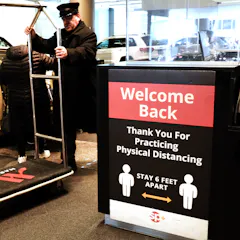
Workplace absences, along with sales lost due to the cessation of brick-and-mortar retail shopping, airline travel and public gatherings, contributed the most.

A bigger-than-expected jump in inflation means the Fed may have to get more aggressive about interest rate hikes. An obscure economic indicator suggests it has room to do so.

The Fed officially began its biggest inflation fight in four decades.

The latest figures offer new evidence that a K-shaped recovery is following the coronavirus recession – which hit the lowest-paid workers the hardest.
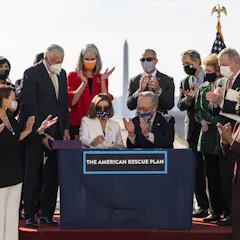
Four articles from The Conversation US archive provide context and analysis on the historic legislation.

Massive stimulus plans combined with rising production costs could lead to expectations that inflation will rise. And that alone could trigger an inflationary spiral not seen in 25 years.
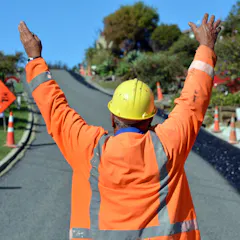
New Zealand has put just over half of its NZ$50 billion pandemic stimulus towards clean energy, but several fossil fuel powered projects will slow down the country’s shift to a low-emissions economy.
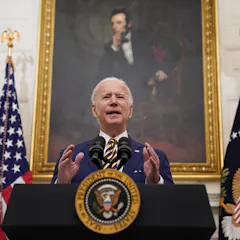
Biden proposed $1.9 trillion in new coronavirus relief spending to help with the economic fallout of COVID-19. Four economists have a few ideas for him.
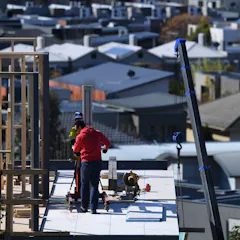
Current housing stimulus measures aim to boost buyer demand and are too small to sustain a recovery. A second round of stimulus is likely to be needed, and it should go into social housing supply.
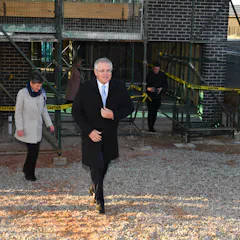
Voters who own housing are strongly invested in increasing the value of their wealth-generating assets. And they strongly favour the Coalition, which knows to protect their interests.
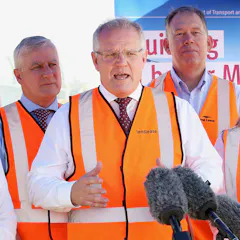
As well as an infrastructure spending boost, governments are fast-tracking approvals. But these processes exist for a reason. If we get projects wrong, we live with the consequences for decades.
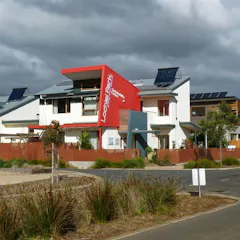
There has never been a better time for public money to go into improving the performance of Australian housing. We could have cut household bills and emissions, as well as saving construction jobs.

A long-term housing stimulus package that focuses on retrofitting to cut energy demand would also help households repay the debts being accumulated during this crisis.
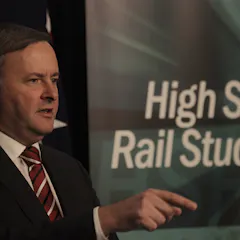
The federal opposition’s idea for a bullet train from Melbourne to Brisbane is not a good use of a generation’s worth of infrastructure spending. It won’t even work as an economic stimulus.

When the things we consider to be normal break down, outcomes that once seemed unlikely or extraordinary become possible.
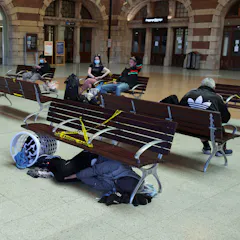
Now is the time for a two-pronged strategy to ensure everyone has a home: a spot-purchasing program to find homes for people now in emergency accommodation, followed by social housing construction.
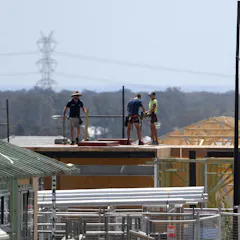
Construction employs one in ten Australians, with a broad range of skills, using mostly locally made materials. Building social housing would meet urgent social needs as well as creating jobs.

An economic downturn as severe as the great depression is possible, but what should emerge out of it?
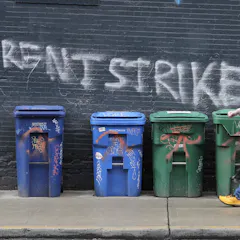
Even as Americans are all told to remain at home, millions are now unemployed and must scramble to figure out how to pay for that home.
Top contributors
-

Associate Professor in Property, Construction and Project Management, RMIT University
-
Associate Professor of Economics, Pace University
-
Associate, Grattan Institute
-
Associate Professor of Latin American Politics, Monmouth University
-
Researcher in Social Protection, Maastricht Economic and Social Research Institute on Innovation and Technology (UNU-MERIT), United Nations University
-
ARC DECRA Senior Research Fellow in Environmental Sociology, RMIT University
-
Professeur d'économie, ESSEC
-
Associate Deputy Vice Chancellor in Research & Innovation, RMIT University
-
Senior Research Scientist at the Harvard T.H. Chan School of Public Health, Harvard University
-
Professor, School of Civil Engineering and Construction Management, Adelaide University
-
Associate Professor in Taxation, Stellenbosch University
-
Professor of Political Economy and Social Theory, University of Sydney
-
Professor of Social Protection and Development, Maastricht University
-
Postdoctoral Research Associate, University of Sydney
-
Senior Lecturer in Urban and Environmental Planning, Griffith University