
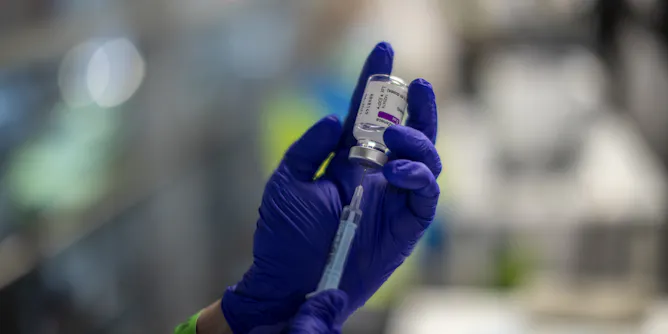
The change in the US position signals how clearly the success of every country in fighting the pandemic depends on vaccinating the whole world.
Articles on COVAX
Displaying 21 - 40 of 46 articles
Pfizer and Moderna are expected to make billions in revenue this year. It’s time all vaccine producers share their IP, data and know-how with the rest of the world.
New study looks at public attitudes to COVID-19 vaccine aid. The results are reassuring.
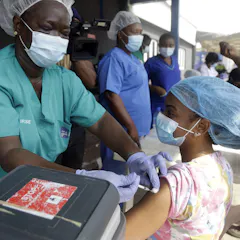
India and South Africa are pressing the World Trade Organization to waive patent rights to help ramp up vaccine production. There’s a better solution.
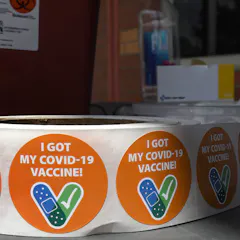
The fight for vaccine equity needs to stop looking to multilateral institutions for permission and instead focus on the policy tools that are already available to states.
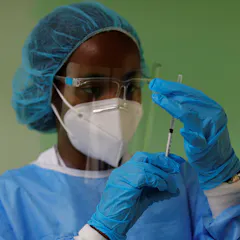
COVAX, the global vaccine distribution initiative, is well behind its goal of delivering 2 billion doses this year due to under-investment, vaccine nationalism and export restrictions.
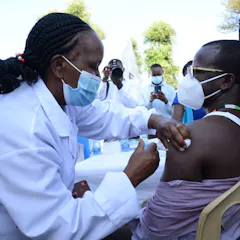
Kenya grapples with two major challenges in the vaccination rollout: access to sufficient doses in light of the global shortage; and vaccine hesitancy.

Reaching the goals of the plan requires the best possible interaction between public and private -for profit and not-for-profit - healthcare sectors.

Fair global agreements, home-grown vaccines and sharing extra doses with poorer nations are all needed if we’re to ever emerge from this pandemic.
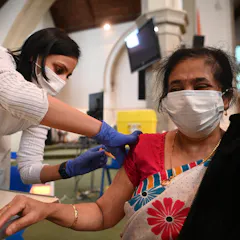
The UK has given around 25% of its population a first dose, but across the world fewer than 3% of people have received a vaccine.
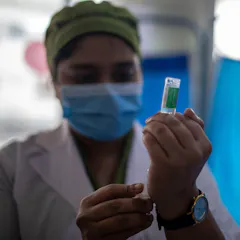
Plus new research on why China is closing down coal-fired power stations. Listen to episode 3 of The Conversation Weekly.

The pandemic will not end for anyone, anywhere until it is controlled in every country. Tanzania’s approach will make it that much harder for normality to return.
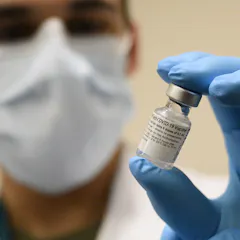
Ghana’s mid-year target of procuring and administering 17.6 million COVID-19 vaccine doses may be constrained by global supply, cold chain capacity, and vaccine hesitancy.

Countries may or may not choose to give their share doses to Covax, but regardless, redistribution needs to be driven by need.
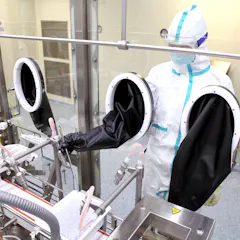
If South Africa is serious about being able to supply anti-pandemic vaccines in future, it needs to rethink the scale of financial, technical and strategic investment into vaccine production.

The Trump White House questioned the value of foreign aid and neglected policies related to helping low-income countries. But US aid had already needed improvement.
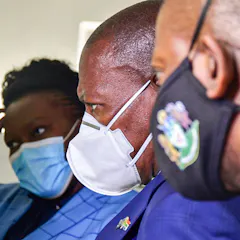
Critics of the South African government argue that it has done too little too late to secure vaccines, and that it doesn’t have a proper plan in place for rollout.

Many countries cannot afford to buy existing COVID-19 vaccines, a collective approach is needed.
CC BY-NC-ND16.4 MB (download)
It’s unlikely South Africa will have a substantial number of vaccines until the second half of this year. Most of the vaccines produced in Europe or America have been bought by other countries.
A waiver on some intellectual property rules at the WTO for COVID-19 vaccines would ensure more equitable access, but wouldn’t solve all the problems facing developing countries.
Top contributors
-

Professor of Public Health, La Trobe University
-
Executive Director, African Population and Health Research Center
-
Professor and Distinguished Research Chair, Globalization and Health Equity, L’Université d’Ottawa/University of Ottawa
-
Dean Faculty of Health Sciences and Professor of Vaccinology at University of the Witwatersrand; and Director of the SAMRC Vaccines and Infectious Diseases Analytics Research Unit, University of the Witwatersrand
-
Associate Principal Research Fellow, Burnet Institute
-
Senior Scholar with the Global Health Policy & Politics Initiative at the O’Neill Institute, Georgetown University
-
Professor of Philosophy, Binghamton University, State University of New York
-
Reader, Global Development Institute, University of Manchester
-
Professor of International Politics, Queen Mary University of London
-
Part-time lecturer at the Global Health & Social Medicine, Harvard University, and Lecturer at the School of Public Health, College of Health Sciences, University of Liberia
-
Clinical associate professor, Faculty of Medicine, University of British Columbia
-
Sarah Joseph is a Friend of The Conversation.
Professor of Human Rights Law, Griffith University
-
Senior Researcher, Health Economics, University of Oxford
-
Ezintsha, Faculty of Health Sciences, University of the Witwatersrand, University of the Witwatersrand
-
Assistant Professor of Global Health and Social Medicine, Harvard University