
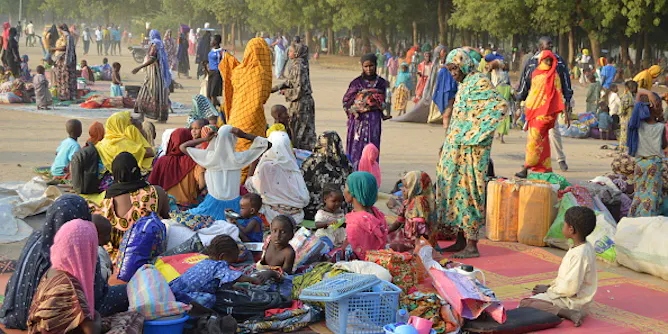
The failures of nominally elected governments has denied leaders - as well as the democratic system - a vanguard popular constituency.
Articles on Coups
Displaying 41 - 60 of 62 articles
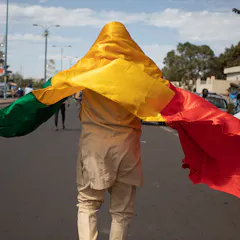
Unimpressive democratic conditions and foreign influence in African countries make recent attempted and successful military takeovers unsurprising.

Rawlings was a polarising figure, a person who led two coups in Ghana before twice being elected president in multiparty polls.

Jerry Rawlings found a unique path to legitimise his military rule in Ghana.
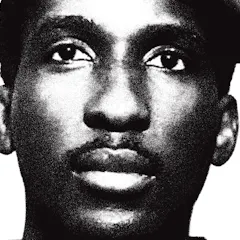
Burkina Faso is still in the throes of chaos decades after the assasination of the charismatic president
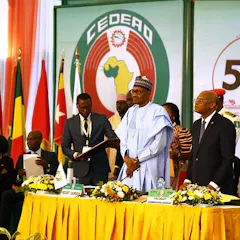
ECOWAS needs to be decisive in enforcing its protocols and sanctioning members that flout the provisions of its protocols and policies.
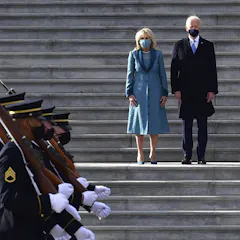
From a global perspective, there was nothing unique about the recent raid on the U.S. Capitol. Both Republican and Democratic administrations have backed military coups around the world for decades.
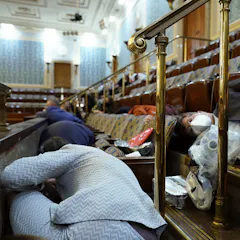
Rather than denigrating other nations as banana republics for their penchant for insurrections and lawless coups, the United States needs to take a long look inward following the raid on the Capitol.

Trump supporters stormed the US Capitol on Jan. 6, disrupting Congress’s certification of Joe Biden as president-elect. Coup experts explain this violent insurrection wasn’t technically a coup.

After becoming Peru’s third president in six days, Francisco Sagasti must both lead the country into elections and build a better democracy. It’s a test Peruvian leaders largely failed 20 years ago.
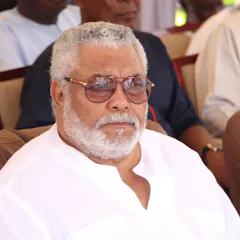
Jerry John Rawlings remains the most polarizing political figure in Ghana since Kwame Nkrumah
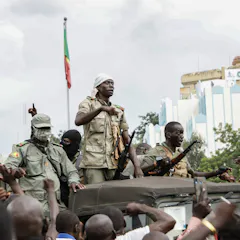
A coup may be a quick fix for a problem leader, but history shows that coups beget more coups.
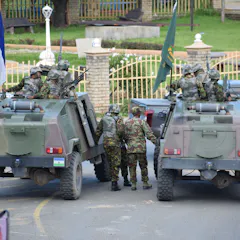
South Africa’s numerous interventions in Lesotho contribute to the acrimonious nature of its political culture.
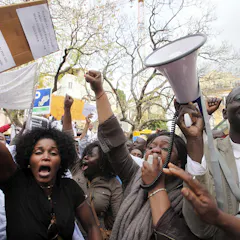
The political crisis and any potential instability may once again force the military’s hand

Since the election of Donald Trump, the United States has been experiencing a slow-moving coup that is still in the process of toppling American democratic institutions.
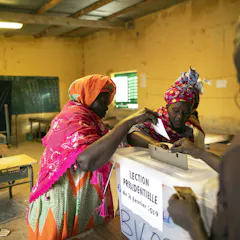
Africa’s democracies have grown stronger during a period in which the world is backsliding on democracy.
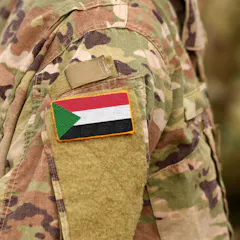
When the establishment retains some leverage over reformers change can be slow, superficial, and short-lived. Sudan appears to be a textbook case of this scenario.

History shows that when government elites believe that there is a risk that they may lose control of the capital, they escalate targeted violence against civilians.
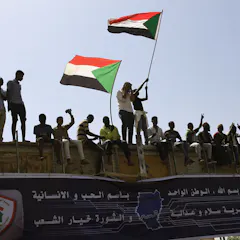
The role of the military in toppling authoritarian rulers, after intensive popular protests, raises questions about how the AU’s policy against coups should be applied.
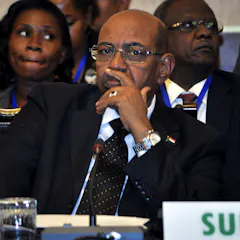
Al-Bashir’s ability to play a skillful combination of internal and external balancing acts, plus ruthless repression and a divided opposition, kept him in power for three decades.
Top contributors
-

Assistant Teaching Professor of Strategy and Technology, Carnegie Mellon University
-
Research Affiliate and Senior Analyst, University of Central Florida
-
Professor of Political Science, Penn State
-
Nonresident Research Fellow, Rice University
-
Director & SARChI Research Chair: Political Economy of Migration in the SADC Region, University of Pretoria
-
Visiting Assistant Professor of Political Science, University of Kentucky
-
Extraordinary Lecturer, University of Pretoria
-
Professor Emeritus of Politics, London Metropolitan University
-
Professor of International Law, University of Pretoria
-
Associate Professor in the Department of Political Science and International Relations, Nile University of Nigeria
-
Senior Research Fellow, Institute of Commonwealth Studies, School of Advanced Study, University of London
-
Senior Research Associate, Department of Political Sciences, University of Pretoria
-
Senior Lecturer, Covenant University
-
Lecturer in International Relations, Monash University
-
Professor of Anthropology, Johannes Gutenberg University of Mainz