

Business is booming for fakes, worth at least US$467 billion a year worldwide. But some fake products can pose serious health risks to unsuspecting buyers.
Articles on Counterfeiting
Displaying all articles

False video ads for French luxury bags made in China promised unbeatable prices. Buying a fake may come with a potentially high cost.

Developments in AI have made fraud and counterfeiting easier, raising the need for tougher fraud detection systems.
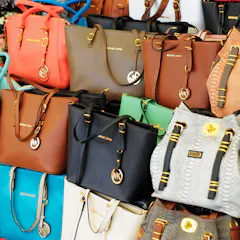
The global trade of counterfeit and pirated products costs countries like Canada billions a year. Governments and industries must come together to protect Canadians.
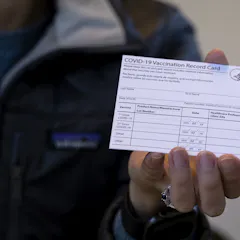
People who forge their own vaccine cards, or buy forged cards, are already facing legal problems, including criminal charges.

The recent seizures of counterfeit testing kits by U.S. Customs and Border Protection show that the counterfeiters have begun to take advantage of the coronavirus crisis.
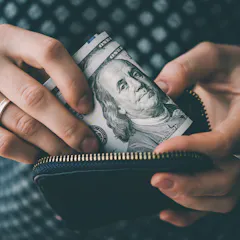
The color of American money goes back to the British colonies.

Handheld scanning technology could help police crack down on e-liquids with too much nicotine.
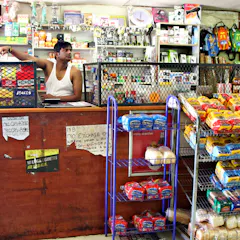
Foreign shop-owners in South Africa are accused of selling counterfeit food and food beyond its sell-by date. These claims are driven by politically charged opinions, not evidence.
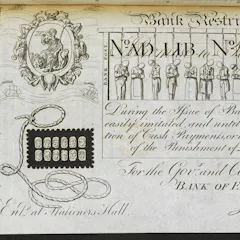
The 19th century Irish crimewave that wasn’t: how a change of policing brought the English counterfeiters to book.
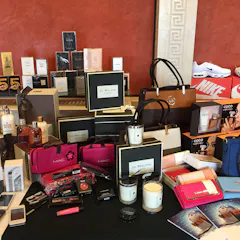
Counterfeit goods could be the Christmas bargains that cost you dearly.

Togolese consumers are increasingly choosing Chinese replicas over ‘authentic’ Dutch wax prints. Their choice raises fundamental questions about the notion of intellectual property.

The singer-songwriter has signed deals with two Chinese retailers to sell authentic merchandise in the country in hopes of stemming the tide of knockoffs.
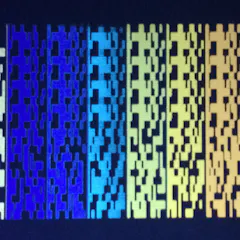
Invisible under normal light but fluorescent under UV light, this ink can print out unique signatures that use ‘molecular encryption’ to authenticate anything they tag.
Top contributors
-

Professor of Chemistry, Northwestern University
-
Lecturer in digital history, University of Hertfordshire
-
Senior lecturer in forensic sciences, Bournemouth University
-
Assistant Professor, Northumbria University, Newcastle
-
Associate Professor of Anthropology, Northeastern University
-
Regents Professor of Law and Communication and Director of the Center for Law and Intellectual Property, Texas A&M University
-
Researcher at the African Centre for Cities, University of Cape Town
-
Assistant Professor of Chemistry, Dartmouth College
-
PhD Student in Chemistry, Northwestern University
-
Senior Researcher in Urban Food Security and Food Systems, University of Cape Town
-
Professor, Ivey Business School, Western University
-
Professor of Law, Boston University
-
Assistant Professor of Criminal Justice, Center for Anti-Counterfeiting and Product Protection, Michigan State University
-
Ph.D. Student of History, American University
-
Professor of Law, Duquesne University