
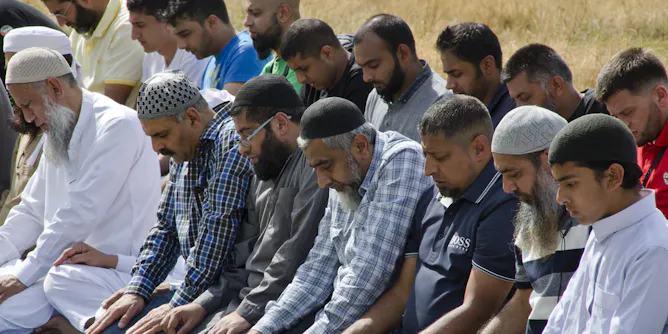
Changes proposed in a new counter-terrorism bill would make the line between pre-criminal and criminal actions ever more uncertain.
Articles on Counter-terrorism
Displaying 81 - 100 of 225 articles
While broad-based counter-terrorism strategies aren’t very effective at preventing lone-actor attacks, community outreach efforts are having success turning troubled young lives around.

If Mohamed Kamer Nizamdeen had not been Muslim, it is highly unlikely he would have been imprisoned in a Supermax facility for four weeks on flimsy evidence.

Counter-terrorism legislation has created a permanent zone of suspicion – but not for everyone.

An analysis of budget documents suggests that federal funding for community-based, counter-terrorism programs has dried up.

An unprecedented onslaught from the US hasn’t destroyed the terrorist organization. What is the secret of its resilience?
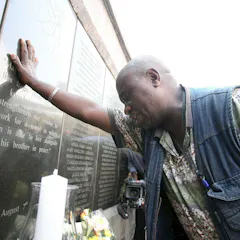
Two decades after terrorists bombed the US embassies in Nairobi and Dar es Salaam, Kenya has implemented a slew of measures to counter terrorism.

Social isolation feeds into extremism and terrorism.

Lecturers remain concerned about limits the Prevent duty places on freedom of expression.
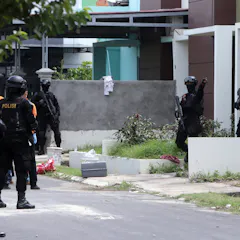
Trained and funded by Australia and the US, Detachment 88 is winning the fight against terrorism in Indonesia, though not without some controversy and continued challenges.
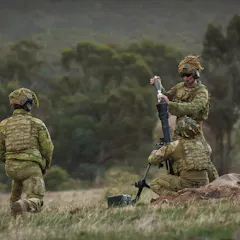
The bill makes it easier for states and territories to seek help from the Australian Defence Force (ADF) to respond to terrorist and other violent occurrences.

Terrorists are wealthy. They’re poor. They’re Christian. They’re atheists. They come from all over. That’s why US counterterrorism efforts must be more nuanced than just barring Muslims.

When it comes to ongoing security co-operation, mutual trust is crucial – but that is currently lacking.

Unless people know their information is secure, how can they feel confident about coming forward to authorities?
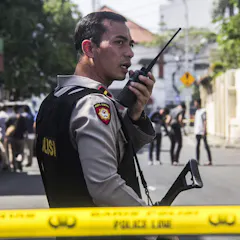
A tougher security approach to terrorism may be counterproductive and could even potentially undermine the supremacy of civilian government in Indonesia.

Talks should include barriers to women’s participation in peace and security institutions, countering violent extremism, foreign fighters, sexual violence in conflict, and the Rohingya crisis.

The government’s increasing focus on ‘extremism’ may be promoting rather than preventing violence.

No country is immune to terrorism, but de-radicalizing people who have been attracted to terrorist organizations like ISIS can work.
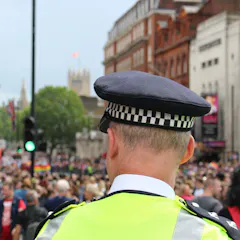
Counter-terrorism policies have social and political impacts on citizenship, identity and our perception of self and the Other. Through the British case, Lee Jarvis discusses his latest research with Sylvain Antichan.
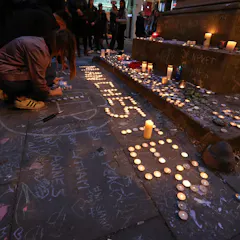
Claims that the Manchester Arena bombing could have been stopped are too simplistic.
Top contributors
-

Professorial Fellow, University of Canberra
-
Associate Professor, School of Social Science, The University of Queensland
-
Associate Professor in North American History, University of Birmingham
-
Chair in Global Islamic Politics, Alfred Deakin Institute for Citizenship and Globalisation, Deakin University
-
Associate Professor, Griffith Criminology Institute, Griffith University
-
Visiting Fellow, Department of Political and Social Change, The Philippines Institute, Australian National University
-
Reader (Associate Professor) Department of Political Science, Federal University of Lafia, Nigeria, Federal University Lafia
-
Reader in Constitutional Law and Human Rights, University of Birmingham
-
Associate Professor, TC Beirne School of Law, The University of Queensland
-
Professor of International Politics, School of Politics, Philosophy, Language and Communication, University of East Anglia
-
Adjunct Associate Professor, Departnent of Social Sciences, Pwani University
-
Associate Professor, School of Criminology, University of Leicester
-
Research Fellow at the Program on Extremism, George Washington University
-
Senior research Fellow, Leeds Beckett University
-
Assistant Professor, School of Politics and International Relations, University of Nottingham