
South Africa’s political parties would do well to learn from Ireland, where the three largest political parties negotiated a coalition treaty that stipulated mechanisms for conflict resolution.
Articles on Corruption
Displaying 301 - 320 of 879 articles
The ANC did not create most of the patterns for which it is blamed. But it has done far too little to change them and often seems happy simply to live with them.
Exactly when the ANC’s reign will end rides on what the party does or does not do between now and its elective conference in 2022.
Serious allegations cannot just be left swinging in the breeze as ‘unproven’ when the initiating process that hangs them out there is your own investigation.
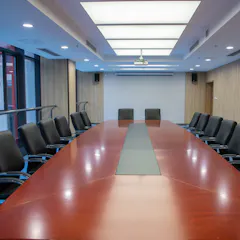
A new study involving extensive interviews with dozens of directors shows that they see their roles as more about supporting executives, not challenging them.

Zambia’s new president will have to balance austerity and the high expectations of the many unemployed young people and struggling people who voted for him.
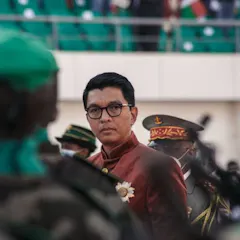
Madagascar semble se diriger vers une nouvelle crise politique, beaucoup plus complexe et probablement plus violente que les précédentes.
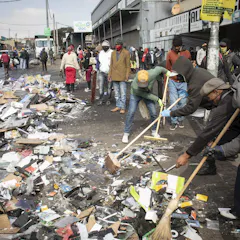
Much of the commentary on the July riots, which cost over 300 lives and billions of rands in damage to the economy, has neglected the long history of violent protests in the country.
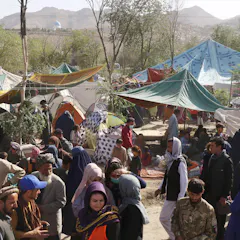
When the US invaded Afghanistan in late 2001, Afghans had endured 22 years of war. The Taliban were on the rise. Little has changed after an additional 20 years of war and suffering.
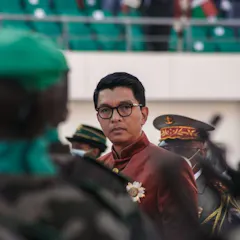
Madagascar seems to be heading towards a new political crisis, much more complex and probably more violent than the previous ones.
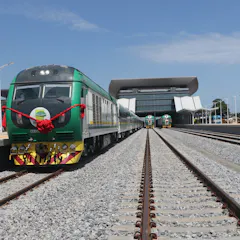
In his new book, Nigeria Democracy Without Development: How To Fix It, international political economist Omano Edigheji explains why democracy has not led to development in Nigeria.

Whoever wins the elections will face two key challenges: reviving the country’s democratic credentials and stimulating the economy.
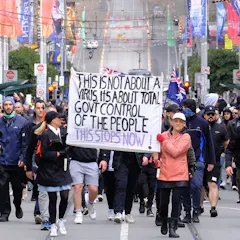
Equality and corruption perceptions appear to explain more than 80% of the differences in trust levels between nations.
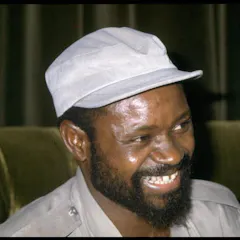
Frelimo, which governs Mozambique, has squandered the enormous political capital it enjoyed at independence. It now remains in power through violence, intimidation, harassment, and threats.
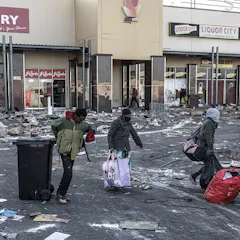
South Africa can’t possibly remain the same country in the aftermath of this mayhem. There are just too many storms ahead to simply continue unchanged.
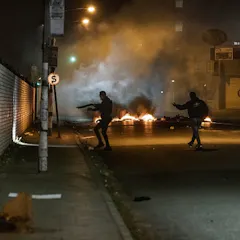
Corruption thrives in a destabilised state with weak institutions. South Africa cannot be allowed back to that space because there will be no turning back.
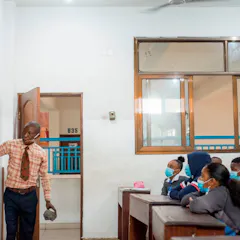
Public statements against payroll fraud seem to materialise at strategic moments.
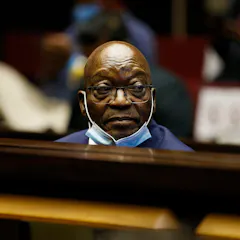
South Africa has many problems. But, as Jacob Zuma has found out, the strength of its rule of law and the independence of its judiciary should not be underestimated.
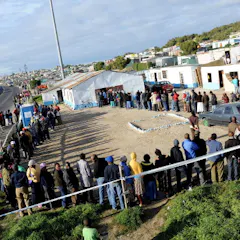
Concerns about socioeconomic well-being were the main reason why people voted for a certain political party.
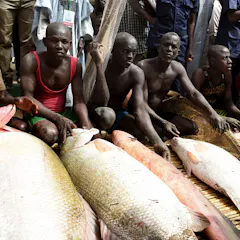
Nigeria must address illegal fishing, which depletes the country’s fish stocks, undermines livelihoods and pushes people into poverty.
Top contributors
-

Political Scientist, University of the Western Cape
-
Professor of Sociology, University of the Witwatersrand
-
Professor of Political Studies, University of Johannesburg
-
Associate Professor, Faculty of Law, Monash University
-
Professor of Politics, University of Sussex
-
Emeritus Associate Professor in Public Law, UCT. Visiting Adjunct Professor, WITS School of Governance; Director, Africa Programme, University of Cambridge Institute for Sustainability Leadership, University of Cambridge
-
Professor in Political Science, University of South Africa
-
Professor of Public Policy & Law, Centre for Governance & Public Policy, Griffith University
-
Professor of Public Affairs, Tshwane University of Technology
-
Professor of Urban Governance, University of the Witwatersrand
-
Associate professor, University of Cape Town
-
Visiting Professor and Professor Emeritus, University of the Witwatersrand
-
Professor of Public Policy, Adelaide University
-
PhD Student in the School of Social and Political Sciences, The University of Melbourne
-
Professor of World Politics, SOAS, University of London